Crude Oil
July 21, 2026
Americas oil production growth cushions blow from Hormuz closure, experts say

By Kate Winston
Editor:
HIGHLIGHTS
Americas produce 20% more oil than Middle East: report
Strait's shutdown may accelerate electrification in India, elsewhere
Growing oil production in the Americas has blunted the oil market impact of the closure of Strait of Hormuz during the US-Iran war, compared to the impact that would have occurred with a similar closure 15 years ago, energy experts said July 21.
The US was the largest oil and gas producer last year, with production growing 4% in 2025, Nick Wayth, CEO of the UK-based Energy Institute, said during a discussion of the organization's 2026 Statistical Review of World Energy.
"All of this goes some way to explaining why we've not quite seen the sort of catastrophic impacts of the Strait of Hormuz closure," Wayth said during a webinar hosted by the Center for Strategic and International Studies.
Five years ago, the Americas were about equal to the Middle East in total oil production, Wayth said. But now the Americas produce about 20% more oil than the Middle East, he said.
"Now, the US has clearly been the dominant driver for that," he said. "But it's not just the US, it's been Brazil, it's been Guyana contributing."
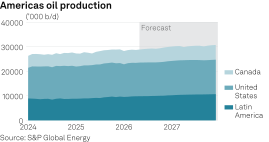
Fifteen years ago, the closure of the Strait of Hormuz would have had a much bigger economic and price effect, Joseph Majkut, the director of the energy security and climate change program at CSIS, said during the webinar.
At that time, Western Hemisphere production growth had not yet been realized, and the world was not building inventories as it has over the last couple of years, Majkut said.
After the current crisis ends, countries may see the power of inventories to modulate demand during crises, Majkut said.
"We might see a period in the following years not of decreased demand, but actually of steady demand, not for consumption necessarily, but for building of new stockpiles," he said.
The Hormuz shutdown could also speed electrification in countries like India, which imports around 85% of its crude oil, Wayth said.
"It's got a choice of: import more crude or try to produce more domestic crude, but that's not going to shift the needle; or massively electrify," he said
