Chemicals, Crude Oil, Polymers
October 07, 2026
Recycled-virgin PET spread hits zero amid rising virgin feedstock costs
By Zhi yi Tan and Yening Lim
Editor:
HIGHLIGHTS
Virgin PET rises on feedstock constraints
Recycled PET prices rangebound amid steady feedstock
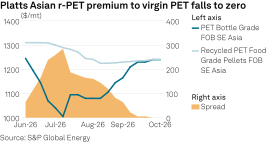
The price spread between recycled and virgin polyethylene terephthalate pellets narrowed further as their feedstock costs diverged, reaching zero for the first time since May.
As of Oct. 7, Platts, part of S&P Global Energy, assessed bottle-grade PET FOB Southeast Asia at $1,240 per metric ton, up $75/mt from Sept. 2. Platts assessed recycled PET food-grade pellets on the same basis at the same price, up only $10/mt over the same period.
"If the price gap between recycled and virgin PET is low enough, big brands will certainly ramp up R-PET usage to increase their overall [recycled-content] percentage," said a Thailand-based producer.
"It depends on each company's policy. Some can switch between virgin PET and R-PET more easily because they manage R-PET content internally rather than to advertise. Others need to think more carefully, as switching an SKU between virgin PET and R-PET is generally not a good look. Overall, if prices are similar, demand will move more toward R-PET," the producer said.
Virgin prices climb on feedstock costs, tight supply
Virgin PET prices moved higher in September, supported by rising feedstock costs and tight raw material availability. A surge in crude oil prices lifted upstream values, prompting regional producers to raise offers.
Despite the firmer pricing environment, export buying interest remained subdued, with many buyers adopting a cautious, wait-and-see approach amid the rally.
The Thailand-based producer said domestic demand continued to provide support, while ongoing feedstock constraints limited operating rates. This, in turn, helped keep export offers firm despite muted buying interest.
Producers also pointed to healthy demand from regions including Europe, which supported prices at elevated levels, a Malaysia-based trader said.
Meanwhile, during the week to Oct. 7, the Thailand-based producer said many buyers expected Chinese prices to soften after the market reopened following China's Oct. 1-7 National Day holiday, although the producer disagreed with that view.
A Malaysia-based trader similarly said sellers continued to report elevated raw material costs, which could help support prices.
Recycled prices rangebound amid steady feedstock, lackluster demand
Meanwhile, R-PET prices did not experience a cost push similar to that in the virgin PET market. Bale prices across Southeast Asia remained fairly stable in September.
According to a Thailand-based recycler, the bale market experienced some supply tightness, which was offset by lackluster demand. The recycler said bale prices remained steady at $426-$475/mt throughout September.
In Indonesia, although multiple recyclers cited some supply tightness because of the rainy season, bale prices remained stable at $600-$620/mt from August through September.
While market participants cited expectations of higher bale prices in the week to Oct. 7, the increases had not fully materialized across the market. "We have not yet increased our buying price ... we are still monitoring [the situation]," the Thai recycler said.
Demand signals in the Southeast Asian R-PET pellet market were mixed in September.
One Malaysian R-PET pellet producer was heard maintaining its offers, citing consistent demand from Asian customers.
The Malaysian recycler said some PET sheet producers were replacing virgin pellets with R-PET flakes because of the price difference. "Good quality [R-PET] flakes about $900 can replace virgin $1300 resin," the recycler said.
However, the recycler said only a few converters had machinery capable of switching between R-PET flakes and virgin pellets.
Other recyclers said the price difference needed to be large enough for converters to switch from virgin material to recycled alternatives, which the sources said were often lower in quality.
