Refined Products, Chemicals, Naphtha
July 23, 2026 · Updated July 28, 2026
Low Rhine water levels hit naphtha supply, disrupting Germany's petrochemical output
Editor:
HIGHLIGHTS
Steam crackers cap output amid cooling issues
LyondellBasell declares BD unit force majeure July 16
Germany's petrochemical sector is facing mounting production disruptions, as critically low Rhine River water levels restrict feedstock movements to inland steam crackers and cause technical outages, olefin market sources told Platts in the week ending July 23.
"I [can] confirm that the Rhine [water] level is an issue for some players to get raw material and deliver goods to customers," a butadiene consumer said.
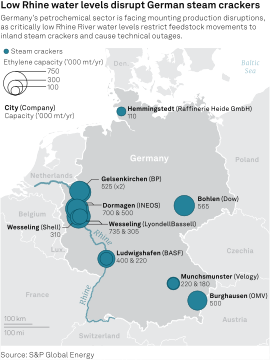
Naphtha, LPG barge logistics
Naphtha and LPG transport logistics along the key waterway have been severely impacted by low water levels, making it difficult to load full barges.
"It's looking quite bad," a naphtha trading source said.
Reduced vessel capacity has increased the likelihood of dead freight costs, raising the delivered cost of moving product into inland demand centers, market sources said.
"Dead freight, we're suffering a bit of that," said an LPG trading source.
As a result, participants said they have had to choose between bearing the cost of dead freight or opting for more expensive transport alternatives, such as rail cars or trucks.
"It's a trade-off between a rail car or dead freight," the LPG trading source added.
"Barges [are] too risky," a propane trader said.
Platts, part of S&P Global Energy, assessed the naphtha FOB Rotterdam barge price at $838.25/metric ton July 22.
Rhine water expected to fall
Rhine water levels are expected to fall to a record low of 25 centimeters at Kaub, the shallowest part of the Middle Rhine, July 25, according to German water authority WSV, sharply limiting barge movements on the waterway and disrupting the transport of naphtha to cracker sites in western Germany.
With insufficient naphtha deliveries, steam crackers were heard to be struggling to maintain operating rates, reducing the output of ethylene, propylene, crude C4, and downstream products, such as butadiene.
The low water level is creating a dual operational constraint. In addition to limiting feedstock logistics, reduced river flow and elevated water temperatures are making it more difficult for petrochemical operators to operate the water-cooling units associated with steam crackers effectively, forcing producers to consider further production curtailments, market participants said.
LyondellBasell declared force majeure on supply from its 170,000 metric tons/year butadiene extraction unit at Wesseling, Germany, effective July 16 and until further notice, according to a customer letter seen by Platts July 23. The outage was attributed to low Rhine levels, which restricted the movement of sufficient feedstock to crackers and reduced the production of crude C4 and butadiene needed to meet contractual obligations.
Shell's steam cracker at Wesseling has also been offline since early July, according to five market participants. The unit has a capacity of 310,000 mt/year of ethylene and 165,000 mt/year of propylene. The duration and cause of the outage could not immediately be established, and Shell did not immediately respond to Platts' request for official comment.
BP Gelsenkirchen fire
A fire at BP's Gelsenkirchen unit July 15 has also added to the uncertainty. The incident affected a diesel desulfurization unit at the Scholven site and was swiftly contained, with investigations ongoing and minor disruption expected.
Following the fire, some producers in the downstream phenol market were expected to rearrange short-term deliveries.
A phenol buyer said that, while it normally receives 15 rail cars, the producer it sources product from had cut supply to 10 in the equivalent delivery period, with the remainder to be fulfilled at a later date.
The Rhine is a critical supply route for German petrochemical and refining assets, particularly for naphtha moving from the Amsterdam-Rotterdam-Antwerp hub into inland production centers. Water levels in the Kaub have also already breached key operational thresholds.
The logistics disruptions are also feeding into market sentiment as producers and consumers enter August contract discussions. European C4 olefin producers and domestic consumers agreed to a Eur50 decrease month over month for August on July 23, the fourth day of negotiation, amid the production issues in Germany and surging naphtha spot prices.
