Agriculture, Livestock, Meat
September 29, 2026
US 90CL beef prices pressured by seasonal demand, high imports

Editor:
HIGHLIGHTS
Imports surge 40% despite tight US supply
Cow slaughter drops 15.5% through September
Seasonal demand decline pressures prices
US import prices for 90% chemical lean beef remained under bearish pressure Sept. 28 as seasonal demand slowed and import volumes rose, despite historically low domestic production of lean beef trimmings.
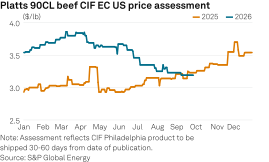
Platts, part of S&P Global Energy, assessed 90CL boneless, boxed and frozen beef delivered CIF Philadelphia at $3.19/lb Sept. 28, steady from a week ago, but down 4 cents/lb from the previous month and year.
Domestic supply remains tight
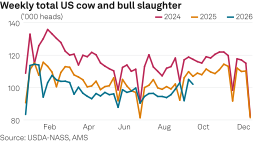
US cow and bull slaughter, the main source of lean beef, totaled an estimated 3.843 million head year-to-date through Sept. 26, down 4.5% from the same period in 2025 and 15.5% below the comparable period in 2024, according to the US Department of Agriculture.
Cow and bull slaughter was estimated at 102,000 head for the week ended Sept. 26, the USDA said. The total was down 2.9% from the previous week but 4% above the prior six-week average. It was down 4.6% from the corresponding week in 2025 and 13.1% below the same week in 2024.
Most of the increase in non-fed slaughter during 2026 has come from dairy cows, according to S&P Global Energy data based on USDA Weekly Actual Slaughter reports. Dairy cows accounted for about 53% of non-fed production during 2026, compared with about 47% during the same period a year earlier.
"Dairy cow slaughter broke from its recent strength, falling sharply from the week prior," S&P Global Energy CERA said in its Sept. 28 US Dairy Short-Term Outlook report. "Federal-inspected dairy cow slaughter totaled 50,100 head for the week ended Sept. 12, down 7.1% from a year earlier and 5,100 head below the previous week, the report said."
That was the largest year-over-year decline so far this year and only the sixth week in 2026 when weekly slaughter failed to exceed the year-earlier level, according to the report.
Slaughter levels also were affected by labor and operational issues, CERA said. Reports of US Immigration and Customs Enforcement activity in Kansas resulted in poor employee turnout and forced several regional facilities to reduce their run schedules, the report said. Packing issues related to heavy carcass and primal weights also limited throughput.
Imports rise
US imports of beef trimmings totaled 18,776 mt during the week ended Sept. 19, up 27.2% from the previous week, according to the USDA.
Imports totaled about 724,721 mt through Sept. 19, up 17.2% from the same period in 2025 and 40% above the comparable period in 2024, the USDA reported.
Australia supplied about 30.1% of US beef trimmings imports during 2026, followed by Brazil at 21.7%, New Zealand at 19.4% and Uruguay at 8.8%.
Analysts said demand for domestic lean beef trimmings typically declines during the fall, while ranchers begin culling cows and bulls before pasture becomes scarce during winter. That could increase domestic lean beef production and leave buyers searching for a floor in prices.
"Imports matter. Boneless beef stocks matter. But so does what buyers are willing to pay," said Shawn A. Sparks, managing director of The Sparks Group, in the Protein Pulse newsletter. "That's what matters going into Q4."
"We can have historically tight cattle supplies and still have a grind market that doesn't need to chase product," Sparks added. "Tight supply only matters to price when somebody needs the pounds."
Despite weak demand, cattle prices in exporting countries have remained high, limiting exporters' ability to meet lower US bids.
"Quiet on my side for the US trim market," a New Zealand beef trader said. "Chinese buyers have been very active and getting in early to secure the start of our season's production."
