Agriculture, Rice, Vegetable Oils, Biofuels, Grains, Non-Sugar Sweeteners, Oilseeds
September 23, 2026
Accelerated biofuel mandates risk tightening global crop markets through 2030: report

Editor:
HIGHLIGHTS
Biofuel push requires 36 million hectares by 2030
Corn, vegetable oil face supply competition
India diverts grain to meet ethanol targets
Accelerated biofuel mandates could intensify competition for corn, rice, sugar crops and vegetable oils through 2030, potentially raising agricultural commodity prices as governments seek to reduce their exposure to oil-supply disruptions, according to new research from Chatham House and the Forest Stewardship Council.
Expanded biofuel targets could generate demand for an additional 36 million hectares of cropland globally by 2030, an area roughly the size of Germany, the organizations said in a report released Sept. 22.
The report characterized the estimate as additional cropland pressure arising from announced mandates and targets, rather than a forecast that 36 million hectares of forests would be cleared.
Around 32 million hectares were used to produce biofuel feedstocks in 2023, with prevailing demand growth previously expected to require another 20 million hectares by 2030. The latest expansion in government targets could instead bring the total implied land footprint to approximately 68 million hectares, according to the research.
The increase could draw more agricultural commodities into fuel production at a time when food and feed markets are already exposed to adverse weather, higher input costs and geopolitical disruption.
"The real risk is that a short-term response to an energy crisis creates a longer-term shock in food markets," Subhra Bhattacharjee, director general of the Forest Stewardship Council, told Platts, part of S&P Global Energy.
"When the same crops are needed for both fuel and food, rapid biofuel expansion can push up prices and place even greater strain on land, water and communities already facing growing uncertainty."
Corn, vegetable oil demand
Corn markets would be among the most directly exposed to faster biofuel expansion because of the scale of existing ethanol demand.
Approximately 40% of US corn demand already comes from ethanol production, while new federal targets would raise overall biofuel requirements to record levels, including a 60% increase in biodiesel and renewable diesel output, the report said.
Further growth in corn-based ethanol could increase competition among fuel producers, livestock feeders, exporters and industrial users, particularly if supply is disrupted by poor weather or higher fertilizer costs.
Vegetable oil markets could face similar pressures from rising mandates for biodiesel and renewable diesel.
Palm oil, soybean oil and other edible oils are used by both food and energy markets, leaving prices sensitive to changes in mandated demand and feedstock eligibility.
India draws more grain into ethanol
The report said the biofuel push could raise agricultural incomes and returns for farmers, landowners and food producers. However, an accelerated shift could also make food markets less affordable and more vulnerable to weather events, transport bottlenecks and geopolitical tensions.
India was identified as an important example of growing competition between food, feed and fuel markets as the country expands its ethanol blending program.
Corn has become India's leading ethanol feedstock, while an additional 5.2 million mt of rice has been allocated for ethanol production, according to the research.
Rising ethanol demand has provided an additional market for Indian grain producers. However, the scale of future diversion will remain significant for domestic corn balances because the feed and starch industries also depend heavily on corn supplies.
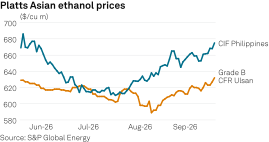
Greater use of rice and corn for ethanol could support farmgate prices, but may also expose processors and livestock producers to higher raw-material costs when harvests underperform or government stocks tighten.
The report's warning comes as agricultural markets face potential disruption from a severe El Niño event, which could affect crop production in several major growing regions.
Indonesia mandate reshapes palm demand
Indonesia's move towards a 50% palm oil biodiesel blend could have particularly significant implications for vegetable oil supply and trade.
The country has restricted exports of some feedstocks to secure sufficient domestic supplies for its expanding biodiesel program, the report said.
Further cultivation to meet fuel demand could increase pressure on forests directly or displace other agricultural production into environmentally sensitive areas.
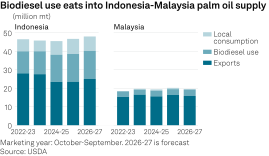
Higher domestic biodiesel consumption could reduce the volume of Indonesian palm oil available to export markets, depending on production growth and the feedstock requirements of the mandate. That could influence global vegetable oil trade and encourage substitution among palm, soybean, sunflower and rapeseed oils.
Biofuel expansion could also become more expensive for governments if higher crop and energy-input costs squeeze producer margins and increase the subsidies required to support mandated volumes, report said.
Platts assessed October-loading crude palm oil CFR West Coast India at $1,272.50/mt Sept. 23, down $5.50/mt day over day,
