Agriculture, Energy Transition, Refined Products, Biofuels, Hydrogen, Renewables, Gasoline, Oilseeds, Vegetable Oils
August 21, 2026
Argentina weighs higher ethanol, biodiesel mandates as SAF gains traction

Editor:
HIGHLIGHTS
Senate reviews bills boosting blend levels
Ethanol output hits 1.35 billion liters
Biodiesel exports drop to 2007 lows
Argentina is considering its most significant biofuels policy overhaul in years, with lawmakers debating legislation that would increase ethanol and biodiesel blending mandates while formally opening the door to sustainable aviation fuel and renewable diesel markets.
According to the US Foreign Agricultural Service report released Aug. 20, the Argentine Senate is reviewing multiple biofuels bills that would replace the current Biofuels Law 27,640 and reshape the country's domestic biofuel market.
The proposed reforms would raise the national ethanol mandate from 12% to 15 % and increase the biodiesel blending requirement from 7.5% to 10%, while gradually liberalizing parts of the domestic market.
The legislation would also explicitly authorize the commercialization of sustainable aviation fuel, renewable diesel (HDRD), hydrogen and biomethane, marking the first time advanced biofuels have been formally incorporated into Argentina's biofuels framework.
"The reform is the first national proposal to give SAF and renewable diesel an explicit legal status inside Argentina's biofuels framework," the report said.
Ethanol demand rises
The debate comes as Argentina's ethanol sector continues to expand.
Fuel ethanol production is forecast to reach a record 1.35 billion liters in 2026, driven by rising domestic demand, new corn ethanol capacity and regulatory changes that now permit voluntary gasoline blends of up to 15% above the country's mandatory blending requirement.
In March, Secretariat of Energy Resolution 79/2026 increased the maximum oxygen content allowed in gasoline and formally authorized distributors to market gasoline containing up to 15 % ethanol through freely negotiated agreements. The mandatory blend remains 12%.
Corn ethanol is expected to account for approximately 60% of total production, with sugarcane ethanol supplying the remainder. Strong domestic consumption is expected to reduce export availability.
Biodiesel exports decline
Argentina's biodiesel industry is facing a different challenge.
Biodiesel production is forecast at nearly 1.2 billion liters in 2026, up about 8% year over year as domestic blending requirements support consumption. However, exports are expected to fall to their lowest level since 2007 as local demand absorbs more production and overseas market access remains constrained.
The report by the FAS, a branch of the US Department of Agriculture, estimates that Argentina's biodiesel sector will operate at only about 27% of its installed capacity despite higher domestic demand, highlighting the extent of unused production capability.
A key point of contention in the Senate debate is whether to maintain protections for small and medium-sized biodiesel producers, which currently dominate supply into the domestic blending mandate. Large integrated soybean processors have pushed for greater market access, while smaller producers argue the existing framework is necessary for their survival.
SAF opportunities emerge
For aviation fuel markets, the proposed reforms could create a pathway for Argentina to leverage its large agricultural base to produce advanced biofuels.
The report notes that Argentina is positioning itself as a future production hub for SAF and renewable diesel, with lawmakers considering provisions that would allow unrestricted commercialization of both fuels for domestic use and export.
Potential feedstocks include used cooking oil, animal fats and other waste-based materials compatible with hydroprocessed esters and fatty acids pathways. However, Argentina currently lacks a dedicated regulatory framework for SAF production and has not yet obtained CORSIA-related certification for domestic production.
The USDA report notes that the introduction of policies supporting SAF and other advanced biofuels could significantly improve investment prospects for the country's oilseed and biofuels industries.
The USDA described Argentina's biofuels sector as entering a "period of significant policy transition" as lawmakers seek to balance energy security, agricultural development and decarbonization objectives.
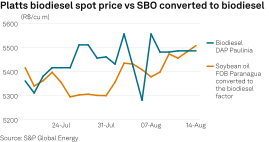
Platts, part of S&P Global Energy, assessed biodiesel FOB Argentina Up River at $1,617/mt on Aug. 20, up $19/mt on day.
