Energy Transition, Maritime & Shipping, Agriculture, Carbon, Vegetable Oils, Biofuels
August 11, 2026
Brazilian biodiesel exports gain traction as alternative to domestic instability

Editor:
HIGHLIGHTS
Brazil biodiesel exports in H1 up 20% on year
Plants seek EU premiums for waste feedstocks
Producers diversify amid domestic instability
Brazilian biodiesel producers are paying closer attention to export opportunities and seeking the international certifications needed to access overseas markets, as they look to diversify routes for the biofuel amid domestic instability.
Delays to scheduled increases in Brazil's biodiesel blending mandate, rising idle capacity and the prospect of securing premiums abroad for biodiesel made with lower carbon intensity and waste-based feedstocks are among the main reasons cited by Brazilian plants for the shift.
However, many market participants are still working out how best to carry out such operations. In addition to having to seek certification to sell into foreign markets, these players are also grappling with challenges posed by volatility linked to global geopolitical conflicts, such as the war in the Middle East, which has driven up freight rates.
The move toward foreign markets is already reflected in the latest data from Brazil's Secretariat of Foreign Trade (Secex). Between January and July 2026, Brazil exported about 76,000 cubic meters of biodiesel, more than 20% above the same period last year and well above volumes recorded over the previous three years.
In recent years, the period between August and December has seen the strongest pace of biodiesel exports. Given that the flow for 2026 is already running above levels observed in previous years, if the country maintains its current export pace, it is possible that it will surpass historical highs.
The data also shows a broader range of destinations. During the same period between 2022 and 2024, Brazilian biodiesel exports were concentrated in four or five global hubs. That number rose to six destinations in 2025, while exports this year have already reached nine different countries. However, the Netherlands, Switzerland and Belgium, which have been among the key destinations in recent years, continue to hold the largest share of exports.
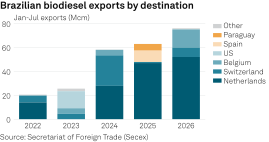
In July 2026, Brazilian exports were mainly concentrated in two shipments to the Netherlands, according to Secex figures. The larger shipment, totaling 6,000 cubic meters, originated in Lapa city in Paraná state, where Potencial's plant is located, and was valued at $7.25 million. The second shipment departed from Candeias city in Bahia state, where Petrobras Biocombustível (PBio) operates one of its plants, carrying 5,000 cubic meters and valued at $5.8 million.
PBio has exported biodiesel on a recurring basis and is one of three market participants that have shipped the biofuel more regularly in 2026. The Paraná cargo, meanwhile, points to the entry of new players into the export market, with Potencial seeking to diversify routes for its biodiesel.
Low carbon intensity premiums
Potencial is not alone. At least four other biodiesel producers in southern Brazil and the Center-West have approached brokers and sounded out the market as they seek to understand exports and begin structuring such operations, market sources told Platts.
The main focus for these new entrants has been biodiesel produced from waste feedstocks, such as used cooking oil (UCO) and technical corn oil (TCO). Such products can command premiums of $20-$50 per metric ton in Europe due to their lower carbon emissions, according to market participants.
Platts, part of S&P Global Energy, assessed the Brazilian used cooking oil ex-works São Paulo state price for one- to 20-day delivery at 5,200 reais/mt on Aug. 10, up 100 reais/mt day over day. Meanwhile, Brazilian technical corn oil ex-works Mato Grosso state price for one- to 20-day delivery was assessed at 6,340 reais/mt on Aug. 10, unchanged from the previous session.
"We are interested in exporting and have already obtained certification for the European market to diversify our operations somewhat," said a producer from Mato Grosso state. "We plan to test the operation later this year, but it has to be biodiesel made from waste so we can secure the premium; otherwise, the operation isn't worthwhile."
A brokerage company told Platts it is beginning to structure biodiesel export operations within its portfolio, driven by growing interest from local plants seeking to obtain quality and origin certificates and subsequently carry out mass balance analysis for exports to the European market.
Brazilian distributors acknowledge that delays to biodiesel blending increase and demand growing more slowly than production have pushed plants to seek route diversification. They do not expect domestic supply shortages, as export volumes are still likely to remain marginal. However, they question how sustainable this operation will be in the long term.
"Today, the economic landscape favors this operation, with the war in the Middle East creating conditions that boost biofuels and the domestic market failing to offer a premium for the product, but if these variables change, will this favorable economic scenario hold up to absorb the Brazilian biodiesel?" said a major distributor.
