


Metals & Mining Theme, Ferrous
November 11, 2025
WCA warns European decarbonization policies could triple cement prices

HIGHLIGHTS
Carbon pricing to become a selling imperative for rising costs
Global demand for cement seen at 3 bil mt/year in 2050
China’s demand seen at 1.2 bil mt in 2035, 900,000 mt in 2050
The World Cement Association sees cement prices tripling or quadrupling under current European decarbonization policies, said Emir Adiguzel, WCA director, at the European Cement Decarbonization Summit on Nov. 10.
The decarbonization measures will place a significant cost burden on the construction sector and end consumers, with carbon pricing becoming a selling imperative for price increases across the industry, Adiguzel said.
The cement sector requires $200 billion in investment by 2050 to achieve full decarbonization, according to the WCA.
While the cement industry faces challenges such as rising energy costs and growing global overcapacity, most carbon-related costs will be passed to consumers, Adiguzel added.
WCA's long term forecast places global cement demand at around 3 billion metric tons per year in 2050.
Demand for clinker, the key ingredient contributing to carbon emissions, is expected to decline to 1.5 billion mt/year by 2050, according to the WCA.
China's demand seen declining
The WCA forecasts China's demand to decline before reaching stability.
Cement demand in China has declined by almost 25% from 2.4 billion mt in 2020 to 1.8 billion mt in 2024, representing a 7% annual decrease, according to a report by WCA.
"We expect demand to continue to fall by 3.9% per year to 1.2 billion mt in 2035 and then at a slower 1.6% per year to 900,000 mt by 2050, reflecting both lower per capital consumption and a decline in population," according to the report.
China's property sector continues to face pressure, with a slowdown in infrastructure investment growth expected to continue in the near term.
New home construction starts, a key indicator of steel demand, decreased 19% year over year from January to September, down 70% from the same period of 2021.
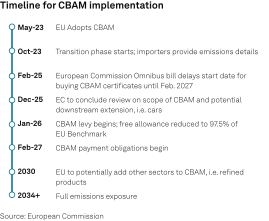
CBAM and decarbonization levers
Between 2019 and 2023, leading global firms reduced carbon intensity from an average of 700 kg Co2/t to 640 kg Co2/t.
The WCA highlighted four key levers for decarbonization that remain largely underutilized by the sector, including energy efficiency, increased use of biogenic fuels, reduced clinker factor with the adoption of LC3, natural pozzolans, supplementary cementitious materials, and carbon capture, storage, electrification solutions.

Adiguzel raised concerns about the effectiveness of the European Union's Carbon Border Adjustment Mechanism (CBAM) in incentivizing non-scheme exporters to reduce their carbon footprint.
"Cement is an irreplaceable material, vital for the infrastructure that underpins a green economy," he said.
Platts, part of S&P Global Energy, assessed Cement Clinker FOB Turkey at $44.5/mt Nov. 6, up 50 cents/mt from the previous assessment.
The assessment was down $1/mt from the price of $46/mt six months ago on May 8.

Editor: