Agriculture, Meat
November 05, 2025
MONTHLY ASIA PORK WRAP: Oct prices fall as German exports resume to South Korea

HIGHLIGHTS
Reopening of German pork market to South Korea
Malaysia first approved Brazilian pork imports
ASF in Taiwan
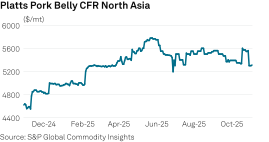
North Asia pork belly prices remained edged lower in October following the reopening of the German pork market to South Korea
Platts North Asia pork belly prices dropped $80/mt, or 1.48%, from Oct. 1 to $5,310/mt on Oct. 31.
Reopening of German pork market
The highly anticipated resumption of German pork exports to South Korea began on Oct. 22 following a previous ban due to an outbreak of foot-and-mouth disease, as reported by the Ministry of Agriculture, Food and Rural Affairs.
Prior to the reopening of the German pork market, many European suppliers had been aggressive in making offers; however, buyers have chosen to hold off on purchasing decisions until the German market officially reopens.
Traders expect that German pork products will start arriving in South Korea between late December and early January at the earliest. This reopening has shifted importers' preferences from other European origins to Germany, as South Korean consumers favor German belly cuts due to their superior meat texture.
Since the reopening of the German pork market on Oct. 22, there has been about a 10% decrease in the offer prices of single-ribbed belly cuts from other origins entering South Korea compared to months ago, according to a trader based in South Korea.
A South Korean importer said that the won weakened against the US dollar by 1.6% in October, making it challenging to make import decisions. This decline increases the cost of buying goods from abroad, affecting pricing strategies for importers.
Malaysia approves Brazilian pork imports
Malaysia approved two Brazilian meat-processing plants to supply pork to the country, with the certification valid for a period of three years, according to a statement on Oct. 14.
A trader based in Malaysia said the approved Brazilian plants also hold certifications for exports to Japan and South Korea, adhering to stricter specifications and standards. This commitment to higher quality requirements enhances their premium status, leading to elevated pricing.
Additionally, a buyer in Malaysia said that current prices for Brazilian pork are higher compared to European alternatives, prompting them to wait for further approvals of additional plants. "Pork loin from Belgium is cheaper than that from Brazil," the buyer said.
The narrowing price gap between European and Brazilian pork is attributed to declining prices in Europe, according to the same trader.
ASF in Taiwan
The recent detection of African Swine Fever (ASF) cases in Taiwan on Oct. 22, specifically at a pig farm in Taichung with a capacity of 300 pigs, has triggered a surge in demand from local buyers, according to a Southeast Asia-based trader.
The same trader said that import inquiries have increased since the incident, as stakeholders seek to secure alternative sources of pork to mitigate the potential impact of the outbreak on local supplies.
The current ASF outbreak in Taiwan appears to be worsening, as highlighted by an Asia-based corn trader.

Editor: