ECONOMICS COMMENTARY — 19 Nov, 2026
Five things to watch in the November Flash PMIs

The November PMI surveys are released as the Fed, ECB, Bank of England and Bank of Japan all expected to hike interest rates at their December meetings according to the financial markets.
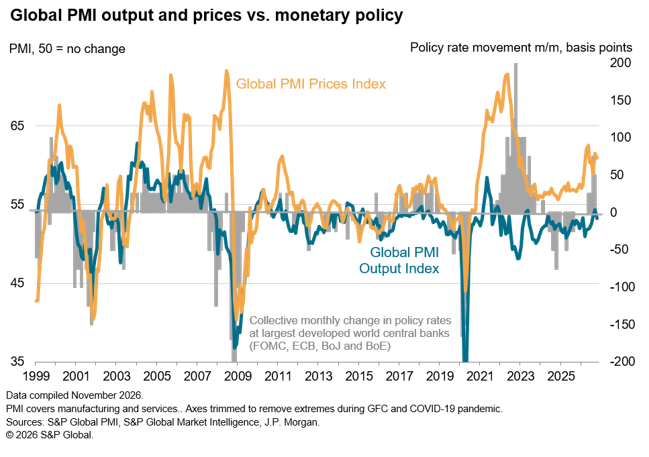
Recent surveys have encouraged hawkishness among policymakers across the developed markets, signalling a combination of strong economic growth and elevated inflation. However, with all central banks clearly stressing the need to be data dependent, there will be some key themes to be watched in the latest surveys:
1. Are cracks starting to appear in global growth?
October's PMI data signalled one of the strongest periods of growth seen since 2022, but the pace of expansion eased from September. The November surveys will help determine whether that slowdown was temporary or an early sign that higher interest rates and persistent inflation are beginning to weigh on activity.
Some cooling of the recent impressive growth spurt might be expected in November, given some of the financial market volatility that we‘ve seen and the stubbornly elevated inflationary pressures that continued to be recorded by the PMIs in October, but – perhaps more importantly – growth should be slowing amid the accompanying tightening of monetary policy and increasingly hawkish rhetoric seen among the major central banks.
2. Can the US continue to outperform other major economies?
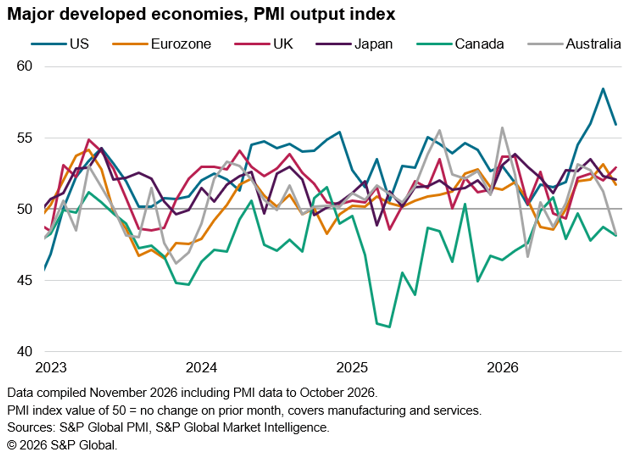
By far the strongest output and employment growth in recent months has been seen in the US, and the November flash PMIs will provide the first snapshot of how businesses have responded to the US mid-term elections and the changing political landscape they offer for the year ahead. Future output expectations indices will be key to assessing the change in business sentiment.
3. Is AI and technology spending still driving expansion?
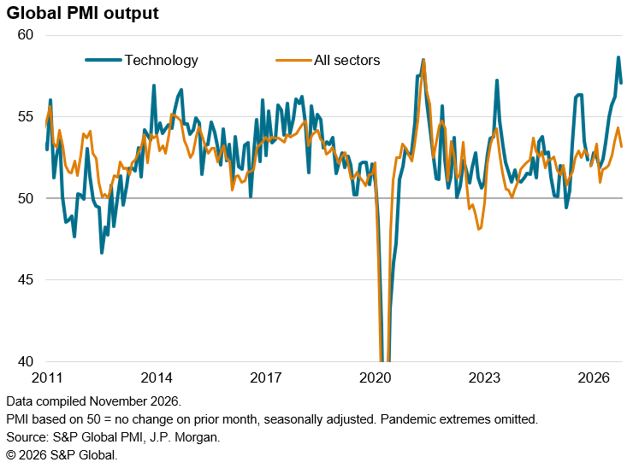
A key driver of the recent economic resilience around the world has been the surge in AI-related spending, but have recent concerns over the AI-build out started to rein in this expansion? Tech growth has far outpaced rates of expansion in all other major sectors tracked by the PMIs in recent months, but did slow markedly in October.
4. Can the UK's growth momentum continue?
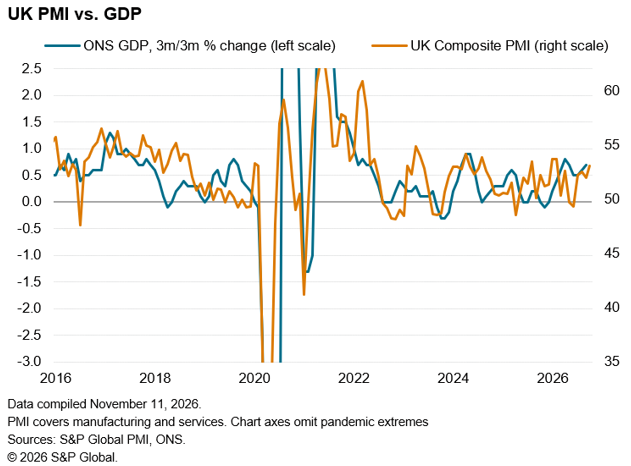
Strong third quarter GDP growth in the UK was signalled ahead by the PMI, and linked in part to improved business sentiment around government policy. Most encouragingly, this growth spell has been accompanied by the best hiring situation since the Budget of 2024. November’s PMI will help gauge whether the UK growth spurt has been sustained into the fourth quarter, which would likely cement a December rate hike.
5. Is political uncertainty beginning to weigh on the eurozone?
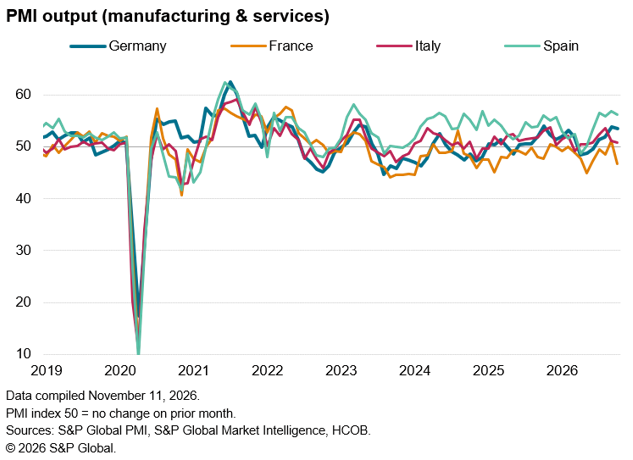
A marked slump in business activity in France during October coincided with heightened social unrest, contrasting with very strong growth in Spain and a robust expansion in Germany. However, recent weeks have also seen a national strike in Spain and protests in Germany, as well as elevated bond yields for some member states. We will be eager to see if these events have disrupted eurozone growth and subdued business confidence, as one of the few things that might derail another rate hike by the ECB is a potential marked deterioration the growth outlook.
November flash PMI surveys for the US, eurozone, UK, India and Australia are released on 23 November, followed by Japan on 24 November.
© 2026, S&P Global. All rights reserved. Reproduction in whole or in part without permission is prohibited.
Purchasing Managers' Index™ (PMI®) data are compiled by S&P Global for more than 40 economies worldwide. The monthly data are derived from surveys of senior executives at private sector companies, and are available only via subscription. The PMI dataset features a headline number, which indicates the overall health of an economy, and sub-indices, which provide insights into other key economic drivers such as GDP, inflation, exports, capacity utilization, employment and inventories. The PMI data are used by financial and corporate professionals to better understand where economies and markets are headed, and to uncover opportunities.
Read our latest PMI commentary here.
This article was published by S&P Global Market Intelligence and not by S&P Global Ratings, which is a separately managed division of S&P Global.
Theme
Location
Products & Offerings