ECONOMICS COMMENTARY — 11 Nov, 2026
Interest rates rise in the major developed economies amid stubbornly elevated inflation

Global inflation remained elevated in October according to S&P Global’s PMI data, with prices charged for goods and services rising at one of the fastest rates seen over the past four years. High prices again widely reflected the pass-through of high costs, notably for fuel and energy, to an increasing number of sectors, with pricing power helped in many cases by demand exceeding supply.
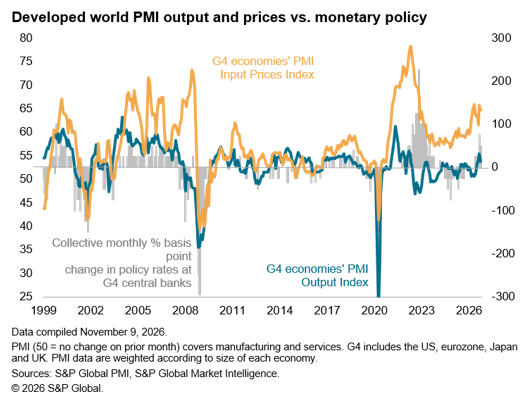
Price growth remained above central bank targets in all major developed economies, the survey data adding to policymaker concerns about the stubbornness of inflation amid resilient economic growth, and encouraging further hawkish policy stances to be adopted. The FOMC and ECB have both now hiked policy rates this year, joining earlier hiking cycles commenced by the Bank of Japan and Bank of Australia. November has also now seen the Bank of England hike rates for the first time in over three years and the Bank of Canada turn more hawkish.
Cooling, but stubbornly high, inflation
Stubbornly high inflation was again signalled in October according to PMI survey data. Measured across both goods and services, the PMIs showed average prices charged rising worldwide at an elevated rate again in October. Although the rate of inflation moderated slightly, and remained well below recent highs seen earlier in the year, October’s price growth was among the highest seen over the past four years.
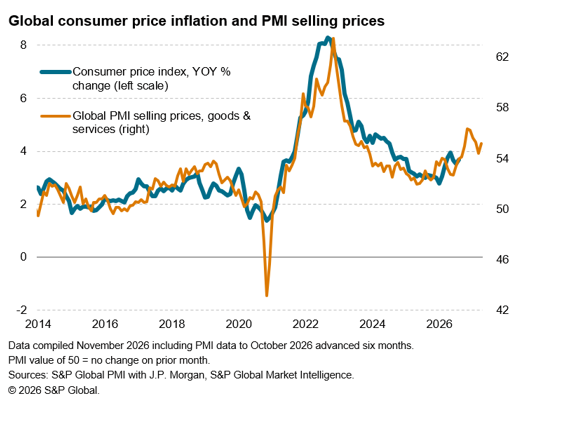
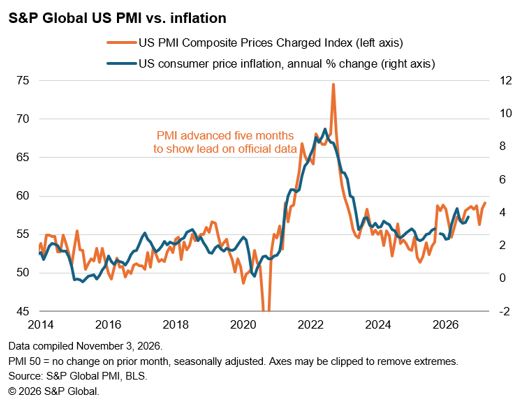
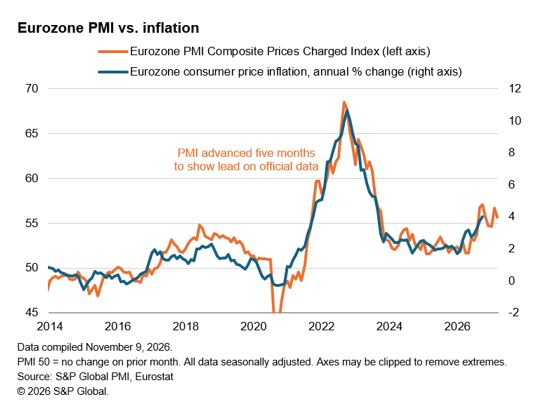
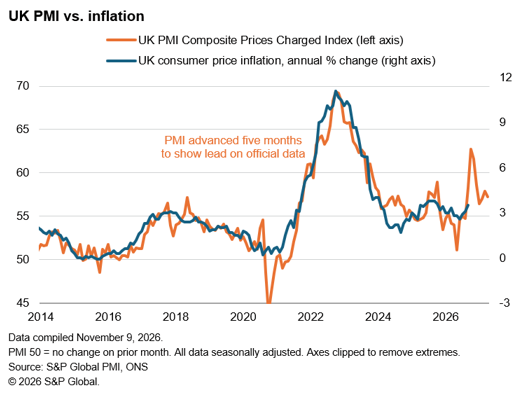
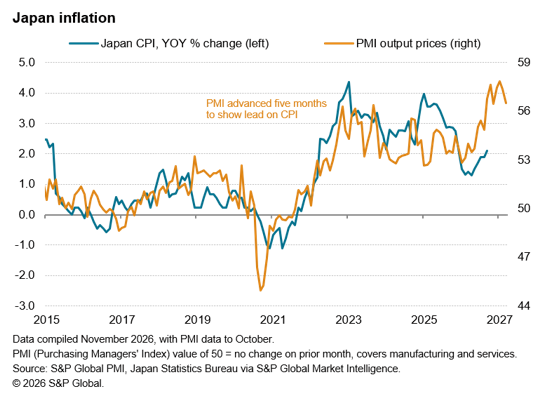
This can be observed by comparing the PMI input cost and selling price indices, at the global level, with the official annual consumer price inflation data over the past decade, where a 90% correlation can be found, importantly, with the PMI gauges leading the official data by six months. Hence, the PMI indicators provide advance warning not only of changes in the trajectory of inflation but also of the near-term inflation rate.
To put it in numbers, official data on inflation indicated that consumer prices rose globally at an annual rate of 3.9% in September, which compares with a pre-pandemic decade average of 2.8%, and the leading indicators of inflation from the PMI data hint that it could breach 4% in the near term, staying elevated into 2027.
Inflation upturn led by transport costs
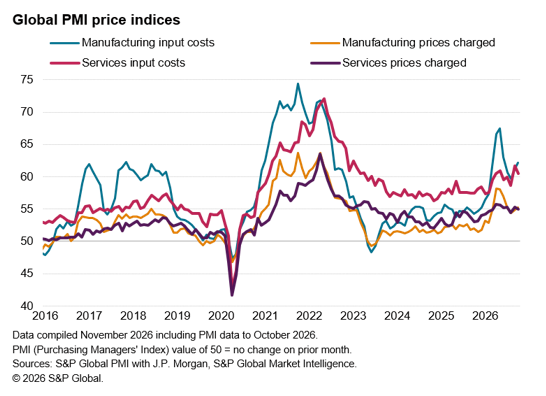
Similar rates of global selling price inflation were observed for goods and services, thanks again principally to higher energy, fuel and transport costs resulting from the war in the Middle East. However, higher interest rates and staffing costs were also widely reported as additional inflation drivers.
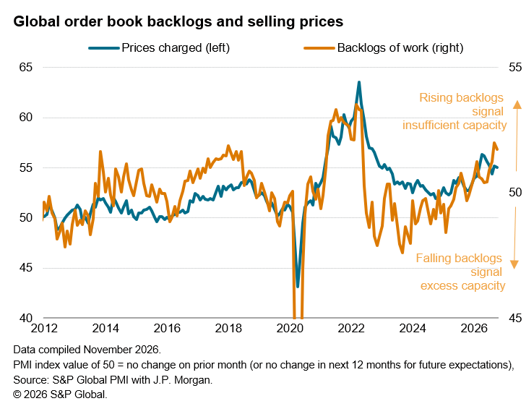
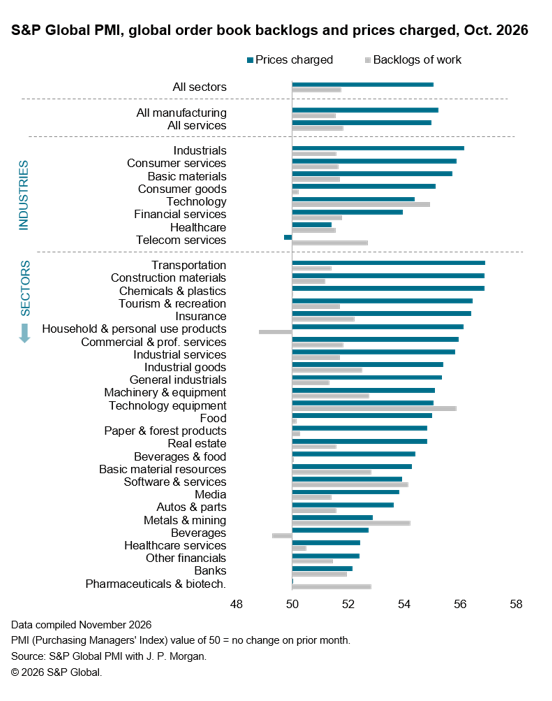
However, a key element of the current inflation cycle is the imbalance of supply and demand for many goods and services. Shortages have contributed to rising backlogs of work in recent months, and hence handed pricing power to suppliers across a wide range of sectors.
The steepest price rises globally were seen for transportation, followed by construction materials. Only in telecom services were lower prices seen, though pharmaceutical & biotech prices were unchanged.
Above-target price growth in all major economies
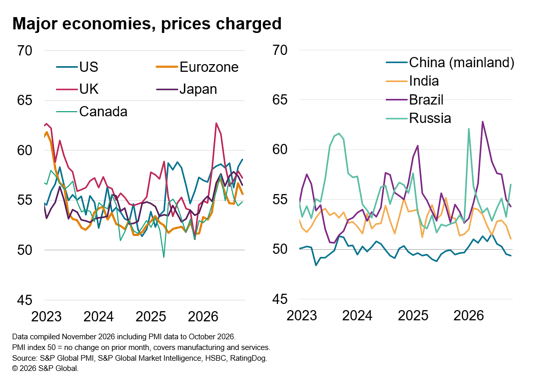
Among the major economies, the US continued to report the steepest rate of selling price inflation in October, as price growth hit the highest since August 2022 to signal a steep rise in consumer prices. Inflation also picked up pace in Canada and Australia.
The rate of increase meanwhile cooled in the UK, Japan and the eurozone, though in all cases remained at elevated levels indicative of headline inflation running ahead of central bank targets.
Of the four major emerging markets, rates of inflation cooled in both Brazil and India, the latter notably down to a four-and-a-half-year low, while prices fell in mainland China for a second successive month. In contrast, price growth hit a nine-month high in Russia.
© 2026, S&P Global. All rights reserved. Reproduction in whole or in part without permission is prohibited.
Purchasing Managers' Index™ (PMI®) data are compiled by S&P Global for more than 40 economies worldwide. The monthly data are derived from surveys of senior executives at private sector companies, and are available only via subscription. The PMI dataset features a headline number, which indicates the overall health of an economy, and sub-indices, which provide insights into other key economic drivers such as GDP, inflation, exports, capacity utilization, employment and inventories. The PMI data are used by financial and corporate professionals to better understand where economies and markets are headed, and to uncover opportunities.
Read our latest PMI commentary here.
This article was published by S&P Global Market Intelligence and not by S&P Global Ratings, which is a separately managed division of S&P Global.
Theme
Location
Products & Offerings