Crude Oil, Refined Products
September 10, 2025
Sudan's Khartoum refinery hit in wave of drone strikes: report

HIGHLIGHTS
Strikes in capital blamed on Rapid Support Forces
Sole oil refinery, electricity substation said to be hit
Army retook refinery from RSF in January
Sudan's sole oil refinery, located outside Khartoum, and an electricity plant were struck in a wave of drone strikes on the country's capital on Sept. 9, according to local reports.
The attacks, blamed on the paramilitary Rapid Support Forces, are the latest escalation in its conflict with the Sudanese army, which began as a feud between rival generals in early 2023.
The Sudan Tribune, a local news outlet, reported explosions at the al-Markhiyat electricity substation and in al-Jaili, location of the damaged 100,000 b/d Khartoum refinery, as well as attacks on military targets in the city. An electricity blackout was reported in the neighboring city of Omdurman.
Attempts to reach Sudanese officials to confirm the status of the refinery were unsuccessful.
It is not the first missile attack on the key plant, which was seized by the RSF at the start of the conflict, but ultimately reclaimed by the Sudanese Armed Forces following a major battle in January. The SAF then went on to make major gains in Khartoum.
The RSF, in turn, appears to have stepped up drone attacks in recent months, with the group allegedly behind strikes on Port Sudan -- the country's wartime capital and oil export hub -- as well as on oil infrastructure, namely the Heglig oil hub on Aug. 30.
The brunt of the recent fighting has occurred in the el-Fasher area of Darfur in southwestern Sudan, an RSF stronghold.
The al-Jaili refinery, which previously met around 66% domestic demand for refined products in the East African country, has suffered significant damage since the conflict began, prompting regular fuel shortages.
In May 2024 it was damaged by an explosion, with the two warring sides blaming each other. In January, eyewitnesses reported seeing a blaze at the plant, while an army spokesman said crude was leaking from storage tanks, but that the control room was secure.
An engineering assessment was due to take place to determine the extent of the damage and establish a timeline for the restart, a Sudanese government source familiar with the matter said at the time.
Fuel import spike
Sudan has imported 51,000 b/d of refined products on average in 2025, the highest level in over a decade and up from 36,000 b/d in the year before the conflict began, according to data from S&P Global Commodities at Sea.
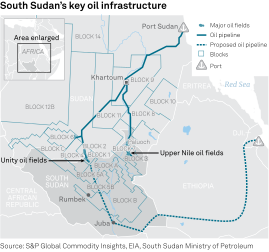
The al-Jaili refinery typically processes Nile and Dar Blend crude from Sudan and neighboring South Sudan -- which is landlocked and relies on a pipeline through Sudan to export its crude. That pipeline, which went offline last year due to a rupture, also fed the refinery.
The two countries pumped a combined 170,000 b/d of oil in July, according to the latest Platts OPEC+ Survey from S&P Global Energy, having seen the conflict dent output.
