Crude Oil, Refined Products
April 07, 2026
South Korea allows refiners to swap delayed crude for immediate SPR supply
HIGHLIGHTS
Swap mechanism addresses delays in Middle East shipments
Swap window covers April and May, extendable month-by-month
Dubai price structure elevated amid supply, logistical disruptions
The South Korean government will enable major domestic refiners to temporarily access a range of crude grades from the national strategic petroleum reserves for immediate processing, in exchange for spot and term Middle Eastern crude cargoes that are scheduled to arrive in the future, according to an industry guidance report issued by the Ministry of Trade, Industry and Resources for the refining industry and subsequently reviewed by Platts on April 6.
The government's crude swap mechanism is designed to mitigate crude supply disruptions—particularly those caused by tanker delays in the Strait of Hormuz—by allowing refiners to borrow equivalent crude volumes from state reserves and return them once their originally procured Middle Eastern cargoes are delivered, according to the industry guidance report.
Platts obtained the official MOTIR industry guidance report from feedstock managers at refiners in Ulsan and Seoul on April 6. When contacted on April 7, MOTIR's media relations team confirmed that the details could be publicly reported.

Under the "swap" arrangement, the government, via state-run Korea National Oil Corp., can immediately lend crude from the SPR to a refiner that has already secured crude overseas but is facing a timing gap before that crude arrives, MOTIR said in the industry guidance report.
"The intent is to lend the same crude grade, or a close substitute, so the refinery can maintain normal throughput and product slate without operational disruption," a feedstock and crude slate strategist at a major South Korean refiner based in Ulsan told Platts on April 6.
This is especially useful when a refiner's Middle East sour crude cargo arrivals are seriously delayed, according to feedstock managers at S-Oil and another refiner based in Seosan.
The disruptions in tanker arrivals from the Persian Gulf continued to keep the Middle Eastern crude benchmark Dubai price structure elevated as Platts assessed the spread between cash Dubai and same-month Dubai swap at a record-high monthly average of $37.66/b in March.
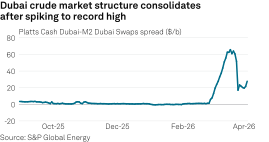
The spread was last assessed at $27.68/b on April 6.
Asia's third-biggest crude importer received 124.28 million barrels from the Middle East in the first two months, making up 70% of 177.31 million barrels of total crude imports over January-February, the latest data from KNOC issued March 27 showed.
Swap procedures
Refiners can simply submit their shipping/nomination documents, such as bills of lading, loading schedule, spot or term cargo purchase deal paperwork to show crude has been procured and is scheduled to arrive, MOTIR said in the report.
The swap agreement window period is for April and May, with the ability to extend month-by-month as needed, according to MOTIR.
Once paperwork is verified, KNOC would lend crude from the SPR to bridge the delivery gap. The refiner then repays the government when the delayed cargo discharges at a South Korean port, returning the same grade where possible or an agreed equivalent, according to MOTIR.

"The arrangement is intended to cover short-term transit delays and can be implemented without triggering an outright SPR release," MOTIR said in the guidance report.
Fuel supply responsibility
By helping refiners sustain runs, the swap supports a stable domestic fuel supply and reduces knock-on tightening in Asia-Pacific refined product markets that rely heavily on South Korean exports, according to middle distillate product managers at two refiners based in Ulsan and Yeosu, as well as MOTIR's report.
Major local refiners have a significant responsibility to ensure that adequate supplies of essential liquid fuels are available domestically, while the refining sector must also strive to meet supply commitments to Asia-Pacific customers, as South Korea is the region's leading supplier of clean oil products, according to product marketing managers at three refiners, including S-Oil, who spoke to Platts throughout March and as of April 7.
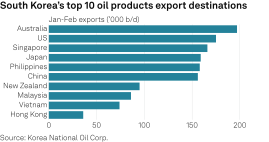
South Korea exported 72.47 million barrels of gasoline, diesel and jet fuel combined over January-February, up 14.9% from 63.08 million barrels sold during the same period a year earlier, KNOC data showed.
