Agriculture, Energy Transition, Biofuel, Renewables
January 09, 2026
China domestic UCO market rebounds amid ample domestic feedstock supply
HIGHLIGHTS
Chinese SAF producers pivot to HVO amid SAF approval wait
Weak export demand diverts UCO to domestic SAF plants
The China domestic used cooking oil market is showing signs of recovery in early 2026, reversing its earlier contraction as market dynamics shift. This improvement was driven by market participants selling UCO feedstocks to domestic sustainable aviation fuel plants. Chinese SAF producers have pivoted to hydrotreated vegetable oil production while awaiting SAF approval, according to market participants.
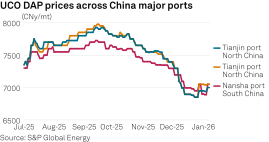
On Jan. 9, Platts, part of S&P Global Energy, assessed UCO DAP prices at major Chinese ports as follows: Tianjin Port, North China at Yuan 7,000/mt, up 2.19% from the recent low of Yuan 6,850/mt on Dec. 23; Nantong Port, East China at Yuan 7,050/mt, up 2.92% from the same low; and Nansha Port, South China at Yuan 7,050/mt, up 2.32% from Yuan 6,890/mt on Jan. 5.
In September, prices reached yearly highs before declining: Tianjin Port rose to Yuan 7,925/mt on Sept. 23, then fell 7.95% to Yuan 7,295/mt by Dec. 4; Nantong Port peaked at Yuan 7,975/mt on Sept. 18, dropping 8.53% to Yuan 7,295/mt; and Nansha Port climbed to Yuan 7,725/mt on Sept. 17, before falling 6.86% to Yuan 7,195/mt on Dec. 4.
Domestic feedstock availability
A representative from a trading house noted that a significant portion of UCO supplies is currently being directed to SAF plants, as demand from major export markets remains weak.
"We've heard there is some demand for feedstocks from SAF plants, which might help support domestic UCO prices," the representative said.
A Chinese UCO producer reported a slight increase in domestic UCO prices, particularly for premium UCO. "I think there might be some movement in the export market in late January. The market should see some activity before the upcoming Lunar New Year celebration, and I believe there will still be some transactions taking place," the producer said.
An East China-based UCO supplier reported that, following recent tenders from SAF plants, premium UCO feedstock prices had increased slightly. European buyers continue to see Chinese UCO as too expensive. Although SAF producers' buying prices have declined compared to last year, pressure from European buyers is even greater. As a result, some sellers now prefer to supply domestic SAF plants, given the subdued demand from export markets such as Europe.
"Despite ongoing plant maintenance, some facilities are still actively procuring feedstocks," a UCO collector said, noting that North China UCO prices remain supported even with maintenance activities.
Chinese SAF producers pivot to HVO
According to market participants, despite the imposition of antidumping duties from Europe, HVO production is still profitable due to high market prices -- even after accounting for duties and other costs. Additionally, domestic feedstock prices in China are currently below previous highs, making large-scale HVO production viable for producers.
This explains why, before obtaining SAF whitelist approval, producers are focusing on HVO production. This strategy enables them to maintain their operations and generate profits while awaiting SAF approval.
Rather than waiting, companies are seizing current opportunities in the international HVO market to expand production capacity, boost cash flow, and fortify their supply chains.
The European sustainable aviation fuel market concluded the year in a subdued, bearish state, with activity muted over the holiday period.
The key market driver heading into 2026 was a significant widening of the price spread between hydroprocessed vegetable oil and SAF, prompting producers to prioritize HVO output.

Editor: