Electric Power, Energy Transition, Emissions
July 07, 2025
Storms, flooding affect Texas, Mid-Atlantic power demand; long-term effects unclear
By Markham Watson and Nicole Baquerizo
HIGHLIGHTS
Hard-hit Texas area had few load centers
Residents may move, rebuilding takes time
Tropical storm cut peakloads
Deadly flooding in the Texas Hill Country and Tropical Storm Chantal in the Carolinas has affected power demand and pricing in both regions, about which industry observers differ regarding longer-term power market impacts.
Various news sources on July 7 reported more than 80 dead as a result of July 4 flash flooding across Kerr County, Texas, and along the Guadalupe River, north and west of San Antonio in the Electric Reliability Council of Texas' South Hub region.
ERCOT's reported peakload on July 5 fell below 65.9 GW, 6.2% below its previous five-year average for that date, while CustomWeather reported ERCOT's population-weighted temperatures fell only about 1.7 degrees below the long-term average.
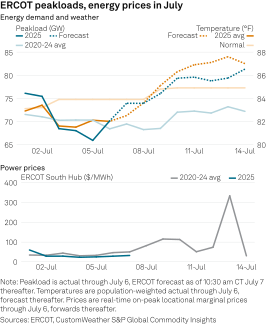
ERCOT South Hub real-time on-peak locational marginal prices fell to about $24.25/MWh July 4-5, which was about 24% less than the 2020-24 average of more than $31.75/MWh.
"This tragedy is a big deal for loss of life," said Evan Caron, founding partner at Dallas-based battery development firm HGP Storage. "However, there are very few demand centers in that part of the state. This should have very little impact to actual demand loss. However, with increased rain comes reduced drought feedback. Increases in soil moisture should cap our daytime highs but increase our evening temperatures. The 'net-net' should be reduced overall demand due to saturated ground."
In a July 7 email, Nainish Gupta, director of regulatory compliance at POWWR, an energy management and software company, said he expects "power demand to be lower moving forward."
"Historically, (over the last 20 years) long-term power demand has gone down in areas that witness large flooding (including hurricanes)," Gupta said. "This is largely due to the relocation of residents moving to other areas. In addition, the electric infrastructure gets damaged and can take a significant amount of time to repair/rebuild, which can lead to short-term reduction in demand."
Chantal cut loads 15.2%
News sources reported one death as a result of Chantal, which the National Hurricane Center began tracking as a tropical depression on July 4, strengthening as a tropical storm with winds of 40 mph on July 5 about 150 miles southeast of Charleston, South Carolina. The center of the storm moved onshore in South Carolina early July 6 with maximum sustained winds of about 60 mph.
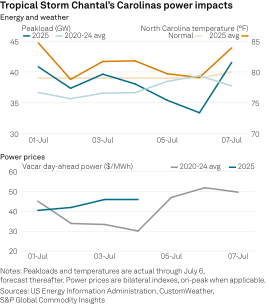
As the outer rain bands moved onshore July 5, load in the North American Electric Reliability Corporation's Carolinas region peaked at 35.4 GW July 5, down 8% from the 2020-24 average of 38.5 GW for that date, and at less than 33.4 GW on July 6, US Energy Information Administration data shows. The July 6 peak is down almost 6 GW, or 15.2%, from the 2020-24 average of 39.4 GW for that date.
Platts assessed the value of power for July 4 delivery at $46/MWh, almost $16, or about 53%, higher than the 2020-24 average of barely $30/MWh for that date, but the July 6 on-peak assessment of $47.25/MWh, was down $4.70, or 9%, from the 2020-24 average of almost $52/MWh for that date.
The National Hurricane Center warned early July 7 of heavy rainfall from the post-tropical remnants, causing flash flood concerns across parts of the Delmarva Peninsula of Delaware, Maryland and Virginia New Jersey and eastern Pennsylvania.
"The usual impact that is seen with tropical storms and depressions once inland involves a moderate uptick in load as the more warm and humid air mass moves in followed by a decrease in load as thick cloud cover, rain, and rain-cooled air take over," said Ian Palao, POWWR vice president for strategic energy services.

Editor: