Metals & Mining Theme, Coal, Non-Ferrous, Ferrous
August 18, 2025
Metals and mining companies face millions in tariff costs, executives say

HIGHLIGHTS
Tariffs ratchet up expenses for aluminum, copper, mining equipment companies
CEOs scramble to find ways to mitigate new duties
Steel company executives cheer tariffs despite falling profits
President Donald Trump's slew of tariffs on almost every US trading partner has led to significant costs and operational impacts for metals and mining companies, executives said on Q2 earnings calls.
For some companies, like steel producers, the tariffs are a welcome means to boost domestic manufacturing and reduce the reliance on foreign imports. But producers of copper and aluminum, as well as mine equipment manufacturers, said the tariffs are driving up expenses.
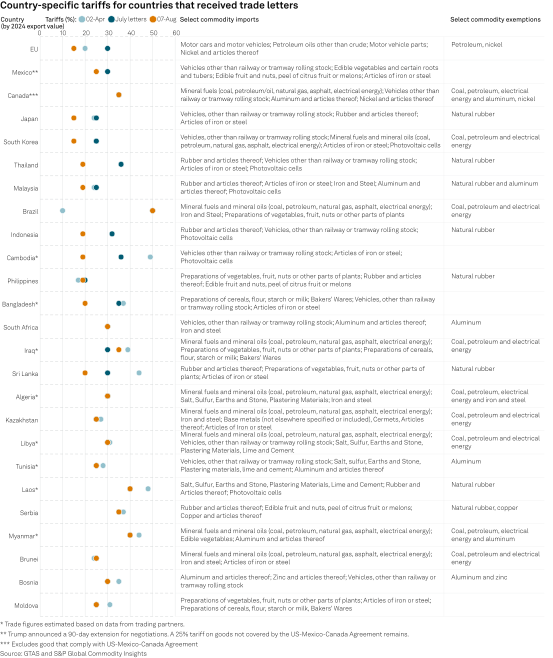
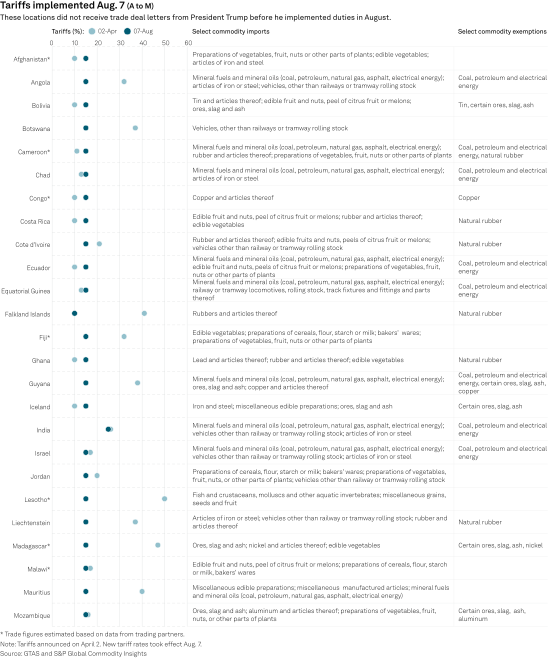
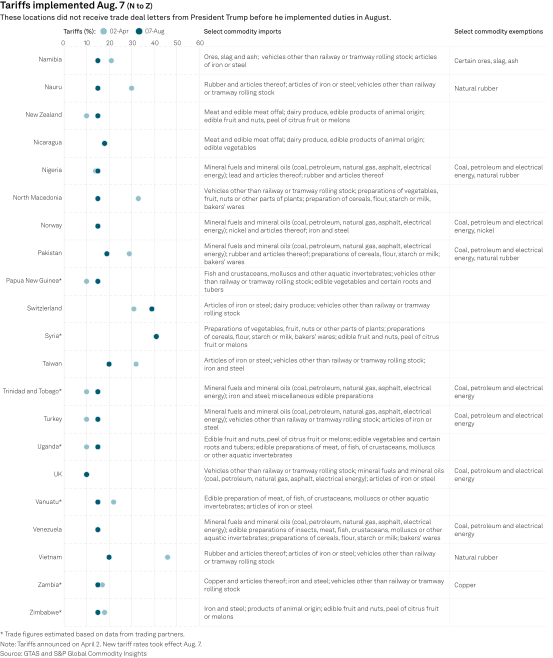
Metals producers are navigating varying country-specific rates and commodity-specifictariffs, like a 50% duty on imports of steel, aluminum and copper and 25% on imports of autos and auto parts.
Most metals are exempt from the country-specific tariffs, which do not stack with the commodity-specific tariffs.
Yet the trickle-down impact of the tariffs on raw materials and input costs has led metals and mining companies to experience fluctuating costs, higher prices and strategic shifts in how they source materials, executives said at the end of Q2.
"The net impact of tariffs was around the top end of our estimated range for the quarter and is likely to be a more significant headwind to profitability in the second half of 2025," Joseph Creed, CEO of mining equipment company Caterpillar, said on an earnings call.
Companies report millions in tariff costs
Several metals and mining companies reported that Trump's tariffs had a significant impact on costs at the end of the second quarter amid the uncertainty surrounding trade policy.
Both Alcoa and Rio Tinto – North America's two major primary aluminum producers – reported millions of dollars in tariff costs following Trump's June 4 decision to double tariffs on aluminum imports from 25% to 50%.
Alcoa, which exports around 70% of its Canadian production to US customers, incurred $115 million in Q2 tariff costs. The company redirected 100,000 mt of Canadian production away from US customers in the quarter to avoid tariffs.
"Approximately 30% of our Canadian aluminum production is available for spot sales and can be redirected to customers outside the U.S. when the premium shipping and tariff netback calculations favor another destination," said Molly Beerman, Alcoa's vice president and CFO.
Rio Tinto, which operates aluminum smelters in Canada, incurred $321 million of gross costs associated with US tariffs on its Canadian primary aluminum exports.
Freeport, the largest US copper producer, estimated that tariffs will have a 5% impact on costs, Kathleen Quirk, the company's president and CEO, said on an earnings call.
"That's something we're monitoring," Quirk said. "We're going to look for ways to modify our supply chains, if possible, and work closely with our vendors to make sure that we're sourcing the material as much as possible that's tariff-free."
Trump imposed a 50% tariff on copper that took effect on Aug. 1, after the second quarter, and excluded less refined materials like copper ore, concentrates and cathodes. But copper producers reported Q2 results amid a surge of copper imports that flooded the US in anticipation of Trump implementing tariffs on the metal.
Caterpillar, which produces mining equipment, estimated tariff impacts in Q2 between $250 million and $350 million. Adjusted operating profit dropped 22% compared to the year prior because of the manufacturing costs from the higher rates.
The tariffs impacted Caterpillar's three primary segments: Construction industries, resource industries and energy and transportation.
"We're going to mitigate the impact of tariffs, exactly which lever we're going to pull, we're looking for a little more clarity before we reach into those," Caterpillar's Creed said on the call. "...But we're going to keep everything on the table."
The company expects the net impact from incremental tariffs for 2025 to be around $1.3 billion to $1.5 billion, Creed said.
Steel applauds tariffs
The US steel industry may be the biggest proponent of the Trump administration's June 4 doubling of tariffs on steel imports from 25% to 50%.
Executives said the tariff actions will help increase domestic demand and allow US-based producers to maintain or increase their pricing, which stabilized at the end of the second quarter.
"If the United States really wants to continue to have a strong domestic steel industry, proper enforcement of the Section 232 tariffs is absolutely necessary with no exceptions or exemptions allowed," Lourenco Goncalves, Cleveland-Cliffs president and CEO, said on an earnings call.
Most steel producers are confident they can adapt their supply chain amid rising costs for raw materials, executives said.
Nucor pointed to the company's raw material supply chain and diverse sourcing capabilities.
"That diversity, along with our world-class sourcing and logistics teams, gives us flexibility to source raw materials in a way that optimizes our cost structure and adapt to this highly dynamic situation," Nucor CEO and President Leon Topalian said.
Steel producers expect to see momentum continue in the second half of 2025, pointing to improving business conditions and profitability as steel demand remains steady.
Despite the tariff tailwind, US steel producers struggled in the second quarter. Nucor saw net income drop 6.6% year over year to $603 million, and Cleveland-Cliffs swung to a $470 million loss, from a $9 million profit a year earlier.
Tariffs impact operations
Several metals and mining companies are reviewing operational decisions following the implementation of the tariffs, company executives said.
Teck Resources Limited, a Canada-based metals company, reported an increase to the capital requirements for a mine extension at its Highland Valley mine, Canada's largest copper mine.
President and CEO Jonathan Price said the company has optimized the project, increasing capital estimates from C$2.1 billion to C$2.4 billion, up 14.3% and 16.7% from a prior estimate.
The mine extension will now include project-level contingencies, account for inflation, input cost escalation and the impact of potential tariffs on construction materials, Price said on an earnings call.
"It's the potential for tariffs on construction materials, which we think is a real driver, of course, particularly in between the U.S. and Canada," Price said.
Grupo Mexico, the largest mine operator in Mexico and Peru, is evaluating opportunities to invest in the US, executives said on an earnings call. This includes increasing smelting and refinery capacity with a focus on potential investments over the next three to five years based on the tariffs.
Olympic Steel reported increased inquiries for fabrication services from original equipment manufacturers looking to onshore, outsource or expand first stages of manufacturing in the US.
"Olympic Steel is well positioned to capitalize on the trend to increase US manufacturing in the months and years to come," Andrew Greiff, Olympic Steel's COO and president, said on the call.
The company reported a net income of $5.2 million on the quarter, down 32.5% from a year earlier.