Energy Transition, Maritime & Shipping, LNG, Emissions
September 29, 2025
Europe's subsidized bio-LNG gains market share on steep price advantage

By Megan Gildea
HIGHLIGHTS
Subsidized, unsubsidized Bio-LNG spread narrows
Demand strengthens for subsidized volumes
FuelEU regulation, vessel pooling drives demand
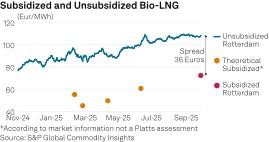
The European subsidized and unsubsidized bio-LNG price spread used in maritime fuel has been steadily narrowing over the past 12 months, driven by robust demand for subsidized volumes and high prices of subsidized material, market sources said.
Traders report the differential has tightened from around Eur50/MWh ($17.28/MMBtu) in early 2024 to a current range of Eur36-42/MWh ($12.32-14.51/MMBtu), with some traders observing spreads as narrow as Eur20/MWh. Sources are also predicting the spread could shrink further into next year and 2027, to be more consistently around the Eur 30/MWh ($10.37/MMBtu) level.
"The premium [of unsub to sub] used to be in the 50s [Eur/MWh], now it's around 40. But I have been hearing half of that for next year and 2027," an Atlantic-based trader close to the market said. "This is a nascent market, with many moving parts," the source added.
Subsidized bio-LNG, in which a production subsidy has been provided to the biogas producer to incentivize its uptake, has historically been at a significant discount to bio-LNG produced without such subsidies. However, rising demand fueled by regulatory compliance needs is exerting upward pressure on subsidized prices.
Regulation driving demand
Bio-LNG, produced from renewable feedstocks such as crops, manure, or waste, is gaining traction as shipowners seek to meet increasingly stringent maritime emissions regulations. The recently implemented FuelEU Maritime regulation, which mandates a 2% reduction in the carbon intensity of marine fuels by 2025—with targets escalating to an 80% reduction by 2050—is a key driver behind this surge.
Initially, many market participants expected only unsubsidized bio-LNG to qualify as compliant under the regulation. However, while the European Commission has yet to issue a definitive statement, market insiders said subsidized product is currently considered compliant in the absence of an official statement saying otherwise.
"We have seen the spread significantly decrease between them, because of demand for subsidized," a second Atlantic-based trader said.
Another key driver of demand is the rise of vessel pooling initiatives for alternative marine fuels. This mechanism allows shipowners to aggregate emissions from their vessels, either in their own fleets or by joining a commercial fleet, thereby offsetting emissions from vessels that fall short of standards.
Two of Anthony Veder's LNG carriers recently joined Finnish energy group Gasum's commercial pool. The two ships will run on bio-LNG and act as "surplus generators" to allocate compliance to other ships in the pool.
"This is an attractive prospect, it's driving demand [for bio-LNG]," a third Atlantic-based source said.
Evolving market uncertainties
Despite concerns about long-term compliance, many shipowners and traders have opted for the cheaper, subsidized bio-LNG to remain competitive in the evolving market. Some feared that choosing unsubsidized volumes, although perceived as a 'safer' regulatory bet, would come at a cost disadvantage.
"We wanted to go for unsubsidized at first, but then we saw others going for subsidized...so we didn't want to put ourselves at a disadvantage," an Atlantic-based source said.
While unsubsidized volumes are still being traded, in light of the growing volumes of subsidized volumes, Platts, part of S&P Global Energy, launched a daily delivered mass-balanced subsidized bio-LNG price assessment on Sept. 25.
The price was assessed at $25.062/MMBtu or at a 40.5 Eur/MWh premium to TTF on Sept 26. The unsubsidized bio-LNG assessment was at $37.23/MMBtu, or a 76 Eur/MWh premium to Dutch TTF. This puts unsubsidized bio-LNG at a 35.5 Eur/MWh premium to subsidized equivalent.
Despite burgeoning demand for subsidized bio-LNG, the market is broad enough to accommodate both materials. Unsubsidized holds strategic value for maritime players and is increasingly finding a place in term contracts - whereby buyers seek regulatory peace of mind. In some cases, traders said shipping companies are negotiating contracts with structures that allow a switch from subsidized to unsubsidized at a premium, to ensure compliance, should subsidized be deemed non-compliant under future regulations.
As demand continues to grow amid tightening regulatory frameworks, the bio-LNG market remains dynamic. The narrowing subsidy gap highlights not only shifting market fundamentals but also the evolving interplay between regulations and maritime fuel economics.

Editor: