LNG, Natural Gas
February 07, 2025
European LNG price spreads widen amid new supply wave

By Clio Ho
HIGHLIGHTS
Influx of new LNG supply contributes to a wide price gap
US, Middle East LNG production capacities ramp up
EU gas storage regulations set to expire in 2025
European LNG derivative price spreads between years have reached their widest levels since assessments began, primarily due to several LNG projects expected to boost supply by 2028.
Platts, part of S&P Global Energy, assessed Northwest European LNG derivatives for Cal26 at $12.553/MMBtu on Feb. 6, representing a premium of $2.902/MMBtu over Cal27.
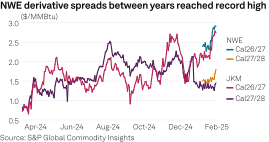
In the adjacent market, Platts JKM, which reflects LNG prices delivered to Northeast Asia, also experienced a multi-month high for the Cal26/27 spread.
The Platts JKM derivative price for Cal26 was assessed at a premium of $2.738/MMBtu over Cal27 on Feb. 6 at the London market close, marking the highest premium since mid-December.
The anticipated influx of new LNG supply contributed to the widening price gap between years. As more LNG is expected to enter the market in the coming years, prices could be significantly suppressed. The ramp-up of new LNG production capacities is primarily coming from the US and the Middle East.
The US capacity buildout for 2028 is projected to reach 156.62 million mt, nearly doubling from 82.70 million mt in 2024. Major projects such as Golden Pass and Plaquemines LNG are expected to boost global LNG supply by approximately 19 million mt, in addition to Port Arthur and Rio Grande LNG, which are also expected to commence production by 2028.
An increase in LNG supplies generally leads to greater market availability, creating a surplus that drives prices down as competition among suppliers intensifies to attract buyers, thereby suppressing future prices.
However, some traders anticipate that the 18 million mt Golden Pass facility may be delayed until the first quarter of 2026. Market sources suggested that while regional supply may be tight, the overall market could be slightly looser than this year due to smaller projects coming online.
"Right now, it's all just uncertainties keeping prices high. While the expected projects in 2025 aren't huge volumes, the market will still be tighter than anticipated, depending on Asian demand," a Mediterranean-based source said.
On a bearish note, EU regulations are set to expire at the end of 2025, meaning the Nov. 1, 2025 target of 90% storage fullness at the EU level would be the last binding target unless the rules are extended.
If the gas storage target is removed by 2026, member states would not need to import as much LNG ahead of winter, which could restrain LNG prices after 2025.
The EU adopted its gas storage regulation in June 2022, requiring member states to meet mandatory storage filling targets after EU gas stocks fell to critically low levels following the winter of 2021-22.