Energy Transition, LNG, Hydrogen, Renewables
July 11, 2025
WORLD HYDROGEN ASIA INTERVIEW: Sarawak Premier seeks tech tie-ups, collaborations to cut clean energy costs

HIGHLIGHTS
Names Japan for new ties in clean energy
Partnerships to focus on CCUS, electrolyzers
Targets 10GW of renewable power by 2030
Hydroelectric dams to power clean hydrogen output
Malaysia's Sarawak state is actively seeking technology partnerships with Japan and other nations to drive down clean energy costs and achieve its ambitious renewable hydrogen output target of 2 million mt by 2030, Premier Datuk Patinggi Tan Sri Abang Johari Tun Openg told Platts, part of S&P Global Energy, July 10.
The state's strategy centers on leveraging its hydroelectric resources and existing LNG infrastructure to become a major clean energy hub, designed to export renewable and low-carbon fuels in Asia-Pacific and beyond, according to the Premier.
"The primary challenge we face is producing hydrogen at an affordable price, which necessitates improvements in technology," Premier Johari said, speaking on the sidelines of the World Hydrogen Asia 2025 conference in Tokyo, held July 8-10.
"If we can offer competitive pricing, we are willing to invest in improving electrolyzer technology. Over time, perhaps within five to 10 years, advancements in the electrolyzer process could allow us to recoup the risks we have taken within a five-year timeframe."
Sarawak's approach reflects broader regional efforts to establish Asia as a competitive renewable hydrogen production center, potentially reshaping global energy trade flows as countries seek alternatives to traditional fossil fuel imports, industry sources and analysts said.
The Premier expressed particular confidence in meeting the renewable hydrogen production target of 2 million mt by 2030, extending to 16 million mt by 2050, backed by strong investments in clean energy projects.
At the conference, Premier Johari unveiled five strategic priorities for renewable hydrogen development including, scaling up production, building domestic demand through transport and industrial applications.
Among Sarawak's prominent renewable hydrogen projects are H2ornbill and H2biscus, which aim to produce renewable and low-carbon hydrogen/ammonia and green methanol, according to data from Energy.
Japanese partnership
Premier Johari outlined broader collaboration opportunities with Japan spanning carbon capture, utilization and storage, petrochemicals, and low-carbon manufacturing for win-win initiatives.
"Japan has been a long-standing partner for us, and we have been trading with them for many years," he said. "Currently, our focus is on identifying new areas of collaboration, particularly emphasizing the value chain of our resources based on our strengths."
The process of converting gas into derivative products could be developed in partnership with Japanese companies or any companies in Asia, Premier Johari said, underscoring the drive to explore potential areas for new collaborations.
Japan's ENEOS and Sumitomo are a part of the H2ornbill project at the Sarawak H2 Hub in Bintulu, to be jointly developed by SEDC Energy and clean energy solutions provider Gentari, the state said in 2024.
H2ornbill targets commissioning in 2027 with a likely production rate of 90,000 mt/year of clean hydrogen, according to Energy data.
Renewables road map
The state is already producing methanol and exploring the potential for renewable methanol and renewable ammonia production, with potential for Japanese companies to participate in gas-to-derivatives projects, the Premier said.
Sarawak has set ambitious renewable energy targets of 10GW of renewable power capacity by 2030, scaling to 15GW by 2035. The Premier said these targets are "quite conservative" and could be exceeded with new technology developments.
The state is also diversifying its renewable energy portfolio beyond hydroelectric power, including a floating solar collaboration with Abu Dhabi at existing dam sites, he said.
"Our hydroelectric facilities can generate power through both hydro processes and solar energy from our site," Premier Johari noted.
Sarawak's hydrogen initiative includes domestic applications to demonstrate commercial viability, with production already underway to power public transport and other hydrogen-powered devices, the Premier said.
This pilot approach allows the state to study cost implications while building operational experience ahead of larger-scale export projects, according to the Premier.
Malaysia has committed to a net-zero target by 2050 and has pledged to increase renewable energy composition to 70% of the total generation capacity by 2050, according to the government's website.
In Sarawak, the government has adopted the most ambitious climate initiatives among the Malaysian states and has announced targets to achieve over 70% renewable power use by 2030, the website added.
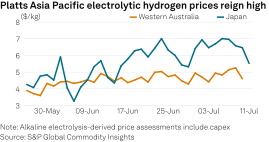
Platts assessed Queensland hydrogen produced via alkaline electrolysis, including capital expenditures, at $4.23/kg on July 7, down 11% from a month earlier.
Platts assessed Japan's hydrogen produced via alkaline electrolysis, including capex, at $6.96/kg July 8, up 54% month over month.

Editor: