LNG, Maritime & Shipping
March 02, 2026
Indian LNG market faces uncertainty after US-Iran conflict threatens supplies
HIGHLIGHTS
Significant India LNG import volumes transit via Strait of Hormuz
LNG premiums expected if crisis persists
Regional gas prices face upward pressure
The Indian LNG market faces uncertainty as industry players closely watch the US-Iran conflict and Strait of Hormuz flows, concerned about potential supply disruptions if tensions continue, market sources reported March 2.
India is the world's fourth-largest LNG consumer. According to S&P Global Energy data, in 2025, India imported more than 25 million metric tons of LNG per year. Of this, over 40% came from Qatar.
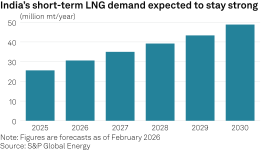
Israel and the US launched air strikes on Iran during the weekend, starting Feb. 28. Key to India's LNG shipments is the Strait of Hormuz, a 20-mile-wide chokepoint between Oman and Iran. A significant amount of India's LNG inflows move through this Strait, according to sources.
"Geopolitical events always have the potential to disrupt energy supply chains and impact markets. We've seen this play out numerous times in recent years, most notably because of Russia's invasion of Ukraine," ANGEA CEO Paul Everingham said.
"The impact of the latest conflict in the Middle East will depend on how long it lasts and whether it continues to escalate. LNG deliveries into Asia will be affected if tankers cannot transit the Strait of Hormuz for any significant length of time," he said.
An Indian LNG importer said that they were actively monitoring the situation. If the tensions resolve within a week to 10 days, there will likely be a limited impact.
However, if the situation drags on, the company may have to assess its supply to downstream customers and possibly take more drastic steps, he said, clarifying that implementing such a drastic step will also depend on what their peers are doing.
Another Indian LNG importer said India is "badly positioned."
According to the source, the problem may not be short-term, and if it persists, the company may have to issue more drastic measures. "It may not happen immediately, but it can happen eventually," he added.
"JKM and India would be at least flat. India can go into premium as well if things go on like this," he said.
There has been no official communication from the Indian government so far on whether to continue or discontinue operations, a third Indian LNG source said. Qatar has not rejected loadings from Ras Laffan now, he said. However, he hinted at the ongoing supply risks in the Middle East.
"No one is guaranteeing transit through the Strait. So, it is entirely up to the risk of the companies that want to transit," he added.
"All eyes are on the Strait of Hormuz," an industry source in Singapore said, adding that India relies heavily on Qatar LNG. Having said that, the Indian market is also very price-sensitive and may stay on the sidelines if prices skyrocket, increasing dependence on alternatives such as LPG, he said.
Platts JKM for the Balance-month-April derivatives contract was observed tradeable at $13.133/MMBtu at 3 pm Singapore time on March 2, up $2.256/MMBtu from the London close on Feb. 27, according to S&P Global Energy data. The LNG West India Marker, or WIM, for April was assessed at $10.397/MMBtu on Feb. 27, at a discount of 30 cents/MMBtu to the April JKM assessment.
Shipping watch
Several LNG carriers are stuck in the region due to a lack of war risk cover, shipping sources said March 2.
"Since the insurance companies have cancelled the war risk cover, the matter ends there, and the question of doing fixtures in the region does not arise," said a source with a company that owns both oil and LNG tankers.
The situation is so serious that most owners are not offering any oil or gas tankers in the region on March 2, the source said.
The priority is to handle existing deals, as several tankers are stuck in the Middle East, rather than offering new fixtures, another source with an owner said.
Technically, the lanes are not closed, a shipping broker said. However, no trades are happening because there is no war risk cover, he added.

Editor: