Electric Power, Energy Transition, Natural Gas, Emissions, Renewables
December 16, 2025
California got a record 52.3% of power from renewables in 2024: report

By Karin Rives
HIGHLIGHTS
Fossil fuel generation hit record low of 36.3%
Challenges remain for meeting 2030 emissions goal
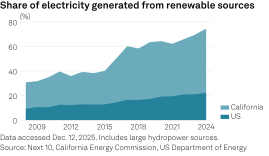
Renewable energy accounted for more than half of California's electricity mix for the first time in 2024 as the state's reliance on fossil fuels reached a record low, according to the latest California Green Innovation Index released Dec. 16.
Renewable energy sources, including large hydroelectric facilities, made up 52.3% of the California grid in 2024, the annual index from the think tank Next 10 showed. That represented a 3.7% increase from 2023.
Fossil fuel-fired generation accounted for 36.3% of power produced, its lowest level on record, the report said, citing California Energy Commission data.
"That is a remarkable progress, considering that just 10 years ago, that share was a hair over half, 51%," Hoyu Chong, author of the report and principal of CEC Economics, a boutique consulting firm specializing in economics and clean energy policy analysis, told Platts, part of S&P Global Energy.
California's renewables portfolio standard does not include large hydroelectric plants. Excluding that source, the state's total power mix for in-state and imported generation consisted of 41.3% renewables in 2024, Chong added in the interview, held with Next 10 officials.
In late November, California also shed its last reliance on coal when the Los Angeles Department of Water and Power transitioned from the Intermountain Power Agency's coal units in Utah to newly built natural gas units at the site, which are capable of running on a mix of hydrogen and natural gas. The coal units shut down, but Utah officials are soliciting interest from potential buyers willing to restart the plant.
The state's clean energy trajectory may continue in 2025 based on partial data for the year. The state achieved 100% clean energy for part of the day during the first 217 days of 2025, the California Energy Commission said in October.
Challenges ahead for 2030
California's greenhouse gas inventory for 2024 will not be released until 2026, a spokesperson for the California Air Resources Board confirmed. However, preliminary data released in November based on the state's largest emitters suggest that emissions continued to drop in 2024 — albeit not at the rate required to meet the state's ambitious 2030 goal to cut economy-wide emissions 40% from 1990 levels.
"It's not all roses," Noel Perry, Next 10's founder, said in the interview. "We have to reduce our emissions by 4.4% between now and 2030 to hit our target. And unfortunately, the average that we've had over the last five years is about 2.3%."
But after emissions dropped by 3% in 2023, Perry said he is optimistic the state may get back on track and eventually meet its goal.
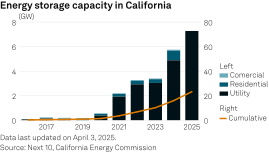
California's RPS requires power producers to source 60% of the retail power they sell from qualifying renewables by 2030 and to reach 100% carbon-free by 2045. In the race to try to get there, the state's utilities added 5,743 MW of energy storage in 2024, a 69% increase from the amount added the year before, Next 10 reported.
In June, the CEC signed off on what it said was the world's largest solar and battery storage project in Fresno County.

Editor: