Energy Transition, Carbon, Emissions
December 03, 2025
Alberta TIER prices jump 25% after MOU, but outlook remains uncertain
By Madeline Ryan and David Lademan
HIGHLIGHTS
TIER prices jump 25% after Alberta-Canada energy MOU
MOU sets C$130/mt minimum carbon price, higher stringency
Oversupply concerns remain despite potential price boost
Prices across the Alberta TIER carbon market rose to multi-month highs Dec. 2 after the recent signing of a new energy, carbon policy agreement between the Alberta provincial and Canadian federal governments.
Platts-assessed Alberta TIER credit and offset pricing jumped 25% on the week of Dec. 2 to close at C$25.00/mtCO2e. Platts heard the market trading higher throughout the week to Dec. 2, with reports of a deal done as high as C$26.00/mtCO2e.
This represents price parity with record highs seen in mid-August.
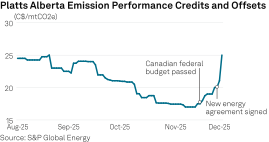
The governments of Canada and Alberta signed a memorandum of understanding aimed at "turning our country into a world energy superpower," said in a statement released by the Alberta government. The energy agreement aims to accelerate major infrastructure projects, especially the construction of a new oil pipeline through Alberta and British Columbia to serve the growing West Coast Canada crude export market, as well as introducing new developments to Albert TIER.
The new energy agreement has received received mixed sentiment in the Alberta Technology Innovation and Emission Reduction market, with one trader saying the market is optimistic about the carbon pricing rising from the MOU.
The agreement commits to the federal and Alberta governments to designing globally competitive long term carbon pricing, establishing an industrial carbon pricing framework by April 1, 2026, incorporating carbon levy recycling protocols and sector-specific stringency factors for Alberta's major oil, gas, and electricity emitters under the TIER system. It also sets a minimum effective carbon price of C$130/ ton, which would raise Alberta's frozen industrial carbon price at C$95/mtCO2e, set in May of this year.
Alongside the market being optimistic about carbon pricing potentially rising, the MOU shows TIER will match stringency with the federal OBPS, with the agreement recognizing Alberta's jurisdiction over the TIER system and saying "the two governments will work co-operatively to ensure the application of Alberta's carbon pricing system (including pricing and stringency) is adapted to the specific circumstances of the electricity sector, the oil and gas sector, and other large emitters such as fertilizer and cement sectors." A carbon pricing equivalency agreement is set to be implemented on or before April 1, 2026.
'Oversupplied to a fault'
Market participants have pegged TIER's upward activity to the MOU and the uncertainty around it as well.
"Seems like the market is still trying to work things out," a broker said.
Another broker expressed skepticism about the MOU increasing carbon pricing, citing the persistent oversupply of credits that continues to plague the market. The MOU does not mention a mechanism to mitigate this oversupply so pricing will remain suppressed, said the second broker.
"Unless they do a [carbon capture, utilization and storage] carve-out and kill supply, then it's oversupplied to a fault," the broker said. "You can make the fund $500, but who cares if you can grab a TIER credit at the corner store."
A second trader thought the MOU does not warrant a price increase and thinks that prices will go up a few dollars, but then come back down. The activity is based "purely on speculation and buying because of headlines," the trader said.
The Alberta TIER market experienced a continual decline in credit prices in 2025, with market participants attributing the driving factor to persistent credit oversupply.
A report released by Foundation Economics on Alberta TIER's 2024 compliance results showed a growing EPC and offset bank from 2024 EPC and offset issuances.
"TIER participants retired nearly the maximum allowable EPCs and Offsets to satisfy their 2024 obligations," the report said. "This maximization of retirements was consistent with the present size of the EPC/Offset bank and consequently depressed prices."
There are large volumes of EPCs and offsets from prior years not yet serialized in the Alberta Carbon Registries, creating a continued growing outlook for the bank, meaning continued downward pressure of credit prices, according to the report.

Editor: