Energy Transition, Agriculture, Carbon, Biofuel, Renewables, Emissions
October 13, 2025
Tech-based carbon removal credit activity surges in September on BECCS growth

HIGHLIGHTS
BECCS overshadows quiet biochar market in September
BECCS credit price vary by ethanol generation type: sources
Platts US biochar carbon credit prices rise to $150/mtCO2e
Tech-based carbon removal credit retirement and issuance data rose sharply in September, bolstered by credits from bioenergy with carbon capture and storage, according to S&P Global Energy data.
The surge came as biochar credit prices edged higher month over month, even though demand remained subdued.
Tech-based, or engineered carbon removal, credit retirements increased to 57,417 metric tons of carbon credits in September, from just 980 mt in August and 11,817 mt in September 2024.
Across the tech-based carbon removal segment -- reflecting technology projects that eliminate greenhouse gas emissions through initiatives such as biochar, mineralization, bioenergy with carbon capture and storage, and direct air capture -- BECCS credits comprised 86% of total retirements in September, according to Puro.earth data. Biochar credits made up 14% at 7,620 mt, enhanced rock weathering credits represented 1.33% or 748 mt, and direct air capture accounted for 100 mt, or less than 1%.
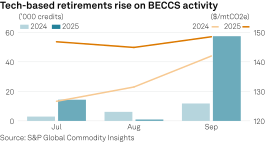
While carbon credits from biochar -- produced by heating organic material or biomass like agricultural waste in a low-oxygen environment through pyrolysis -- capture CO2 as carbon sinks, this pathway has been the most active in the tech segment.
"Some say biochar is flying off the shelf, and some say it's quiet," a broker said. "From what we are trying to close deals, it's the busiest time of the year, the fourth quarter."
Financial markets typically require companies to secure carbon offsetting projects at the end of the year, the broker added.
However, BECCS retirements and issuance have risen significantly over the past year. One reason for this trend, besides the US Inflation Reduction Act 45Q, is the nature of BECCS projects: as capital-intensive ventures, they seek offtake contracts to finance the carbon management side of their operations, which explains where some of the retirements have been directed.
Lympha.earth, carbon credit brokers reported to Platts an offer for Puro.earth-certified BECCS credits from the US at $200/mtCO2e for 20,000 mt and 2024 and 2025 vintage.
The latest offers in the market for BECCS credits have been heard indicatively valued at $200-$220/mtCO2e in the US from ethanol-based credits, up from $150-$200/mtCO2e earlier in the year, while BECCS credits from Europe have been heard indicatively valued at $300-$400/mtCO2e, according to Platts data.
"Seen BECCs at $220/mtCO2e, but $200/mtCO2e is feasible," a US-based trader said. "I don't think anything was clearing there."
Sources said the price difference for BECCS project credits depends on whether they use first- or second-generation processes. First-generation ethanol, or conventional, is produced from food crops such as sugarcane, maize, or rice grown primarily for fuel. Second-generation ethanol, which is in early development, is derived from agricultural residues like husks, stalks, and crop waste -- materials that would otherwise go unused.
"Bioethanol projects are in a different category from BECCS projects, which are bought at premium prices by the likes of Google and Microsoft," a Europe-based BECCS developer said on the condition of anonymity. "Therefore, I am not sure we can extrapolate from this project's retirement to the wider BECCS market."
The retirement of carbon credits indicates that their emissions-offsetting benefits have been fulfilled, and these credits cannot be resold or traded.
Credit issuances
Carbon credit issuances for tech-based carbon removals rose 395% in September, climbing to 85,650 mt from 17,318 mt in August. The volume of issuance also increased by 803% year on year from September 2024, when 9,482 credits were issued.
Carbon credit issuances occur once a project is registered and verified by a carbon registry, making its credits available for trade in the voluntary carbon market.
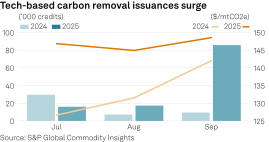
Similar to the drivers in credit retirements during September, the main driver of credit issuance growth in the tech segment was the Gevo North Dakota project, certified under the Puro.earth carbon removal standard and registry's geologically stored carbon methodology. This methodology involves CO2 being permanently stored in geological storage with a permanence of over 1,000 years. The project accounted for roughly over 80% of the total tech-removals credit issuance.
Earlier this year, Gevo acquired assets of Red Trail Energy, LLC, Gevo North Dakota project, where CO2 is captured from biogenic fermentation as plant-based alternatives to petroleum products are created, according to Puro.earth platform.
Credit retirements in September from Gevo's North Dakota BECCS plant were marked as 'Retired for LCFS markets,' according to Puro.earth data.
About 13% or 7,620 mt of credit issuances in the tech segment were from biochar, supporting the trends seen in BECCS growth in the market and capacity to scale.
Mirroring both higher month-on-month credit issuance and retirements, the US biochar carbon credit price for current-year delivery rose 5% year over year and 2% month over month in September.
Platts, part of S&P Global Energy, assessed US biochar for 2025 delivery at $150/mtCO2e on Oct. 13, steady day over day, supported by multiple indications at that level.
Lympha.earth, carbon credit brokers also reported an offer for Puro.earth-certified Biochar credits at $170/mtCO2e for 1,000 mt and 2024 and 2025 vintage.
Year-end voluntary carbon market demand is expected to mirror 2024 patterns and increase, sources have said.

Editor: