Electric Power, LNG, Natural Gas
February 03, 2026
Analysts see record-breaking US gas storage draw during winter storm

By Corey Paul
HIGHLIGHTS
Expects 366 Bcf draw in week ended Jan. 30
Consensus estimate would wipe out surplus
NYMEX prompt month futures soften on warmer weather
US natural gas market analysts expect the US Energy Information Administration to report a record-breaking storage withdrawal for the week ended Jan. 30, as severe cold caused upstream production freeze-offs and an intense spike in heating demand.
Analysts surveyed by Platts, part of S&P Global Energy, predicted a consensus withdrawal estimate of 366 billion cubic feet for the upcoming EIA gas storage report. The EIA is scheduled to report its estimate Feb. 5.
If the predicted draw-down is accurate, it would mark the largest-ever recorded pull from US storage inventories, surpassing the prior record of 359 Bcf set in January 2018. A withdrawal this large would erase the US storage surplus.
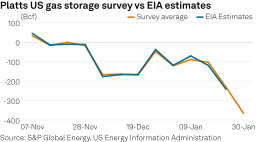
The 5% surplus to the five-year average headed into the week would flip to a 1% deficit, leaving US inventories at 2.457 trillion cubic feet.
The anticipated pull would be extremely bullish compared with both the five-year average withdrawal of 190 Bcf for the corresponding week and the year-ago pull of 195 Bcf.
US inventories haven't been below the five-year average since the week ended April 18, 2025, EIA data showed.
"Nobody is going to care if it warms up, but right now it's going to be a draw for the ages," Phil Flynn, senior account executive with The Price Futures Group, said in a Feb. 3 interview. "It's a perfect storm."
Fundamentals
The January US winter storm brought severe cold to much of the Lower 48 states, sending cash prices soaring as the US integrated gas system responded to wide production disruptions and shifting demand.
Market fundamentals tightened by some 20 Bcf/d during the week to Jan. 30, S&P Global Energy CERA data showed.
Total supply fell by more than 5 Bcf/d, while total demand spiked 15 Bcf/d to about 167 Bcf/d.
Surging demand for natural gas heating and power generation drove most of the increase. Residential-commercial gas burn jumped 23% week-over-week to about 67 Bcf/d, while power demand climbed 15% to about 42 Bcf/d.
On the supply side, production disruptions in the US were partially offset by an 850 million cubic feet/day increase in net imports from Canada and a rise in sendouts from LNG import facilities, which averaged about 940 MMcf/d during the week.
At US LNG export facilities, feedgas demand plummeted over 20% to an average of less than 16 Bcf/d.
Outlook
Market conditions have eased considerably over the past week.
The NYMEX March Henry Hub contract fell by more than $1/million British thermal units at the start of the week as forecasts showed a return to above-normal temperatures. Henry Hub futures for March were just under $3.40/MMBtu in afternoon trading Feb. 3, CME Group data showed.
"Perilous volatility may continue, and bulls may try to claw back a portion of [Feb. 2's] losses," analysts with EBW Analytics said in a Feb. 3 note to clients. "Triple-digit storage deficits could offer near to medium-term support. Nonetheless, with a clear view to the end of winter, plunging heating demand, bearish technicals, and a benign long-term outlook, further downside cannot be ruled out."
For the current week ending Feb. 6, CERA's natural gas supply-demand model is projecting a smaller 274 Bcf withdrawal from storage, which would be bullish to the five-year average draw of 146 Bcf for the corresponding week.

Editor: