Crude Oil
September 13, 2025
Trump ready for ‘major’ Russian sanctions if NATO stops buying Moscow's oil

HIGHLIGHTS
Trump conditions Russia sanctions on NATO oil boycott
Proposes 50%-100% China tariffs to pressure Moscow
Claims war would end quickly with coordinated approach
US President Donald Trump said Sept. 13 he is ready to impose "major sanctions" on Russia if NATO members stop buying Russian oil and implement coordinated trade tariffs on China, arguing such measures would quickly end the Russia-Ukraine war by breaking Beijing's influence over the Kremlin.
Trump's statement, posted on his social media platform Truth Social, marks a shift in approach to the conflict that has reshaped global energy markets since Russia's invasion of Ukraine in February 2022. The president called for trade tariffs ranging from 50% to 100% on Beijing to weaken China's economic influence or "strong grip" over Russia. Linking China trade tariffs directly to the Ukraine conflict introduces a new dimension to international efforts to pressure Moscow into peace talks and potentially affects commodity trade flows across multiple regions.
Trump added that oil purchases by NATO states have been "shocking," arguing that it "greatly weakens your negotiating position, and bargaining power, over Russia."
Trump's assertion that "China has a strong control, and even grip, over Russia" reflects the growing economic relationship between Beijing and Moscow since the war began. China has become Russia's largest trading partner and a key buyer of discounted Russian crude, providing Moscow with crucial revenue despite Western sanctions.
Market implications
Key US lawmakers this week said Russia's Sept 9 violation of Polish airspace should spur the US Congress to pass a bill to impose punishing sanctions and tariffs on buyers of Russian energy. But it was unclear if US President Donald Trump would back such a move.
Trump renewed his threat of secondary sanctions on countries buying Russian oil as the EU mulls a mechanism to halt imports of fuels made from Russian crude in third-party countries. The European Commission in June proposed legislation to end imports of Russian gas and oil completely by the end of 2027, making good on its pledge to try to end any remaining dependency on Russian energy.
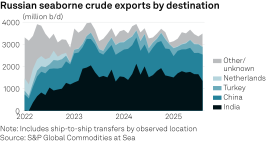
If implemented, Trump's proposed strategy could fundamentally alter global oil and gas trade patterns. NATO's 32 members include mostly European countries and Turkey, currently Russia's third biggest buyer of oil behind China and India.
In the first 11 days of September, Russia's crude oil exports rose to an average of 4.052 million b/d, a 20% increase compared to the August average of 3.403 million b/d, according to a new S&P Global Commodities at Sea analysis.
The increase was fueled by higher shipments to key destinations like India and Turkey, S&P Global Energy analysts said in the report.
"Crude oil shipments from Russia to India have increased 5% after dipping to 1.421 million b/d in August, reaching an average of 1.488 million b/d as of Sept. 11," the analysts said.
Crude futures moved higher Sept. 10 after Trump posted to Truth Social: "What's with Russia violating Poland's airspace with drones? Here we go!"
Platts, part of S&P Global Energy, assessed the Dated Brent crude benchmark at $67.74/b on Sept. 12, up 2.18% day over day and up from a recent low of $65.36/b on Sept. 5.
