Maritime & Shipping, Containers
August 13, 2025
AD Ports Group takes advantage of Red Sea disruptions with no end in sight

HIGHLIGHTS
Red Sea volume at 25% of H1 feeder traffic
US tariffs 'strong incentive' to set up locally
Container shipping demand holds 'resilience'
Red Sea shipping disruptions tied to the Israel-Hamas conflict are unlikely to be resolved even by next year, and opportunities still exist for those shipping companies able to offer "reliable passage" in the waterway and alternative trade routes, AD Ports Group said in an Aug. 13 statement to the Abu Dhabi stock exchange.
Feeder container volume was 829,000 twenty-foot equivalent units in the second quarter, up 34% from the same period a year earlier, and 1.55 million TEUs in the first six months, up 45% from a year earlier, AD Ports Group said in the statement. 25% of the volume in the first half went through the Red Sea, it said.
"While the Red Sea situation continues to pose a risk to global trade, the group has been able to mitigate adverse impacts and, in fact, has capitalized on increased demand for both reliable passage through the Red Sea and alternative trade routes," the company said in the statement. With Red Sea disruptions likely to continue into 2026, feeder container volume through the Red Sea "should remain strong in the near term."
AD Ports Group is able to shift its container shipping services more quickly than global shippers, which are bound by a fixed schedule, the company said in the statement. Container shipping demand and rates are expected to show "continued resilience" for the rest of the year, "especially for a regional container feeder shipper not exposed to North American routes like AD Port Group," the company said.
US tariffs may benefit the UAE as an intermediate stopping point for trade to other countries, AD Ports Group said. The UAE faces a 10% US tariff, it noted. "The trade differential with China, Vietnam, Thailand, Malaysia, Indonesia and many other countries is creating a strong incentive for companies to consider putting assembly and processing capabilities on the ground" in the UAE. While the number of ships making calls at UAE ports has not grown, more shipping volume is being handled through UAE ports and moved onward, executives said on a conference call after the earnings. The value of Abu Dhabi's non-oil foreign trade in H1 surged 35% from a year earlier to Dirham 195 billion ($53 billion), according to a presentation for the call.
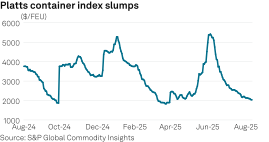
The Platts Container Index, a weighted average of spot rate assessments on key routes, rose from $1,831.25/FEU on March 25 to $5,414/FEU on June 5, before easing back to $2,035.50/FEU on Aug. 12, according to S&P Global Energy data.
