Crude Oil, Refined Products, Maritime & Shipping, LPG
March 11, 2026
Trump says oil companies should use Strait of Hormuz, touting US progress

By Kate Winston
HIGHLIGHTS
Vessel transits rebound with eight ships crossing
US has not yet escorted any tankers: Leavitt
US President Donald Trump says that oil companies should use the Strait of Hormuz, arguing that the US has taken out Iran's mine ships and does not believe any mines have been laid in the area.
When a reporter asked Trump March 11 if he was encouraging the CEOs of oil companies to use the Strait of Hormuz right now, Trump said, "I think they should, I think they should." When asked if Iran has laid any mines in the Strait of Hormuz, Trump said, "We don't think so."
The US took out almost all of Iran's mine ships in one night, Trump said. Overall, the US has taken out 60 Iranian ships, he said. "I didn't realize they had that big a Navy," Trump said. "Just about all of their Navy is gone."
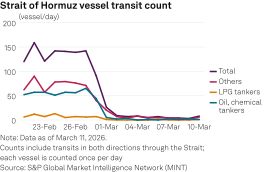
Vessel transits at the Strait of Hormuz rebounded on March 10 with eight ships crossing, including two tankers, according to data from S&P Global Commodities at Sea. This was up from three vessels the prior day, CAS analysts said in a report published March 11.
The two tankers that transited were US-sanctioned tankers, including one likely carrying Iranian LPG, the report said. There were ten other tankers that showed signals in the Strait, but with signal jamming in the region linked to the conflict, their positions are uncertain, the report said.
The US has taken steps to aid shipping through the strait, including with the announcement that the US International Development Finance Corporation would offer $20 million in maritime reinsurance. DFC said March 11 that insurance company Chubb would be the lead partner in the program.
White House officials have also said that the US Navy would, as necessary, escort ships through the strait. White House Press Secretary Karoline Leavitt said March 10 that the Navy has not escorted a tanker or vessel at this time.
Before escorting tankers through the strait, US Central Command would want to prepare the battle space, retired General Kenneth F. McKenzie, said during a March 11 webinar hosted by the Middle East Institute.
"What you want to do is you want to set the conditions, if you send a warship up there, where you can ensure the Iranians are not able to mass effectively against you," McKenzie said.
That preparation would include: degrading Iran's fleet of fast-attack craft, ensuring the area is not vulnerable to land-based cruise missiles, eliminating Iran's submarines, and getting a good picture of any mines in the strait, McKenzie said. The military is likely working on these preparations now, he said.
When escorting ships through the Strait, the ships that are most vulnerable to mines are warships, not tankers, McKenzie said.
"A tanker can hit a bit of mine and they'll feel a bump up on the bridge, but it's not going to sink it," McKenzie said. "A 7,000- or 10,000-foot warship hits a mine, you're going to have human casualties, and you're going to have flooding, you have significant problems."
At some point the Navy will be ready to start escorting vessels if it is ordered to do so, but ideally, it would be an international effort, McKenzie said. "I would hope that it would involve ships and nations that actually use the oil."

Editor: