Chemicals, Polymers
December 29, 2025
COMMODITIES 2026: Global polyethylene packaging fundamentals to remain weak in H1
HIGHLIGHTS
China economic stimulus efforts could lift demand
Europe faces tariff uncertainties, lack of regulation clarity
Higher resin prices, stability expected in Americas
This is part of the COMMODITIES 2026 series, in which our reporters bring to you key themes that will drive commodities markets in 2026.
The global polyethylene packaging market is expected to remain slow through the first half of 2026, as oversupply and weak demand conditions continue.
Asia eyes demand recovery
Holidays in Asia during the first quarter are expected to be bearish for demand, with a rebound anticipated in the second quarter. China's demand may also rise due to potential economic stimulus efforts aimed at achieving its 2026 GDP growth target that will be set in Q1.
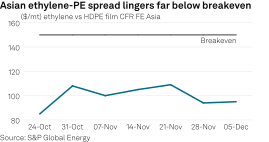
Supply pressures could ease due to rationalizations and limited plant startups in the first half of 2026, but margins still may not recover in 2026.
"With easing supply pressures and a potential pickup in demand due to government incentives in Q2, the China PE market is projected flat to up in H1 2026," said Will Xu, associate director for polymers news and research management at S&P Global Energy CERA.
Narrow upstream margins could also lend support to prices.
"Naphtha and ethylene margins are already in the negatives," a Singapore-based trader said. "It will be challenging for PE prices to go down further."
In India, market participants see growth in the packaging sector in the coming months.
"The increasing presence of e-commerce and quick retail services in Indian cities could lead to higher growth of the packaging sector, combined with buying interest for polymers in the flexible packaging segment," a major Indian polymer producer said.
The producer believes India's consumption growth is expected to drive packaging demand, especially for linear low density polyethylene and low density polyethylene grades.
Tariff, regulation uncertainties dim European market
The 2026 outlook for what has been a generally weak European market is clouded after a whirlwind year that saw widespread rationalization and consolidation efforts amid heightened uncertainty in business due to tariff disputes and a lack of clarity on regulations.
"We have the European taxation on imports, which we do not know yet," a European converter said. "Also, will the capacity increase in Asia, especially in China, affect the flows of material?"
"We are a little bit killing ourselves here in Europe," the converter said, referencing the influx of lower-cost imports. Many sources have cited expectations of continued competitive import prices in Europe in 2026, keeping supply ample unless some regulatory stance is taken.
However, Europe is not expected to see lower production costs anytime soon, which will continue to drive imports and keep local operating rates low. Producers said rates averaged about 75% in 2025.
Americas resin to rise, stability expected
US-based market players said the packaging sector, despite a challenging year, could face more stability in 2026.
"I do believe this segment will see moderate growth in 2026," a US-based distributor said.
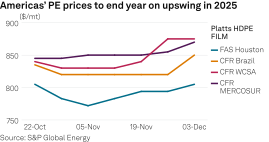
On the pricing side, oversupply has made it difficult for buyers to accept price increases, with price stability expected after January hikes.
A US-based trader said upcoming price increases for 2026 from producers could leave customers with no choice, while a second US-based trader said they expect "things will improve," with more agreements reached and clarity on tariffs.
General resin prices in Brazil are also expected to increase, amid expectations that a definitive antidumping duty on US PE imports will be implemented in February.
The country currently applies a preliminary antidumping duty of $199.04/mt.
"The US will remain the main PE supplier to Brazil even with the ADD," said a Brazilian-based trader. "US prices will increase, and offers from other origins will also be pushed higher. Who pays the final price is the customer."
For the packaging sector, national elections in Brazil and the FIFA World Cup are expected to boost disposable goods demand, according to a domestic distributor.
In Mercosur countries, sources point out that packaging remains a persistent strong point, despite general macroeconomic woes and instability.
"Packaging is the market that will be less affected by economic and political changes," said an Argentina-based trader. "Argentina is an example; it has had several impacts, and there have just been shifts in suppliers."
Resins demand in the region is supported by elevated meat exports, according to a Paraguay-based trader.
Steady demand is expected to persist on the West Coast of South America, with slight to limited growth in H1.
"I have observed that customers are adopting a cautious approach in purchasing and are exercising more control over their stock levels," said an Asian producer based in Peru.
The source added that the film conversion market has become more competitive, with Southeast Asian final products being imported at competitive levels, a common fear among resin importers amid pricing and demand challenges across Latin America.

Editor: