Chemicals, Polymers, Solvents & Intermediates
July 02, 2025
Geopolitical tensions boost R-PET appeal in Brazil in June, but demand lags

HIGHLIGHTS
Geopolitical conflicts raise crude oil volatility, global freight costs
Asian PET producers consider run rate cuts amid low margins
R-PET price attractiveness improves; demand holds in Brazil
R-PET demand struggles in US, Europe due to wide price spreads
Geopolitical conflict developments in June heightened volatility in crude oil markets and significantly raised global freight and insurance costs, improving the price attractiveness of recycled polyethylene terephthalate in Brazil; however, domestic economic pressures maintained steady demand levels, according to market participants.
Platts, part of S&P Global Energy, last assessed post-consumer PET clear bottle bales (95/5) on July 1 at Real 4.30/kg DDP Sao Paulo, up 40 cents from June 2. R-PET clear flakes were assessed at Real 7.10/kg DDP Sao Paulo, up 20 cents from June 2.
Virgin resin prices rise with higher freight rates
Virgin PET, usually priced in Brazil based on Asian prices plus freight, experienced an increase in its references in June.
Since the announcement of the US-China 90-day tariff pause on May 14, competition for shipping space has significantly driven up freight costs.
The Platts-assessed container rate from Northeast Asia to East Coast South America has more than quadrupled since mid-May, reaching $6,700/FEU on July 1, the highest level since September 2024.
Moreover, the Iran-Israel conflict started June 13 further pressured freight and insurance costs, as well as led to increased volatility in crude oil markets.
Platts-assessed North Sea crude oil Dated Brent rose 14% June 12-19, but fell 15% from June 19 to July 1, impacting prices for virgin PET feedstocks -- monoethylene glycol and purified terephthalic acid.
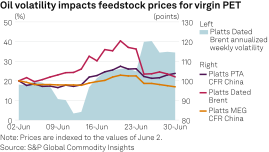
Despite market analysts discussing a potential crude oil price hike to over $100/b due to the conflicts, prices have rebounded to around $70/b.
Persistently low margins, coupled with upstream volatility, prompted major Asian PET producers to discuss potential run rate cuts mid-June, while others chose to undertake turnarounds in their PET units, adding bullish pressure on resin prices.
R-PET impacts
The improved attractiveness of R-PET amid rising virgin resin costs led several recyclers -- previously halted or operating at low rates -- to increase their run rates throughout June, as the market awaits the typical seasonal improvements in demand in the second half of the year.
Increased bids for feedstock, particularly from food-grade pellets makers, exerted upward pressure on scrap prices during the month.
Recyclers were heard aiming to capitalize on lower feedstock costs following May's price declines and on the diminished appeal of the virgin resin alternative.
In contrast, Envases Universales, which planned to launch its integrated 41,000 mt/year R-PET preform facility in Ponta Grossa, Paraná, in July, has postponed its opening to late 2025 as it addresses machinery commissioning and works toward plant homologation and obtaining the necessary permits, according to sources.
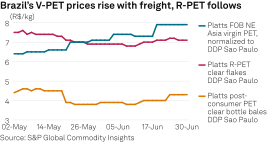
Downstream demand levels, however, have not met expectations, with many market participants noting lower-than-anticipated buying interest in finished R-PET products.
Outlook
Looking ahead, market participants are hopeful that demand will rise in the coming months due to seasonal trends.
Still, concerns over price movements and virgin resin stock levels have tempered this optimism.
Some believe the improved cost appeal of recycled material will boost buying interest, while others warned that high virgin resin inventories may dampen demand, especially with rising imports throughout 2025.
A normalization of the freight market could once again enhance the price competitiveness of virgin PET, while developments in US tariff policy on July 9 -- when a 90-day pause on non-retaliating countries ends -- could also alter the landscape.
Meanwhile, a deteriorating economic outlook stemming from Brazil's tight monetary policy may lower companies' willingness to purchase recycled material, given its typical price premium.
The absence of regulations mandating the use of recycled content in Brazil discourages many companies from operating with lower margins for marketing purposes or only to meet voluntary sustainability targets, sources have said.
Recent reports from the National Confederation of Industry indicated that confidence among entrepreneurs in R-PET downstream sectors declined in June, with the beverage sector hitting a 12-year low.
The food and textiles industries also reported low confidence regarding current conditions and economic expectations.
US, Europe, Asia
In the US and Europe, R-PET demand has also struggled in recent months due to the wide price spread compared to virgin material.
In Europe, although recycled content mandates have kept R-PET prices at elevated levels, buyers shifted to virgin resin due to the absence of penalties and economic incentives.
Lower demand in the US has exerted downward pressure on prices since their peaks in early May.
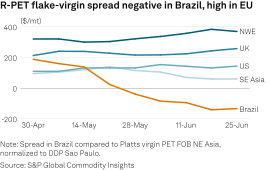
In Asia, an export-driven market, increased freight costs for exporting flakes to the US and Europe have dampened demand, with some recyclers temporarily halting operations, local sources said.

Editor: