Chemicals, Crude Oil, Aromatics
March 09, 2026
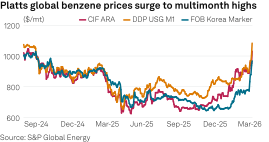
Global benzene prices hit multimonth highs across Asia, Europe, US Gulf
HIGHLIGHTS
Global benzene prices track upstream feedstock movement
Feedstock crunch triggers production cuts, force majeures in Asia
Strait of Hormuz disruption crimps supply
Global benzene prices rose as the upstream energy complex, such as crude oil and naphtha, key feedstocks for benzene production, increased amid the ongoing conflict in the Middle East.
Asia
Asian benzene prices soared to a 17-month high March 6, driven by a rally in crude oil and mounting feedstock supply concerns stemming from the Middle East war.
The Platts-assessed Asian benzene FOB Korea marker rose for the fifth consecutive session, reaching $967.67/metric ton, a $195/mt week-over-week increase. This is its highest level since Oct. 7, 2024, when prices were assessed at $984.33/mt.
The effective closure of the Strait of Hormuz has emerged as a critical issue for Asia-based market participants.
"Feedstock supply is tightening, and logistics will get more expensive, but I think buyers will draw down inventory and wait for prices to ease rather than pay up for expensive prompt cargoes," a Southeast Asia-based benzene trader said. "It's wait-and-see for now."
In both physical and paper markets, the April/May intermonth contango structure flipped to backwardation during the week ended March 6, signaling strong demand for front-month cargoes.
Several trade sources said South Korean crackers are reducing run rates, which is expected to further constrain Asian benzene supplies.
South Korea's GS Caltex and LG Chem have reportedly cut cracker operating rates, while Yeochun NCC declared force majeure, citing "critical disruption in the procurement of raw materials" due to the Strait of Hormuz blockade in a letter to customers dated March 4.
Amid upstream supply fears and news of China's plans to halt gasoline exports, key chemical futures contracts, including benzene, have surged.
The front-month April Benzene 2604 futures contract listed on the Dalian Commodity Exchange jumped Yuan 493, or 6.99%, to hit its trading limit of Yuan 7,546/mt March 6.
"There may be plans to reduce petrochemical production for more fuel production" in China, a Southeast Asia-based analyst said.
Meanwhile, a Chinese producer expected benzene supplies to tighten further.
"March is already going to be tight," that same producer said. "Moreover, production in China is also decreasing as some refineries are lowering run rates."
Sinopec raised its East China benzene listed price daily throughout the week ended March 6, with a cumulative increase of Yuan 1,350/mt week over week, reaching Yuan 7,500/mt March 6, up from Yuan 6,150/mt Feb. 27.
Europe
While Europe has seen less direct impact from the restricted flow of feedstocks and benzene out of the Persian Gulf, as most flows head to Asia, the overall tightening Asian supply and disruption to global shipping activity have raised concerns about the flow of imports into the region.
Combined with the primary driver of soaring crude and naphtha values, the Platts CIF Amsterdam-Rotterdam-Antwerp marker climbed to $1,031/mt March 6, up $142/mt week over week, and the highest level seen since August 2024.
Market players at the European Petrochemical Luncheon in Rome March 4-5 also saw an incentive for styrene producers to raise output as much as possible, given mounting supply concerns amid disruption to Saudi Arabian exports and already-expected European supply issues.
"I think if you're an ethylbenzene/styrene producer, you probably want to be running flat out right now if you can," a benzene trader said.
While around 30,000 mt of benzene imports are expected to arrive in the EU in March, benzene players said the import picture was becoming less clear.
"I don't know which are affected or not," a producer said. "If India reduces the run rates, I'm not sure benzene will come."
India was heard to be the largest exporter of benzene to Europe so far in 2026, sending several thousand metric tons already, with roughly another 18,000 mt heard to be en route for March.
CIF ARA spot bid-offer ranges were heard to have shifted even higher March 9 amid further energy complex gains, though they remained wide, with a trader saying they were "difficult to narrow with crude movements."
US Gulf Coast
The US Gulf Coast benzene spot market surged to multimonth highs during the week ended March 6, driven by climbing upstream crude prices.
"Since early March, the closure of the Strait of Hormuz has pushed crude prices sharply, in turn lifting benzene values significantly," S&P Global Energy CERA analyst Sahar Qavi said. "Benzene prices have continued to strengthen alongside crude rather than fundamentals."
Prompt-month USG benzene prices jumped from 304 cents/gal Feb. 27 to 362 cents/gal March 6, a week-over-week increase of 19.1%, according to Platts data.
This marks the highest prompt-month benzene price since July 26, 2024, when it reached 366 cents/gal, according to Platts data.
The market's strength mirrored the broader energy complex, highlighted by WTI crude settling at $90.90/b March 6.
Benzene "tracks crude," a trader said when asked if prices will continue to rise.
USG benzene touched an 18-month high March 3, and momentum persisted throughout the week as prices continued to climb, hitting a 19-month high March 6.
"Benzene demand may lift due to Iran war-related supply uncertainties, as buyers in other regions look to replace missing volumes, particularly once styrene turnarounds are complete," Qavi said.

Editor: