Chemicals, Polymers
January 07, 2026
COMMODITIES 2026: Weak auto sector puts brakes on global ABS, nylon growth
HIGHLIGHTS
Asian auto imports pressuring European ABS
China EV tax exemption shift to hit nylon
US facing tariffs, interest rates headwinds
This is part of the COMMODITIES 2026 series, where our reporters bring to you key themes that will drive commodities markets in 2026.
Weak consumer demand, tariff-induced trade restrictions, and intense competition wracked the global automotive industry in 2025. The outlook for 2026 is not much better, and its impact will be felt across polymer markets that focus on the automotive sector, from ABS to nylon and polymer additives like carbon black. As a result, expectations for demand and pricing are subdued.
European automotive slump weighs on ABS
European automotive nylon consumption is expected to remain weak through 2026, with market fundamentals unlikely to shift without significant changes to trade dynamics or cost competitiveness.
The increase of competitively priced Asian vehicle imports in the European market has reduced demand for domestically produced automobiles, consequently dampening demand for engineering polymers in the region.
Chinese vehicle manufacturers BYD and Jaecoo saw a large increase in vehicle sales in 2025 at 485.15% and 13,408.13%, respectively, in the UK market.
ABS reached its all-time lowest FD NWE spot price at Eur1,430/mt on Dec. 17, according to Platts assessments. Platts is part of S&P Global Energy.
Market sources indicated the structural nature of these competitive pressures suggests limited prospects for near-term recovery. The combination of sustained import competition and altered consumer purchasing patterns could mean prolonged subdued consumption in the automotive sector.
The persistence of Chinese state support for automotive exports, with subsidies that enable vehicles to be offered at price points European manufacturers cannot match, amid higher European interest rates and elevated production costs, points to continued constraints on domestic production volumes, maintaining downward pressure on nylon pricing and utilization rates across Europe.
An ABS distributor said they don't expect any changes in demand until mid-2006 or even 2027.
EV policy shift could further slow Asian auto demand
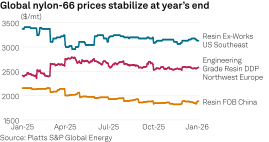
The Asian nylon market is facing similarly weak conditions, as participants attempt to balance a gradual slowdown in auto demand growth against increasing nylon 66 production capacities.
Adding to existing headwinds is the gradual phasing out of China's purchase tax exemption for electric vehicles, which began Jan. 1. This could impact the number of new car sales and result in high auto inventory levels, a Chinese nylon buyer said.
"With the EV share in the Chinese auto market exceeding 50%, growth is now more about gaining market share from rivals and expanding into overseas markets," a trader said.
Amid weak conditions in the domestic market, China nylon 66 producers are increasingly exploring opportunities in overseas markets, but a significant headwind is that demand for polyamide 66 polymers is lagging capacity expansions, leading to reduced utilization and diminished margins.
This is driving uncertainty regarding new adipic acid capacities in the coming years, said Hong Shen, senior principal analyst for nylon intermediates at S&P Global Energy CERA. Many of those plants are part of a combined investment strategy for polyamide 66 polymer production, which also includes the production of HMDA or adiponitrile.
US nylon suppliers see poor demand persisting
Many US nylon market participants are pessimistic about the prospects for automotive sector recovery in H1 2026, citing persistent macroeconomic and trade policy uncertainties that could continue to dampen demand, despite growing nylon consumption per vehicle.
A nylon supplier said they were "not really optimistic" about the 2026 market, citing that interest rates are "still too high" and expressing concerns about consumer financing challenges constraining new vehicle purchases.
The proposed 0.5% interest rate adjustment is viewed by industry sources as insufficient to stimulate a meaningful recovery in auto loan demand, suggesting that current market conditions may persist well into 2026.
A distributor predicted that 2026 would bring "challenging times," citing the impact yet to be seen in the market from tariff policies aimed at reducing automotive imports from China to the US and Mexico. The distributor added that further price decreases for nylon would do little to bolster buying demand.
Sources said price stability is expected to persist as customers will be reluctant to purchase at higher prices even when automotive demand recovers.
Market sources also shared a significant disconnect between automotive production signals and nylon pricing. Production lead times of 60-90 days are creating delays before any automotive recovery translates into stronger petrochemical pricing.

Editor: