Agriculture, Biofuel, Oilseeds, Vegetable Oils
December 30, 2025
COMMODITIES 2026: Biofuel mandates redraw the soybean oil map in South America
HIGHLIGHTS
Brazil's rising biofuel mandates absorb domestic supply
Indonesia's B50 plan could reshape global vegoil flows
SBO prices likely to trail heightened demand
This is part of the COMMODITIES 2026 series, in which our reporters bring to you key themes that will drive commodities markets in 2026
South America's soybean oil markets are being pulled in different directions heading into 2026.
In Brazil, domestic policy—led by higher biodiesel blending mandates—is increasingly absorbing supply and reshaping trade flows. In Argentina, prices remain anchored to international demand, with South Asia continuing to set the tone.
These contrasting dynamics emerge as policymakers across key vegetable oil-producing countries weigh more aggressive biofuel mandates. Indonesia's proposed B50 program, alongside Brazil's planned move to B16, could alter global supply and demand balances, with ripple effects across the SBO complex.
Brazil: Policy-driven demand reshapes flow
Brazil's SBO market enters 2026 on the back of strong crushing activity. Throughout the 2024-25 cycle, monthly levels constantly exceeded those of the previous harvest. S&P Global Energy CERA estimates that the season will conclude with a record-high crush, with another increase projected for the 2025-26 season.
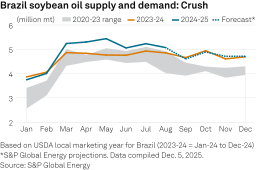
The record soybean production supporting this expansion was driven by two key factors: Brazil's growing role as China's primary supplier amid shifting US-China trade dynamics, and stronger domestic demand from the biodiesel sector following the increase in the blending mandate to 15%.
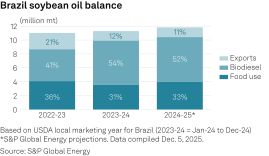
In 2025, domestic soybean oil negotiations outperformed exports, according to market participants. After the blend rose to 15% from 14% Aug. 1, domestic deals were increasingly priced at a premium to FOB export values. Traders broadly agree this shift has been the main driver behind the sharp fall in exports since August, with November marking the lowest export volume of the year and the weakest November since 2020.
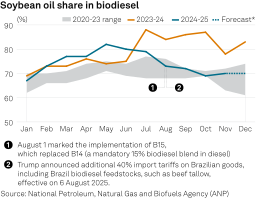
Data from the National Agency of Petroleum, Natural Gas, and Biofuels showed that the share of soybean oil in biodiesel declined after the tariffs took effect. Looking ahead, market participants warn that if US tariffs are lifted and beef tallow exports return to earlier levels, soybean oil prices could face renewed support in 2026.
"The 2026 outlook heavily depends on when B16 will be implemented," a Brazil-based trader said. Although it is planned for March, the government has already signaled it may struggle to meet the RenovaBio timeline.
"B16 requires very strong crushing rates, and the big concern is the volume of soybean meal that would hit the market," the trader added, noting that meal oversupply could pressure margins.
In 2025, soybean meal prices remained under pressure for most of the year, driven by the record-high crushing activity as strong demand for soybean oil increased processing volumes and, consequently, the supply of meal.
Brazilian meal processors are entering 2026 with historically low inventories, facing challenges in securing raw materials for the first months of the year.
Argentina: Global demand remains the anchor
Argentina's soybean oil market is expected to head into 2026 driven primarily by international demand rather than domestic mandates.
As the world's largest SBO exporter, Argentina sends more than half of its shipments to India, leaving FOB prices closely tied to South Asian buying patterns. Meanwhile, the biodiesel mandate continues to play a limited role in driving crush demand, as the mandated blend is relatively small.
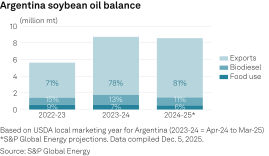
In 2025, Argentine soybean oil was generally more competitive for international buyers than Brazilian material. Even so, traders note that palm oil from Indonesia—the most liquid and cost-efficient vegetable oil—remains the main benchmark for South Asian importers, often limiting upside for soybean oil prices.
That balance could shift if Indonesia advances its B50 biodiesel program. "There would be less availability of CPO, and more demand for rival vegoils," a broker based in Argentina mentioned.
Additional support could come from India, where traders expect stronger demand for vegetable oil amid tighter supplies of Black Sea sunflower oil next year.
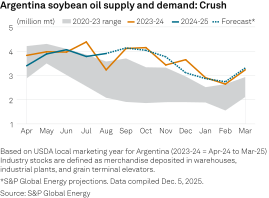
Crush margins remain under pressure, largely due to weak soybean meal prices. CERA estimates that crushing volumes in the 2024-25 cycle will fall below those of the previous cycle, although they will remain above the 2020-23 range.
Exports, however, are set to close the season at record highs, supported by a temporary suspension of export taxes. During the brief window of zero duties, export commitments across the soybean complex surged, volumes that continue to flow through the market.
On the meal side, Argentina's export pace has been impacted by changes in export taxes and limited supply. Key importing regions, such as Europe and Iran, are actively seeking to replenish low stocks, and new soybean meal demand from Indonesia's poultry sector could provide additional support if planned government programs are implemented.
Overall, unless there are significant changes in trade dynamics or unexpected disruptions, meal prices are likely to remain under pressure throughout 2026. In contrast, SBO prices are likely to trail heightened demand amid global biofuel policy ambitions, reflecting the overall outlook for the South American soybean complex.

Editor: