Agriculture, Biofuel, Vegetable Oils, Oilseeds
December 18, 2025
COMMODITIES 2026: Firm demand to offset larger supplies in palm oil markets
HIGHLIGHTS
Indonesia's biodiesel use to underpin global prices
Palm oil was more expensive than soybean oil in 2025
Demand to pick up in 2026 with key buyers low on stocks
This is part of the COMMODITIES 2026 series, where our reporters bring you key themes that will drive commodities markets in 2026.
Firmer regional demand will underpin palm oil markets through 2026 despite higher production forecasts, expectations from industry participants across the supply chain showed.
Indonesia, the world's largest palm oil producer, is set to roll out a nationwide 50% biodiesel blending mandate in 2026, a move expected to absorb nearly half of its crude palm oil output and tighten exportable supplies
Meanwhile, global demand is forecast to strengthen, with India and China increasing imports and seasonal consumption during Ramadan and Lunar New Year boosting buying.
Palm oil remains a "structural winner over the next 5-10 years," Dr Benjamin Hook, head of Agribusiness intelligence at UK-based commodity risk firm Global Data, said at an industry event in November.
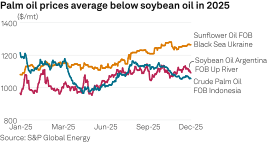
In physical markets at origins, the average price of crude palm oil FOB Indonesia was at $1,090/mt in 2025, according to data from Platts, part of S&P Global Energy. This was higher than its closest rival, Argentina soybean oil FOB upriver at $1,052/mt, but lower than Black Sea Ukraine sunflower oil at $1,173/mt.
Bullish biodiesel mandates
Indonesia plans to implement a nationwide B50 biodiesel target in 2026, a move that would eat into exportable palm oil supplies as the vegetable oil is the primary feedstock used to make biodiesel in the country.
Under the current blending mandate of 40% or B40, 23% of Indonesia's annual crude palm oil output of around 50-51 million metric tons is used for biodiesel production, Kuala Lumpur-based Glenauk Economics said in November, adding that this share could rise to 41% under a full B50 rollout, which would consume about 21 million mt of CPO.
While Jakarta has made several announcements supporting the transition to B50 in 2026, traders and research houses expect B50 to be implemented in the second half of the year as the government must allocate additional funds to subsidize biodiesel makers.
To fund the increased biodiesel blending program, export levies on palm oil exports may be hiked by about 5% to 7.5% between November 2025 and January 2026, multiple analysts told Platts.
US biofuel policies, set to be implemented in 2026, will also keep soybean oil prices high, indirectly supporting palm oil demand, according to a research note from Malaysia-based CIMB Securities in December.
Production forecast
Indonesia's crude palm oil production could rise to about 56 million metric tons in 2025, according to a forecast issued by the Indonesian Palm Oil Association, or Gapki, on Oct. 28, an upward revision from its previous forecast of 53.6 million mt for the year.
Favorable weather conditions in 2025, with no prolonged rainfall, along with healthy prices in 2024, have encouraged farmers, Gapki Secretary General Hadi Sugeng had said in October.
For Malaysia, production is projected to surpass 20 million mt for the first time in 2025, driven by better weather, increased labor, and new high-yield plantations, according to the Malaysian Palm Oil Board.
Palm oil demand
Global palm oil demand is set to strengthen in early 2026, driven by seasonal consumption during Ramadan and the Chinese New Year and Indonesian domestic demand, which is likely to support prices, market sources said.
India, the largest buyer of vegetable oils in the world, is expected to import 8.7 million mt in the marketing year 2025-26 (October-September), a rise of 11.5% from 7.8 million mt in 2024-25, according to a US Foreign Agricultural Service or FAS report released in August, citing a rebound in domestic consumption following multi-year lows in 2025.
"The next year will start with a rise in demand in India, as requirements for January, February and March have not yet been fulfilled, with only around 25% coverage done till now," an India-based vegetable oil broker told Platts.
Brazilian and US soybean oil exports are likely to face constraints due to domestic biofuel mandates, increasing reliance on palm oil, a Malaysia-based exporter said.
China, the second largest importer, is expected to increase its palm oil imports to 5 million mt in 2025-26, up from 4.6 million mt, with the Lunar New Year further lifting demand, US FAS said.
Derivatives mirror palm market
The palm oil derivatives market is anticipated to track the movements in the palm oil market in 2026, with industry sources saying that prices for stearin and palm fatty acid distillate (PFAD) will mirror fluctuations in CPO prices.
"We typically see a seasonal lull period around the year-end, as buyers cover their stocks, and the Oleochemical sector sees reduced activity during winter. However, demand is expected to increase in the summer," a Malaysia-based exporter said.
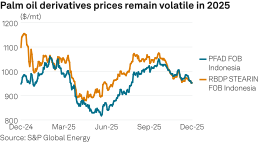
The Indonesian PFAD price fell to $952.5/mt on Dec. 12, a 2.80% decline from the start of the year, and the price of RBDP stearin FOB Indonesia fell 17% to $952.5/mt by Dec. 12, according to Platts data.

Editor: