Agriculture, Biofuel, Vegetable Oils
November 13, 2025
Biofuel demand drives vegetable oil prices to multi-year highs

HIGHLIGHTS
Biofuel demand surges, driving vegetable oil prices higher
Increased blending mandates boost feedstock utilization
Trade disruptions, costs challenge biofuel supply chains
Global demand for vegetable oils from the biofuel sector is surging, pushing international prices to their highest levels since mid-2022, according to the latest FAO Food Outlook report released Nov 13.
The FAO Vegetable Oil Price Index reached 169.4 points in October 2025, up 11.3% from May and marking the sharpest increase among major food commodity indices over the period.
Global biofuel demand is set to remain robust in 2026 as major producer countries pursue supportive policies and higher blending mandates, despite diverging feedstock trends and volatile markets. The latest FAO Food Outlook identifies oilseed-based biofuels and sugarcane ethanol as areas of growth, driven by government initiatives in Indonesia, Brazil and the US, while high input costs and trade disruptions challenge supply chains.
The FAO forecasts a 2.1% expansion in global utilization of oils and fats for the season. This growth is "largely driven by expectations of higher demand from the biofuel sector," according to the report.
This rising demand for feedstocks, underpinned by "supportive policies" in major consuming countries, is expected to outpace production. As a result, the FAO projects that global carry-over inventories of oils and fats will decline for a third consecutive season in 2025/26.
This tightening supply-demand dynamic is already reflected in pricing. The FAO Vegetable Oil Price Index in October 2025 reached its highest level since July 2022. The report specifically highlighted "Indonesia's planned increase in biodiesel blending mandates in 2026" as a key factor supporting palm oil prices and tightening the market.
The biofuel sector's pull is not limited to biodiesel. The FAO also projects a record 1.614 billion metric tons of global coarse grain harvest in 2025. This ample supply is expected to meet rising demand for "industrial purposes" for maize, a key feedstock for ethanol.
In the sugar market, the report noted that in Brazil, the world's largest producer, "a greater share of the sugarcane harvest is expected to be directed to ethanol production," further cementing the link between energy policies and agricultural commodity demand.
Vegetable oil-based biofuels: margins and mandates
Global utilization of vegetable oils for biofuel is forecast to expand by 2.1 percent in 2025-26, led by increased mandates and supportive government policies across key consuming regions.
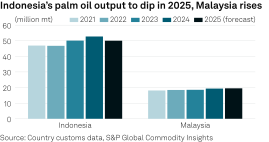
Indonesia's scheduled hike in biodiesel blending in 2026 is boosting palm oil prices and tightening exportable supplies, even as Malaysia surprised markets with above-expectation production, temporarily easing global prices.
Indonesia's palm oil production for January-September 2025 was 43 million mt, marking a 11% increase year over year, Eddy Martano, chairman of the Indonesia Palm Oil Association, or GAPKI, said at an industry conference Nov. 13.
For Platts FOB Indonesia, CPO offers were reported at $1,065/mt for November loading, with indicative bids $15 lower. December loading cargoes were priced $5 higher.
November loading offers for Stearin were at $992.50/mt and for PFAD at $997.50/mt, with indicative bids about $20/mt lower for both. December loading cargoes were priced similarly to November.
In Argentina, the government raised the official biodiesel price by 6.2%, while temporarily reducing the diesel-blending mandate from 7.5% to 7%, citing surging soybean-oil feedstock costs.
Soybean oil cash spot prices FOB Paranagua for December delivery increased Nov. 11, while Chicago Board of Trade soybean oil futures for December closed at 51.10 cents/lb, up 0.52 cent, or 1.03%, from Nov. 10.
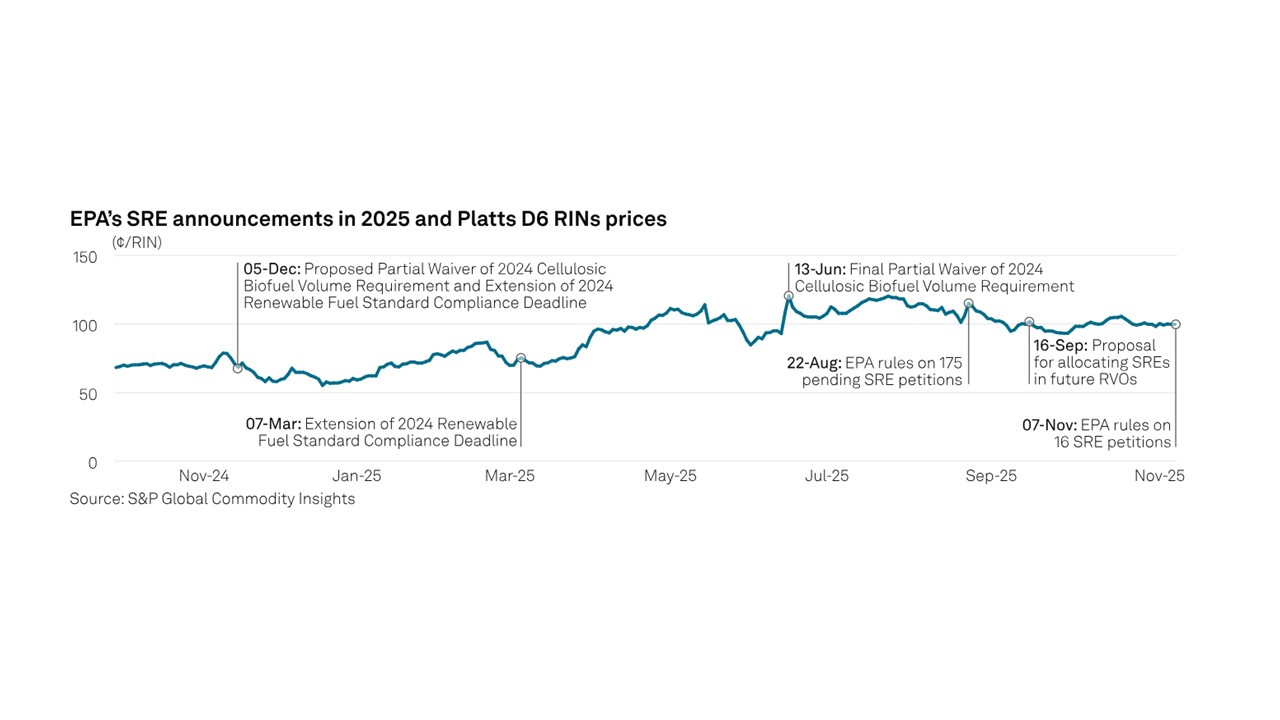
Rapeseed and soy oil demand is firm, underpinned by tight EU supplies and new domestic biofuel demand in Brazil and the US.
Despite the rise, world carry-over inventories are expected to decline for the third consecutive year due to faster demand growth, tightening availability for both food and fuel sectors.
Ethanol outlook: feedstocks and global flows
Brazil's sugarcane output is forecast to rebound by 4 percent after weather-driven setbacks, with a greater share diverted to ethanol production as producers respond to sustained government incentives and higher blending mandates.
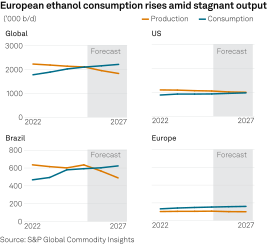
India's 2025 harvest recovery, prompted by expanded cane area and favorable monsoon conditions, will support both sugar and ethanol output, while Thailand's expansion also underpins regional supply.
These shifts ensure continued global surplus, keeping ethanol feedstock prices stable even as output rises.
Freight, policy volatility and market risks
Global trade in vegetable oils is expected to increase as Asian buyers replenish stocks, but Red Sea logistics disruptions and new transit fees have raised voyage costs by up to 24 percent in recent months.
Price support for biofuel feedstocks comes from high ocean freight rates and regionally fragmented regulatory environments, alongside intense competition for export markets amid shifting trade flows.
Looking ahead, macroeconomic uncertainty, freight costs, and weather volatility pose persistent risks to biofuel cost structures and supply reliability.
Continued demand growth for biofuels in 2026 will hinge on policy support and regulatory certainty, set against the backdrop of tightening feedstock availability, rising voyage costs, and market volatility.

Editor: