Agriculture, Meat, Livestock
November 05, 2025
Lean beef trimmings supply crunch looms as global cattle herd shrinks

HIGHLIGHTS
US lean beef trimmings prices hit record high
Global cattle herd shrinking, reducing supply
Buyers take advantage of high domestic cow slaughter
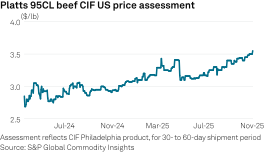
The Platts assessment for 95CL beef CIF US for a 30- to 60-day shipment period hit $3.55/lb, or $7,826/mt Nov. 4, its highest value since the assessment started March 18, 2024.
The trade volume of lean beef trimmings has been thin amid low demand as buyers have had access to a higher domestic supply for spot purchases. However, the limited global supply has supported prices for forward contracts, according to sources.
In New Zealand, one of the main US lean beef trimmings suppliers, "the beef season has started, but production is well below the previous year, and below the previous three-year average," a trader said. "Price of cattle is extremely high, too."
"2025 marked large levels of female harvest in Brazil and Australia due to prices demanded in export markets," Ryan Urie, global head for crops and proteins analysis for Energy, said. "We are likely to see one of the smallest global cattle herds in 2026, reducing total global availability. Couple this with female retention in the US, and supply availability is in trouble for 2026."
Regarding the US domestic demand, "at what price do grinds and food service lose demand?" Urie added. "It's hard to be a beef demand bear as the consumer has been tremendously resilient, but at some point, [consumer] budgets will get stretched. But US consumers have a high affinity to beef, and high gross domestic product, GDP, numbers, as the current ones, reflect a high correlation to beef consumption."
Buyers for spot take advantage
Trade volume has been thin, as buyers have been securing coverage at lower domestic spot prices to mitigate the high import prices amid the seasonal increase in the slaughter numbers of cows and bulls, analysts said.
"Lower fresh domestic 90CLs values for spot are making imported beef no longer a bargain," a second trader said. In addition, buyers are holding their next year purchases "waiting on some direction on the Supreme Court hearings Nov. 5 regarding the use of the International Emergency Economic Powers Act, IEEPA, to broadly impose tariffs on goods entering the US."
According to the US Department of Agriculture data, 110,000 head of bulls and cows were slaughtered in the week ended Nov. 1. The last weekly slaughter figure was the highest since March 15, up 2.8% from the previous week, 3.4% from the previous six-week average, but down 8.7% from the same week in 2024 and down 24.7% from the same week in 2023.
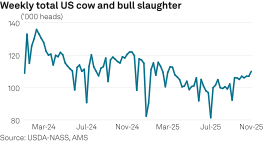
So far in 2025, 4.556 million head of bulls and cows, the main source of lean trims, have been slaughtered to Nov. 1, down 11.4% from the same period in 2024, according to the latest data from the USDA in its Daily Livestock and Poultry Slaughter reports.
"Beef cows are in the middle of the culling season, with farmers sending more head to slaughter amid less forage, while dairy cows have been retained as the dairy margin has been positive enough to send fewer dairy cows to slaughter," Katherine Mera, US dairy analyst at S&P Global Energy, said.

Editor: