Agriculture, Energy Transition, Biofuel, Renewables
September 19, 2025
Indonesia mulls B45 biodiesel as B50 faces feasibility delays; B40 demand surges

HIGHLIGHTS
Indonesia mulls B45 biodiesel as interim B50 step
B40 biodiesel demand exceeds 2025 quota target
Feedstock, capacity constraints loom for B50 rollout
Indonesia is considering introducing a 45% biodiesel blend (B45) as an interim step toward its B50 mandate, as technical and economic hurdles threaten to delay full implementation of B50 beyond 2026, senior energy officials said this week.
The Ministry of Energy and Mineral Resources has yet to complete road tests and feasibility studies for B50, raising questions about whether the program can launch as planned next year.
"We've never conducted specific tests for B45, but studies are underway on the additional 5% blend. We've received the initial report, but there are still many critiques to address," said Eniya Listiani Dewi, Director General of New, Renewable Energy and Energy Conservation at ESDM, on Thursday.
Energy Minister Bahlil Lahadalia confirmed that B50 trials are in their third phase, but a final decision on whether to roll out B45 first or move straight to B50 will depend on test results.
B40 Demand exceeds quota and appetite
Indonesia's Ministry of Energy and Mineral Resources expects national demand for its B40 biodiesel mandate to exceed the 2025 target of 15.6 million kiloliters (kl), with industry requests already signaling an additional 100,000–200,000 kl of offtake before year-end.
Director General of New, Renewable Energy and Energy Conservation Eniya Listiani Dewi said the ministry has received multiple requests for more biodiesel volumes and is evaluating them jointly with the Directorate General of Oil and Gas.
"We just issued a ministerial decree determining the volume. The next step is to achieve more than our target, so there's a possibility of exceeding it," Eniya said on Sept. 18.
Indonesia rolled out B40 — a blend of 40% palm-based Fatty Acid Methyl Ester (FAME) with petroleum diesel, as part of its strategy to cut fossil fuel imports, boost palm oil demand, and lower transport emissions.
The mandate was launched on Jan. 1, 2025, but had a transition period until Feb. 28, 2025 due to technical challenges. Full implementation was achieved by March 2025.
Subsidy requirements are also rising. The Palm Oil Plantation Fund Management Agency (BPDPKS) is projected to spend Rp 51 trillion ($3.1 billion) this year on B40 subsidies, up from the government's earlier estimate of Rp 35.5 trillion. The energy ministry has proposed an additional Rp 16 trillion to cover unpaid 2024 subsidies.
Feedstock, capacity constraints loom
If rolled out at full FAME content, B50 would require around 20 million mt of FAME, about 2 million mt more crude palm oil than current B40 levels. Five large-scale biodiesel plants are needed to meet that demand, of which three are under construction.
The Indonesian Biofuel Producers Association said existing production capacity of around 19.6 million kl could technically support B50, but high FAME prices and rising subsidy costs could strain public finances.
Industry groups, including the Indonesian Mining Association, have urged the government to evaluate B40 implementation before raising blend levels further, citing cost pressures on fuel-intensive sectors like mining.

Policy balancing act
Experts warn that moving too quickly to B50 could risk engine performance issues and supply chain disruptions if readiness is not ensured.
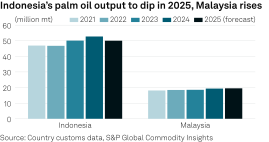
With CPO output forecast to rise from 48 million mt in 2025 to 50 million mt in 2026, according to industry estimates, Indonesia could still export about 22 million mt even under a B50 scenario.
However, higher domestic use could reduce export revenues and limit funding for biodiesel incentives.
Conversely, delays or a switch to B45 could keep more supply on the export market in the near term, easing tightness and providing relief to importing countries like India and China.
Diesel import demand may also decline under higher blending mandates, potentially narrowing Indonesia's trade deficit but further entrenching its dependence on volatile palm oil markets.
Platts, part of S&P Global Energy, assessed crude palm oil CFR WC India October shipment at $1,160/mt on Sept. 19, unchanged day over day.
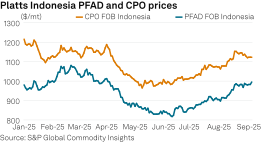
Platts assessed CPO FOB Indonesia October loading at $1,125/mt on Sept. 19, unchanged day over day. Platts assessed RBDPS FOB Indonesia October loading at $1,050/mt on Sept. 19, unchanged day over day. Platts assessed PFAD FOB Indonesia October loading at $1,007.50/mt on Sept. 19, unchanged day over day.

Editor: