Agriculture, Meat
August 11, 2025
Brazilian chicken cut exports to UAE rise in July as bird flu disrupts global trade

By Graham Style
HIGHLIGHTS
UAE's chicken cut imports jump 12.6% on month to 30,300 mt
Whole bird shipments hold stable at 21,200 mt in July
Bird flu recovery drives three-month export rebound
Brazil's chicken exports to the UAE surged month over month in July as the market continued recovering from a bird flu outbreak three months earlier.
Frozen chicken cuts led the rebound amid ongoing supply pressure in domestic Brazilian markets, according to the latest trade data from Brazil's Secretaria de Comercio Exterior, or Secex.
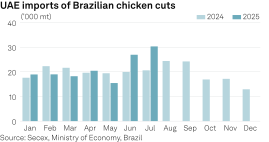
UAE imports of Brazilian frozen chicken cuts under HS code 020714 increased by 12.6% month over month to 30,300 mt in July from 26,900 mt in June, according to Secex data. The July volumes were nearly double the 15,400 mt imported in May, indicating a market recovery after bird flu disruptions that had limited trade earlier in the year. Year over year, imports of chicken cuts increased significantly from the 2024 volumes of 20,600 mt.
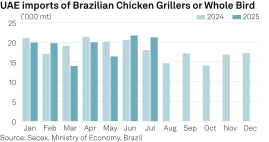
The strong monthly increase in chicken cuts contrasts with the steady level of whole bird shipments, which remained mostly unchanged at 21,200 mt in July, compared with 21,700 mt in June. Still, whole chicken exports continued to show solid year-over-year growth of 17.8% from 18,000 mt in July 2024, marking a notable recovery from May's low of 16,400 mt, when bird flu impacts were at their worst.
Market dynamics
The divergent performance of chicken cuts compared with whole birds reflects specific regional demand patterns and supply constraints impacting various product categories. Market participants said the limited availability of certain cuts, such as breast meat, is shaping trading activity across global destinations.
Brazilian exporters face mounting pressure from oversupplied domestic production and limited export options.
"Mexico is experiencing an oversupply of poultry products, resulting in downward pressure on prices," a trader said.
The trader said global market preferences for specific cuts have been influencing different performances, with "the Middle East being the primary market for griller products and therefore experiencing minimal change from the previous month, while the European markets remain closed and other regions face an oversupply of chicken breast cuts. The UAE tends to be the recipient of diverted supply."
A second trader said the high import volumes of recent months may not impact the market later in the year.
"A significant proportion of these July imports are managed by processors capitalizing on low prices," the trader said. "They are able to import and store volumes of chicken breast for longer periods of time to process."
The recovery from bird flu disruptions has left exporters seeking alternative markets as traditional destinations remain constrained.
"Brazil is reliant on Europe and China resuming imports to help ease current market pressure," the second trader also said.
Despite this, trading conditions in the UAE remain quiet due to the holidays and the summer slowdown. Market participants said activity was subdued, with many traders only returning from summer breaks in the coming weeks.
The UAE's role as a consistent outlet for Brazilian chicken cuts has grown in importance as other key markets remain disrupted.
Platts, part of S&P Global Energy, last assessed the CIF Middle East chicken breast price at $2,700/mt Aug. 8, down $50 from Aug. 5.

Editor: