July 14, 2025
Top shrimp suppliers to US face uncertainty as tariff pause ends
By Ignacio Garcia and Felipe Peroni
HIGHLIGHTS
Top US shrimp supplier India's negotiations drag on
Indonesia, Thailand hit with reciprocal tariffs announced April 1
Shrimp prices recover after initial drop on tariff uncertainty
The end of the 90-day pause of US reciprocal tariffs on July 9 did not bring relief to the global shrimp market, with India's negotiations dragging on and several seafood supplying countries hit with fresh tariffs.
US President Donald Trump has announced tariffs on several countries that are key US shrimp suppliers, while extending a tariff pause in India as negotiations continue. India is the US' largest provider of shrimp.
After months of talks, Indonesia and Thailand will face tariffs of 32% and 36%, respectively – the same amount of the reciprocal tariffs announced for the countries April 1.
Indonesia was the third-largest supplier of shrimp to the US this year, with shipments reaching 57,740 mt from January to May, up 1.9% year over year, according to data from S&P Global Intelligence's Global Trade Atlas. Vietnam ranked second, with 21,158 mt, up 3.5% year over year, followed by Thailand, with 10,515 mt, a growth of 21.6%.
Other exporters of shrimp were also hit with tariffs, such as Mexico, with 30%. The country exported 7,128 mt of shrimp to the US from January to May, an increase of 15.2% on the year.
Vietnam and India were exceptions. Following several weeks of negotiations, Vietnam reached a deal for 20% tariffs, lower than the 46% announced in April, but above the baseline 10% rate.
India, which sent 133,449 mt of shrimp to the US in January-May, had its negotiation deadline extended to Aug. 1. Yet importers are not entirely optimistic about the ongoing talks, as uncertainty remains.
"No changes, just additional uncertainty," a US-based importer of Indian shrimp told Platts.
Ecuador, the second-largest exporter with 95,419 mt in January-May, faced a 10% reciprocal tariff from the start, resulting in minimal market disruption.
Since last year, US shrimp imports have also been subject to a combined antidumping and countervailing duties, with most Vietnamese companies facing 28.6% duties, India with 8.3%, Indonesia with 4.61% and Ecuador with 3.8%.
The pause, initiated on April 9, exempted most countries from specific tariffs, establishing a uniform baseline tariff of 10% while increasing tariffs on imports from China. In 2023 and 2024, China ranked eighth among shrimp exporters to the US, with total exports of 3,630 mt and 2,873 mt, respectively. However, shrimp imports from China to the US during April and May 2025 were minimal, at just 16 mt and 1 mt, respectively.
The primary effect of the tariffs has been increased uncertainty in the market. Prices initially dropped but returned to their original levels as the market adjusted to the "new reality."
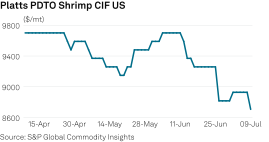
Platts, part of S&P Global Energy, assessed PDTO Shrimp CIF US at $8,708/mt on July 14, unchanged day over day.
Many Indian packers rushed to ship as much shrimp as possible during the pause, and some US companies stockpiled inventory before tariff rates could rise. With strong production in aquaculture-rich countries and high inventories, prices have reached their lowest levels in the past 12 months.
Many countries are bracing for the reinstatement of previously scheduled tariffs, leading to uncertainty in trade relations and potential retaliatory measures from affected nations. Trump indicated he would handle future tariffs via letters to foreign nations, suggesting further unilateral actions without negotiated agreements. This approach raises concerns for countries that had hoped for a more collaborative negotiation process.

Editor: