Fertilizers, Chemicals, Energy Transition, Renewables
April 15, 2026
Europe's ammonia imports fall in Q1 as buyers shun US product under CBAM

Editor:
HIGHLIGHTS
EU ammonia imports fall to 717,000 mt in Q1
US shipments drop 56% amid high carbon costs
Algeria supplies 30% of EU seaborne ammonia
European ammonia imports dipped and buyers steered clear of US product in the first quarter of the definitive phase of the EU's Carbon Border Adjustment Mechanism, ship tracking data compiled by Platts, part of S&P Global Energy, showed.
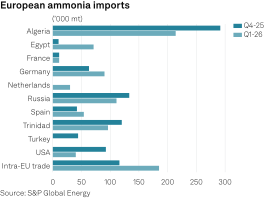
According to the data, about 717,000 metric tons of seaborne ammonia were imported to the EU in Q1, compared to 787,000 mt in fourth-quarter 2025.
The clearest change from the commencement of the CBAM's definitive phase was a fall in US imports -- with only 40,000 mt imported in Q1 compared to about 90,000 mt in Q4.
European ammonia buyers have been wary of US product since the beginning of CBAM due to its high default carbon intensity value, traders and buyers have told Platts. Under the CBAM, US product has a default carbon intensity of 3.41 metric tons of CO2 equivalent, the second-highest rating globally. Using the latest EU Emission Allowance weekly average, importers face a CBAM exposure of about $170/metric ton for US product.
Conversely, the calculated CBAM cost for an ammonia cargo with a carbon intensity of 2.2 mtCO2e was $60.84/mt April 10.
Adding to its disadvantage, US ammonia also faces a 5.5% duty rate into the EU.
Algeria remained the single largest origin of EU imported seaborne ammonia, providing 30% of the supply, more than double both Russian and Trinidadian production, the next largest suppliers. Both Algeria and Trinidad hold duty-free status to the EU, while Russian seaborne imports have exclusively been shuttled by EuroChem to its own operations at Antwerp in 2026.
Some US ammonia is still flowing to Europe, the data showed, but into Norway instead, which is not subject to CBAM or the EU import tariff.
No US ammonia was imported into Norway in Q4 2025, while 39,000 metric tons across two shipments was delivered in Q1.
Conversely, intraregional EU trade climbed, from about 116,000 mt shuttled between EU locations in Q4 to 185,000 mt in Q1.
Platts assessed CFR NW Europe duty paid/duty free ammonia at $875/mt April 14.