Agriculture, Fertilizers, Chemicals, Biofuels, Grains, Oilseeds
April 01, 2026
US corn, soybean farmers face rising fertilizer, fuel costs amid Middle East war
By Sampad Nandy and Sayona anna John
Editor:
HIGHLIGHTS
Rising fuel, fertilizer costs may push farm input costs higher
Corn planting intentions drops 3%, soybeans rise 4% in 2026
E15 waiver, biofuel rules boost demand outlook
US corn and soybean farmers are likely to face pressure from rising fertilizer and fuel costs amid the ongoing war in the Middle East, ahead of the upcoming planting season, US-based market participants said March 31.
Average US diesel prices reached $5.4/gallon on March 31, up $1.81 year over year, according to US Energy Information Administration data. Diesel plays a key role in farming activities. US farmers plant corn and soybeans during April-May.
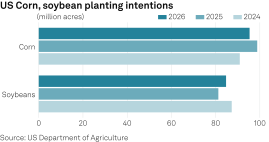
US farmers intend to plant 95.3 million acres of corn in 2026, down 3% from 2025, according to a US Department of Agriculture report released March 31. The report also showed soybean planting intentions at 84.7 million acres in 2026, 4% higher than in 2025.
"Importantly, the survey for this acreage report was completed before much of the current geopolitical risk was fully realized, so changes to acreage could occur by the next adjustment," S&P Global Energy CERA said in a report on March 31.
CERA forecasts US corn acreage at 95.2 million acres, down 3.6% on year, and US soybean acreage 4.7% higher on year at 85 million acres.
"With rising fuel prices, it would become expensive to plant crops across the intended planting area," a farmer based in Iowa said.
US farmers said they are also facing rising fertilizer prices. Global fertilizer prices have increased as the Middle East is a key exporter of nitrogen-based fertilizers, including urea, market analysts said.
The UN Food and Agriculture Organization has indicated that the Middle East war could push global fertilizer prices up 15%-20% in the first half of 2026.
CERA forecasts that the Middle East will export 10 million metric tons of nitrogen in 2026, accounting for 23.4% of global exports. CERA also projected that Middle East will export 23 million mt urea this year, accounting for 38.5% of global outflows.
US will import 3.4 million mt nitrogen in 2026, up 3.7% year over year, and 2.2 million mt urea, down 3.2%, according to CERA.
Amid rising fertilizer prices, US farmer associations have urged the government to revoke countervailing duties on phosphate fertilizers from Morocco and Russia.
"Trade import duties that limit supply and drive up prices only make it harder for farmers to stay afloat," Scott Metzger, president of the American Soybean Association said on March 23.
"Maintaining the phosphate fertilizer [duties] will allow a small set of powerful corporations to continue to limit supply options for farmers," the National Corn Growers Association said in a statement on March 23.
Support from fuel blending
Farmers said they expect the recent extension to the sale of gasoline blended with 15% ethanol will boost domestic corn demand. Corn is a key feedstock for ethanol production.
The US Environmental Protection Agency announced emergency waivers on March 25 to allow for the continued nationwide sale of E15 from May 1-20 to ease fuel prices in the country.
"The agency will be ready to extend the emergency fuel waivers as long as the fuel supply circumstances warrant such action," the agency said in a release. NCGA President Jed Bower said in a statement on March 25 that the move will "help [US] corn growers who are doing their best to navigate tough economic times."
CERA has forecast corn usage for ethanol production at 5.55 million bushels in the marketing year 2025-26 (September-August). For MY 2024-25, CERA estimated corn consumption for ethanol at 5.4 million bushels.
The EPA increased the renewable volume obligation for biofuels blends with gasoline and diesel on March 27 in 2026 and 2027, setting the record high requirements. Its Renewable Fuel Standard program requires US refiners to blend 25.82 billion gallons of renewable fuels in 2026 and 25.98 billion gallons in 2027.
The increase in the renewable volume obligation may boost soybean demand in the domestic market, industry analysts said. Soybean oil is a key feedstock for renewable fuel.
"The 2026-2027 RVOs will increase soybean oil use, boost US soybean processing, and grow domestic biofuel markets for our crop," ASA president Metzger said March 27.
CERA has forecast soybean oil usage for biofuels at 14.8 million pounds in MY 2025-26. For MY 2024-25, CERA estimated soybean oil consumption for biofuels at 11.8 million lb.
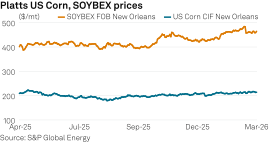
Platts, part of S&P Global Energy, assessed SOYBEX FOB New Orleans at $464.44/mt on March 31, up $5.24 day over day. Platts assessed US corn CIF New Orleans at $214.05/mt on March 31, up 75 cents day over day.
