March 21, 2025
Chinese shrimp imports rise 3% YOY in Feb, domestic prices fall
By Elvis John and Felipe Peroni
HIGHLIGHTS
Imports from Ecuador up 16% MOM
Higher Feb imports increase stock levels, lower local prices
High stock levels in China pressure origin prices downward
China's shrimp imports rose 3% year over year in February, with inflows from Ecuador rising 16% year over year, General Administration of Customs of China data showed March 20. The data covers imports of warm-water shrimp under tariff code 030617.
Ecuador continued to dominate the Chinese market with a 79% share in February, followed by India with only a 10% share.
However, total imports in the first two months of 2025 declined 16% year over year to 131,980 mt compared with the same period in 2024.
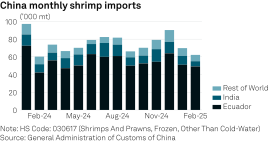
Month-over-month imports have displayed a downtrend in 2025 after ending 2024 on a positive note.
China's shrimp imports increased consistently from October to December due to low inventory levels and higher domestic prices, market participants said. However, prices started to ease by December, leading to reduced imports into 2025.
Domestic prices declined further in March, following the 3% year-over-year increase in February imports. The holiday lull during the Lunar New Year may also have contributed to lower trade activity in January-February, according to market participants.
Related content: Key trends and obstacles in global protein markets
Ecuadorian imports rise, prices drop
The double-digit increase in shrimp imports from Ecuador in February has pressured prices, according to Ecuadorian market participants.
Strong sales to China in the first two months of the year may have contributed to increased inventories, they said, adding that with comfortable stock levels, Chinese importers are now unwilling to accept higher offers.
Consequently, Ecuadorian exporters have been seeing China's shrimp prices at levels lower than before and depressed compared with other markets.
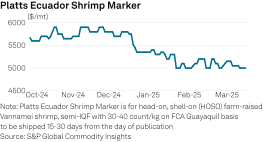
During the week to March 21, at least one trade of 30-40 count/kg head-on, shell-on was made at $4,400/mt CFR China. The Platts Ecuador Shrimp Marker was $5,000/mt FCA Guayaquil on March 20, based on recent trades and values of 30-40 count/kg HOSO to Europe, highlighting the gap between the two markets.
"Chinese demand is terrible," a shrimp exporter said.
Some producers have been trying to diversify and divert volumes to other better-paying markets, such as the US and Europe. However, there are concerns that even these markets may become saturated if China's demand and buying prices do not recover.
Imports from India fall
China's shrimp imports from India fell 42% month over month and 54% year over year in February.
One exporter based in West Godavari, Andhra Pradesh said higher prices in India and favorable inventory levels in China led to lower imports from India in January-February, adding that Chinese buyers became more interested once Indian prices started to fall by early March.
According to Indian exporters, China prefers to buy from India when there is an inventory gap as the transit time is lower, with one exporter noting this pattern reflected in the sudden 60% month-over-month increase in imports in November.
China mostly buys smaller-sized shrimp from India to produce value-added products. Market participants expect an increase in demand for processed food products in China might lead to a rise in demand for smaller-sized shrimp from closer origins like India.
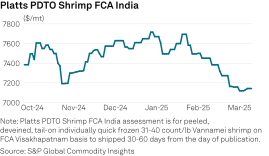
Platts, part of S&P Global Energy, assessed peeled, deveined, tail on shrimp FCA India unchanged day over day at $7,143/mt March 20.