Agriculture, Energy Transition, Refined Products, Metals & Mining Theme, Chemicals, Maritime & Shipping, Electric Power, Biofuels, Renewables, Jet Fuel, Vegetable Oils, Non-Ferrous, Ferrous, Wet Freight, Polymers, Food, Beverages
March 12, 2026
US opens Section 301 trade probes into 16 economies, including EU, China, India

HIGHLIGHTS
Investigation targets manufacturing overcapacity
Probe threatens tariffs on key commodity sectors
The US launched Section 301 investigations into the manufacturing policies of 16 major trading partners, including the EU, China and India, to address unfair trade practices, the Office of the US Trade Representative said in a statement March 11.
The USTR said the probes under Section 301(b) of the Trade Act of 1974 will examine whether acts, policies and practices related to "structural excess capacity and production" in manufacturing sectors are unreasonable, discriminatory or otherwise burden or restrict US commerce.
Other trading partners subject to these investigations are Singapore, Switzerland, Norway, Indonesia, Malaysia, Cambodia, Thailand, Korea, Vietnam, Taiwan, Bangladesh, Mexico and Japan, according to the USTR.
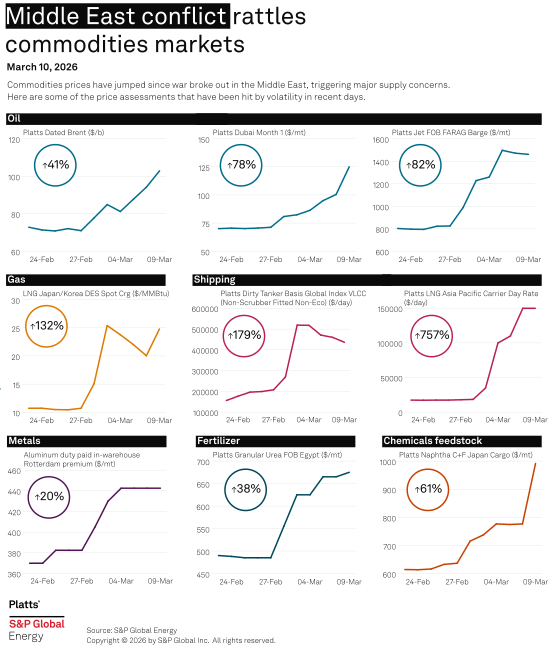
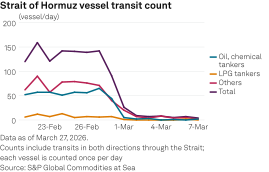
The move revives one of Washington's most powerful trade enforcement tools at a time when commodity markets are already dealing with conflict-driven disruptions in the Middle East, including container booking suspensions, emergency bunker surcharges and steep freight inflation on key shipping routes.
The probe suggests a return to a more assertive trade posture, potentially leading to supply chain disruptions similar to those seen during the 2018-19 tariffs and more recent tariff-related impacts, according to multiple India-based grains and pulses traders.
The Section 301 tariffs on Chinese goods during the first Trump administration triggered years of retaliatory duties, especially on US soybeans and energy products, causing massive shifts in global trade flows that took years to stabilize.
Commodity impact
In its Federal Register notice, the USTR said the investigations target economies whose production capacity appears "untethered" from domestic and global demand, leading to overproduction, persistent trade surpluses and underutilized or idle capacity across manufacturing sectors.
The agency listed the affected sectors as including aluminum, automobiles, batteries, cement, chemicals, electronics, energy goods, machinery, paper, plastics, semiconductors, ships, solar modules, steel and processed food and beverages.
For commodity and industrial markets, the notice covers a wide range of sectors. The USTR specifically cited evidence of excess capacity in India's solar module, petrochemicals and steel sectors; Korea's petrochemicals sector; China's chemicals and batteries sectors; and Mexico's process manufacturing, including food and beverages.
This raises the prospect of a broader policy overhang across energy, agriculture-linked manufacturing and industrial materials supply chains -- even before any remedy is announced, the grains and pulses traders said.
In a separate USTR statement March 11, Ambassador Jamieson Greer said the investigations underscore President Donald Trump's push to reshore critical supply chains and create manufacturing jobs, saying that the US will "no longer sacrifice its industrial base" to other economies' excess production.
The process now moves to consultations and public comment. The USTR said dockets will open on March 17, with written comments and hearing requests due by April 15 and public hearings beginning May 5 at the US International Trade Commission.
Any eventual trade remedy would follow only after the USTR determines whether the identified policies are actionable and what form of response is appropriate, the agency added.
For the biofuels and agriculture sectors, the inclusion of the EU, Indonesia and Malaysia is notable, as these regions are key suppliers of sustainable aviation fuel feedstocks and vegetable oils.
Any eventual tariffs resulting from this investigation could significantly affect the "Farm-to-Fuel" economics that have shaped the green energy transition over the past three years, the grains and pulses traders said.
