Refined Products, Agriculture, NGLs, Crude Oil, Diesel-Gasoil, Gasoline, Jet Fuel, Biofuels
May 22, 2026
East Africa Briefing 2026: Fuel supply security, infrastructure investment key to regional development

By Jenson Ong
Editor:
Concerns over fuel supply security in East Africa could be progressively alleviated by increasing storage capacity, enhancing financing mechanisms and infrastructure investments, keynote speakers said at the 2026 S&P Global Energy East Africa Market Briefing held on May 12 in Nairobi, Kenya.
Due to its lack of an operating refining sector, East Africa remains heavily reliant on imported refined products, leaving it exposed to disruptions in key supply routes and international price swings. The region's dependence on Middle Eastern flows -- roughly 80% of its gasoil and jet fuel comes from Persian Gulf states -- meant it was one of the worst-hit regions in the first months of the Middle East conflict.
The wider consequences of this became clear less than a week after the Briefing event, with mass protests breaking out in Nairobi that saw roads leading into the capital city blockaded and disruption reported in other parts of the country, which is one of the main access points for the East African hinterland to import its fuel.
Availability prioritized amid supply risks
Ensuring fuel availability remains the priority for policymakers and industry alike, particularly during periods of sharp supply disruptions.
"Availability is critical -- affordability follows once supply is secured," said Solomon Osundwa, vice chairman of the Petroleum Institute of East Africa (PIEA), adding that markets may need to prioritize access to product even if it requires flexibility on specifications in the short term.
Lee Kinyanjui, Cabinet Secretary for Investments, Trade and Industry of Kenya announced April 30 that fuel standards in Kenya would be relaxed for six months, allowing sulfur content in automotive diesel (KS EAS 177:2025) and gasoline (KS EAS 158:2025) of up to 50 ppm from the existing lower 10 ppm limit to expand the supply pool, according to Kenyan press.
Recent geopolitical developments have led to longer voyage times, increased freight costs and delays in cargo arrivals into East Africa, reinforcing the region's exposure to global supply chains and price volatility.
Key Platts benchmark oil prices typically referenced in import contracts include the FOB Arab Gulf and FOB Mediterranean cargo assessments.
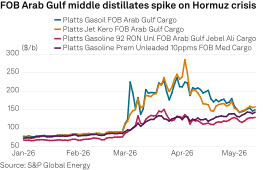
Platts FOB Arab Gulf gasoil and jet fuel price assessments recorded new highs in March during the peak of the Middle East war, reaching more than double pre-war levels.
Storage and strategic reserves key vulnerabilities
A key theme emerging in East Africa is insufficient strategic fuel stockholding across the region, with existing infrastructure largely commercial and import-focused in nature.
"Fuel shortages and lack of strategic stocks would worry and destabilize [the market]," Osundwa said, noting that stockpiles would need to be built progressively rather than through rapid accumulation.
While Kenya operates storage infrastructure through pipeline networks and private operators, these inventories are primarily for operational and "just-in-time" deliveries rather than strategic reserve purposes.
"The single biggest vulnerability in East Africa today is storage," said Maina Kigundu, Standard Bank Group's head of downstream retail, traders and refineries coverage, adding that infrastructure gaps continue to limit supply resilience.
Financing challenges remain a critical bottleneck, particularly for smaller oil marketing companies operating within the region.
"We see marketers struggling to provide collateral and guarantees in the current climate," said Noreen Araka, head of oil and gas at KCB Bank Kenya, adding that clarity around subsidy frameworks and credit risk remains essential before more advanced financing frameworks can be developed.
Araka also pointed to the increasing importance of risk mitigation tools in the current operating environment. "Operational risk insurance is essential in some of the markets we operate in, given the level of geopolitical uncertainty," she said.
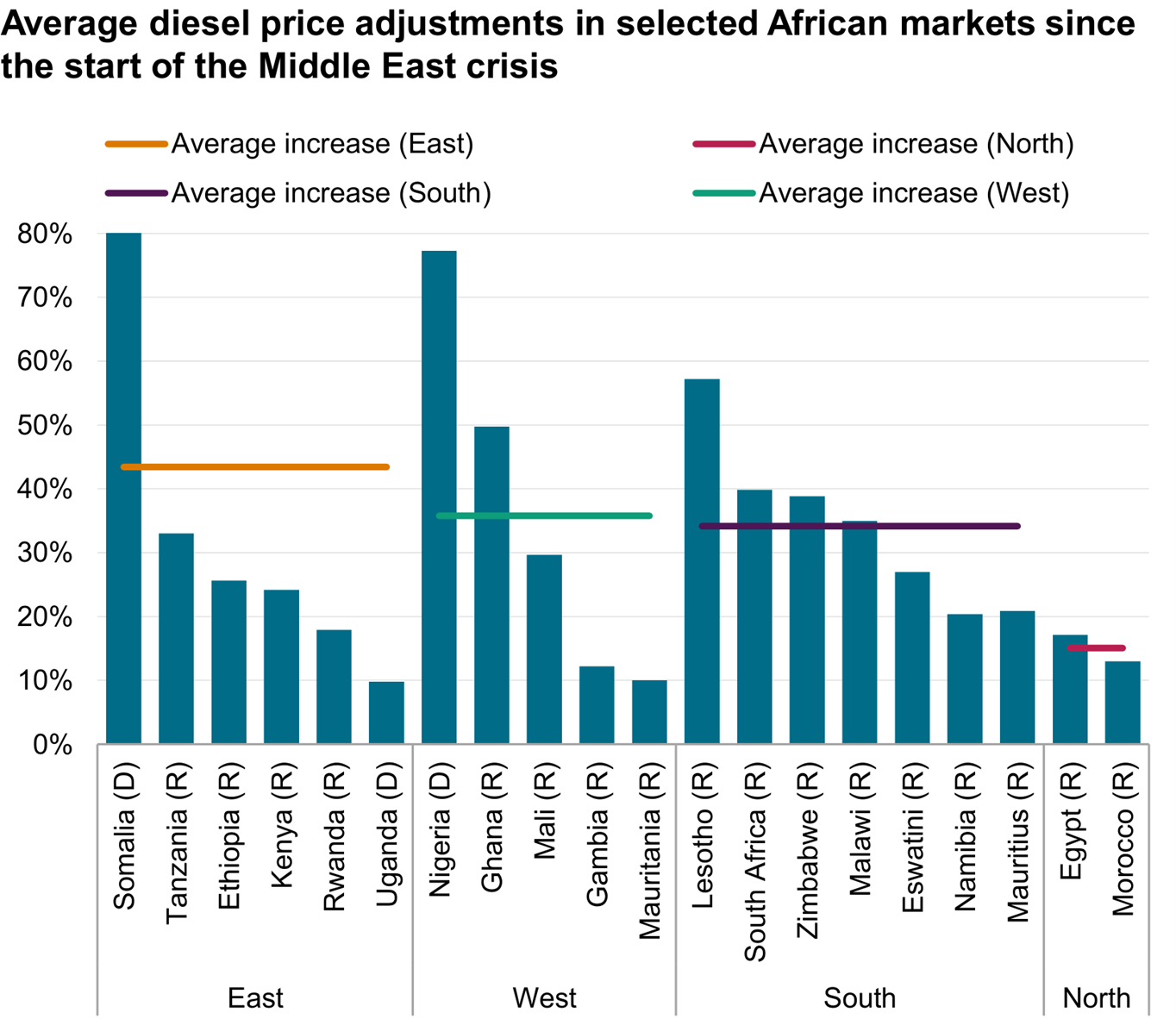
Higher global prices and longer supply chains have increased working capital requirements, particularly under subsidy regimes where delays in reimbursement can strain liquidity across the value chain.
Infrastructure growth potential
The discussion also highlighted a broader infrastructure growth potential, which continues to lag demand growth across East Africa.
East African countries are still in talks over the potential location of a new Dangote-backed refinery project, and are considering a development in Port Mombasa, Kenyan President William Ruto told the Africa Forward Summit in Nairobi in the week to May 14.
The main reasons for favoring Mombasa over the Tanzanian port of Tanga are its superior port infrastructure -- being larger and deeper -- and the economic significance of the Kenyan market, which is regarded as the largest in the region.
East Africa remains heavily reliant on road transport for fuel distribution, contributing to higher delivered costs in the supply chain. At the same time, population growth and urbanization across the continent are expected to drive continued increases in fuel consumption.
Speakers also pointed to challenges in advancing large-scale infrastructure projects, with investment constrained by risk-return considerations and regulatory complexity.
Looking ahead, speakers emphasized the need to balance immediate supply security with longer-term structural improvements, including investments in storage, financing frameworks and supply diversification.
"The fluctuation in international prices is the single largest concern," Osundwa said, underscoring the continued exposure of East African markets to global market dynamics.
Infrastructure investment -- particularly in refining and storage -- remains critical to strengthening supply resilience.
