


Refined Products, Diesel-Gasoil, Gasoline, Jet Fuel
November 17, 2025
Central Asia seeks alternative fuel imports amid Russian supply challenge

HIGHLIGHTS
Central Asian nations see fuel prices climb
Kazakhstan freezes fuel prices
Kyrgyzstan considering imports from Azerbaijan
Central Asian countries are working to stabilize their fuel markets as Ukrainian drone strikes and new Western sanctions have piled pressure on Russia's refining sector, triggering a push for new price controls, new trade links and lasting tariff waivers, policymakers and lobby groups have said.
In recent months, escalating Ukrainian drone strikes on Russia's refining sector have threatened to put pressure on traditional export routes into Central Asian countries, denting domestic fuel availability and triggering new measures to incentivize refiners to prioritize the domestic market. Countries inside the Eurasia Economic Union have so far been exempted from some new controls, which include a comprehensive gasoline export ban and partial restrictions on diesel deliveries for small refiners and traders.
However, in an interview with S&P Global Energy, Asylbek Jakiyev, chairman of oil and gas lobby group PetroCouncil, said that mounting pressure on Russia's oil sector had triggered new concerns over the country's ability to fulfil its intergovernmental agreements, prompting precautionary measures from many countries in the region. "Nobody understands what will happen next, whether Russia can continue supplying fuel, in particular during the high season," he said.
According to a recent report from Energy analysts, Russia's rail exports of gasoline and diesel have so far stayed roughly consistent with seasonal norms, averaging over 120,000 b/d in September and 10% more than the previous year. However, markets remain attentive for the impact of imminent US sanctions on Russia's largest oil companies, Lukoil and Rosneft, which are intended to put additional strain on some of the country's most prominent refiners.
After steady drone strikes through October, unplanned refinery maintenance was expected to have resulted in a 75,000 b/d monthly decline in Russian crude runs, contributing to the lowest throughput volumes since the initial invasion of Ukraine in 2022, according to Energy oil analysts William Oneill and Tanya Stepanova.
Price reaction
The Russian output slump has sent shockwaves through the global distillates market, contributing to steady price increases in nearby Central Asian countries that rely on imported supplies.
In Kyrgyzstan, the country's antimonopoly service has warned that domestic fuel prices could jump by 15% due to a lack of imports from Russia, according to an Oct. 24 statement. In Kazakhstan, meanwhile, the National Statistical Bureau reported that prices had risen by between 1% and 3.6% from August to September, subject to fuel type.
Responding to the price rally, the Kazakh energy ministry announced a moratorium on further price increases for RON-92 gasoline and diesel fuel, effective Oct. 16, which have capped further fuel inflation through the end of the harvest season. Recent maintenance at local refineries Pavlodar and Atyrau contributed to short-term supply contractions, but both have since restarted in recent months, Platts reported previously.
Jakiyev said that the price freezes had stabilized the domestic market, but warned the measure could stunt investment in the Kazakh energy sector if kept in place for long periods. In the downstream oil sector, in particular, Kazakhstan is currently in the process of a major expansion drive, and has aimed to double its refining capacity with major new investments. The Kazakh energy ministry was not available for comment.
In Uzbekistan, meanwhile, the impact of the Russian fuel crisis is starting to be felt in the diesel market, said Saidabboskhon Saidvaliev, chairman of the Uzbekistan Oil Traders Association, in a separate telephone interview.
Uzbekistan imports little to no gasoline, but typically draws over 10,000 b/d of diesel from Russia by rail each month, according to estimates from Energy analysts. In September, however, imports dropped by 50% to 7,000 b/d, the Energy data showed.
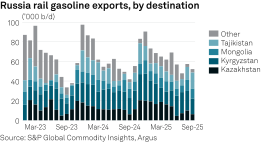
Import diversification agenda
Against this background, Central Asian countries are stepping up efforts to diversify their fuel imports.
Kyrgyzstan is considering establishing fuel imports from Azerbaijan, Daniyar Amangeldiev, deputy Prime Minister, told local press on Oct. 24. Such a move could be possible due to a pause in fuel import duties agreed between members of the Eurasia Economic Commission in September, he said, backing a current waiver expiring July 1, 2026.
Kazakhstan and Uzbekistan are also in talks with potential suppliers to source fuel from alternative routes, said PetroCouncil Chairman Asylbek Jakiyev, who has previously flagged Turkmenistan, Iran and Azerbaijan as alternative, albeit costlier import options.
Russia, too, has taken steps to draw additional fuel supplies, cancelling its fuel import duties on Oct. 15 and paving the way to draw additional fuel from partners such as China, South Korea and Singapore. In September, it significantly hiked its fuel imports from neighboring Belarus, receiving some 14,000 b/d of gasoline and 9,000 b/d of diesel, up from a combined 6,000 b/d the previous month, Energy analysts reported.
Mismatches in national fuel quality standards may create barriers to future import flexibility, however. In Kazakhstan, for instance, additional deliveries of Chinese jet fuel may be difficult to assimilate into the domestic fuel market, being typically A-1 quality and superior to the country's domestic fuel standards, PetroCouncil said. As a result, the country would need to make significant investments in its storage infrastructure to accommodate Chinese supply, Jakiyev said.
Platts assessed Jet Kero FOB Singapore Cargo prices at $95.72/b Nov. 17, up $2/b from the previous week and $12.35/b month over month.

Editor: