Electric Power, LNG, Natural Gas
October 17, 2025
US cannot attain preeminence in energy, AI if tariffs remain: Liberty Energy

HIGHLIGHTS
Q3 revenue down as oilfield service demand dipped
Higher gas activity not offsetting oil's dip
The Trump administration's tariff polices are making drilling and completion equipment more expensive and could hamper companies trying to build out the power needed to win the AI race, Liberty Energy CEO Ron Gusek said Oct. 17 during a third-quarter earnings call.
Liberty, which is nurturing a burgeoning power business targeting data center loads, reported a slowdown in its oilfield services business for Q3 while stressing growth opportunities in power and announcing a target of delivering 1 GW of capacity through 2027.
Tariffs on imported steel and other materials endanger both businesses and the administration's priorities around energy production and AI, Gusek said.
"The Secretary of Energy has called the race for AI dominance our next Manhattan Project," and winning the race requires foreign-made power equipment and other components, Gusek said, invoking Liberty's founder and former CEO, Chris Wright, who now heads the US Department of Energy.
"Much of this is currently made overseas, and much of it is now subject to tariffs," he said. "Is this a path to winning a race the administration has identified is so critical to our nation's future? I would argue, no. It's a path to mediocrity at best."
Drilling dynamics
Gusek echoed other energy executives who — sometimes under the anonymity granted by Fed banks' quarterly surveys — have voiced concerns with the administration's tariff policies and its preference for low crude oil prices.
Operators say they are wary to invest, and drilling and completion activity has been falling. US rig and frac crew counts, though up from the year-to-date lows recorded in the summer, still sit well below 2024 levels.
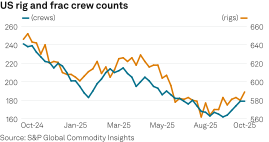
At 589, total drilling rigs operating as of the week to Oct. 8 were down by around 9% versus 2024, Energy data showed. The tally of active frac crews has declined by more than 25% over the same period.
Gas rig counts have been on the rise in recent months but are being outdone by the drop-off in oil-directed activity.
"Slowing trends in oil markets have more than offset increased demand for natural gas fleet activity, where long-term fundamentals remain encouraging in support of LNG export capacity expansion and rising power consumption," Gusek told analysts Oct. 17.
Oil producers have moderated well completions owing to macroeconomic uncertainty and production outperformance during the first half of the year, and activity has now fallen below levels required to sustain North American oil production, Gusek said.
During the quarter, Liberty "repositioned fleets as expected, acknowledged softer conditions in months ahead (likely through at least H1'26), and commented that they remain well-positioned to react swiftly when demand rises, but stopped short of disclosing whether they idled any horsepower beyond the repositions," TPH analyst Jeff LeBlanc said in an Oct. 17 note to clients.
Activity could pick back up in late 2026 if commodity futures remain supportive, Gusek said.
Results, power outlook
Liberty reported Q3 revenue of $947 million, down 17% compared with Q3 2024 and a decrease of 9% versus Q2 2025.
Analysts' questions were mostly focused on the company's Power Innovations business, which is developing gas-fired, on-site power projects for industrial, commercial and data center customers.
Capital expenditures in 2026 are "markedly shifting towards the growing opportunities for power generation services," Gusek said. "We now expect to have approximately 500 megawatts of generation delivered by the end of '26, [and] another 1 gigawatt of cumulative power generation by the end of '27."
The company now expects to end up with a higher share of planned power capacity serving data center customers than expected when Liberty launched the power business in 2023, Gusek said.

Editor: