Electric Power
November 03, 2025
Summer power demand response performance in PJM 'well below' historic levels

HIGHLIGHTS
DR performance during the season was 67%
Historic DR levels have been ‘north of 90%’
Demand response performance in PJM Interconnection over the summer was lower than expected and "well below" historically observed levels, but it remains unclear why power curtailment service was not higher, Pete Langbein, manager for demand side response operations at PJM, said during a Nov. 3 Distributed Resources Subcommittee meeting.
"The actual performance is 67% and you can think of that as a giant weighted average of all the activity from the summer and that is well below anything that we have seen historically from load management," Langbein said.
It was a "bit of a surprise" to PJM to see numbers in this range for summer events, as "historically those numbers have been north of 90%," Langbein said.
Demand response is a way for retail consumers to respond to wholesale power prices or to power system reliability needs, and it is integrated into PJM's wholesale power markets.
By participating in demand response, retail customers can transact in PJM's energy, capacity and ancillary services markets to receive payments for reducing demand.
There are two categories for customers to participate in PJM markets as demand response, or DR. They can participate as load management, known as Pre-Emergency and Emergency DR, in which providers make a commitment in the capacity market to reduce load when required or receive a financial penalty.
The other method is economic DR, where providers participate in the energy and ancillary services markets when it is economic. If the economic DR offer price is less than the marginal power price, they will be deployed like a power generator.
Companies that offer this service are called curtailment service providers and are required to have customers reduce load when dispatched.
Load management performance
PJM called on DR for load management six times over the summer, which comprised a total capacity commitment of 11,962 MW of installed capacity and a shortfall of 3,669 MW.
Capacity service provider commitments totaled 10,623 MW with capacity load reductions of 6,460 MW, which was a shortfall of 4,163 MW or a capacity service provider shortfall of 61%, according to data PJM shared with stakeholders during the meeting.
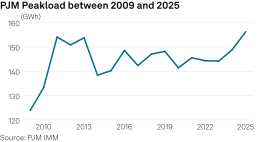
PJM had three of the top 10 peakload days during this past summer, "so as we continue to get tighter from a resource mix and capacity perspective load management is becoming increasingly important for reliability and this performance is very concerning," Kevin Hatch, senior manager dispatch with PJM's System Operations team, said.
One stakeholder asked if the DR resources had performed better could that have avoided power reserve shortage events. Hatch said PJM just received the data and is reviewing it, but from a broad perspective, the resource mix is getting tighter, and risk is increasing so better performance from DR resources is needed.
DR provider CPower said that its customers delivered an estimated 38 GWh of load relief to the US power grid from January through September, which was 137% more than 2024 altogether, according to a Nov. 3 statement.
A company spokesperson said in an email that its largest portfolio of customers and partners is in PJM, "although we enable 23,000 sites across the US to participate in demand response and energy flexibility programs."
It remains unclear which curtailment service providers in PJM are overperforming and which are underperforming.
PJM said it plans to open a stakeholder process to discuss and seek to resolve the issue before the 2028-2029 base residual capacity auction scheduled for late June 2026.
If a solution is reached that requires tariff changes, the adjustments would need to be filed with federal regulators in April 2026.
"Time is incredibly tight to get this all done," Langbein said.

Editor: