


Electric Power
July 24, 2025
Tesla bets on cheaper models, autonomy to recover demand amid steep EV slump

By Daniel Weeks
HIGHLIGHTS
Company plans Q4 launch of cheaper models
Automotive revenue drops 16% year over year
Tesla has delayed until late 2025 its plans to roll out cheaper electric vehicles due to the recent repeal of US federal EV tax credits.
The company started production of its lower-cost model in June, but Tesla will focus on building and delivering "as many vehicles as possible in the US before the EV credit expires," CFO Vaibhav Taneja said July 23 during an earnings call.
Tesla aims to launch its lower-cost vehicles in Q4 after the $7,500 tax credit expires, executives said.
"Given the abrupt change, we have a limited supply of vehicles in the US this quarter," Taneja said. "If you're in the US and looking to buy a car, place your order now, as we may not be able to guarantee delivery orders placed in the later part of August and beyond."
S&P Global Energy analysts expect a short-term US EV demand spike as consumers try to take advantage of the EV tax credit before it expires but forecast a long-term decline in demand. The analysts forecast the EV sales market share will reach 21% in 2030 and 74% in 2050, down from 24% and 80% in the 2024 outlook, respectively.
Tesla's deliveries are down in 2025 so far due to macroeconomic uncertainties, the company said. Energy analysts also said political backlash against CEO Elon Musk caused a slowdown in Tesla sales earlier this year.
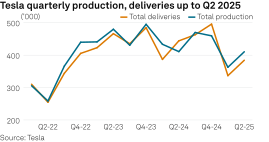
Tesla's Model 3 and Model Y production increased 3% year over year to 396,835 in Q2, but all other model production dropped 45% to 13,409. Overall deliveries fell 13%.
Tesla's automotive revenues dropped 16% year over year, company data shows. Energy generation and storage revenue also declined 7%.
Tesla attributed the drop in revenue to declined vehicle deliveries, lower regulatory credit revenue, and lower average selling price for vehicles and energy storage.
Tesla deployed 9.6 GWh of energy storage, a 2% increase year over year. The segment saw a record gross profit in Q2 of $846 million. The segment will see "shifts in demand and profitability" due to the early expiration of consumer credits caused by the recent Republican-led spending bill.
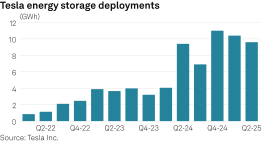
"Note that the overall deployments will continue to vary quarter to quarter," Taneja said. "Despite this business having the largest impacts from tariffs, we're seeing customers willing to accept some of the tariff impacts."
Taneja said tariff costs increased "around 300 million" quarter over quarter, mostly impacting the automotive and energy storage segments.
"Given the latency in manufacturing and sales, the full impacts will come through in the following quarters and so costs will increase in the near term, but we're doing our best to manage these impacts," he said.
Musk called Q2 2025 the start of a "fundamental transformation of the company" due to the rollout of its automated "Robotaxi" vehicles in Austin, Texas. "Autonomy is the story," he said, centering his comments mostly on Tesla's AI-driven future.
Tesla is working to get regulatory permission to launch in other US markets, including California and Florida. Service areas and number of vehicles in operation will increase "exponentially" in the US, Musk said. The company is also seeking regulatory approval in Europe.
"It really is the single biggest demand driver," Musk said.

Editor: