


10 Jul 2020 | 21:12 UTC — New York
Windy, wet Tropical Storm Fay makes landfall near Atlantic City, New Jersey
By Jared Anderson and Janet McGurty
Highlights
Energy infrastructure impacts limited as of July 10
Regional utilities prepared for power outages
Refineries unaffected, vessel traffic at ports shut or limited
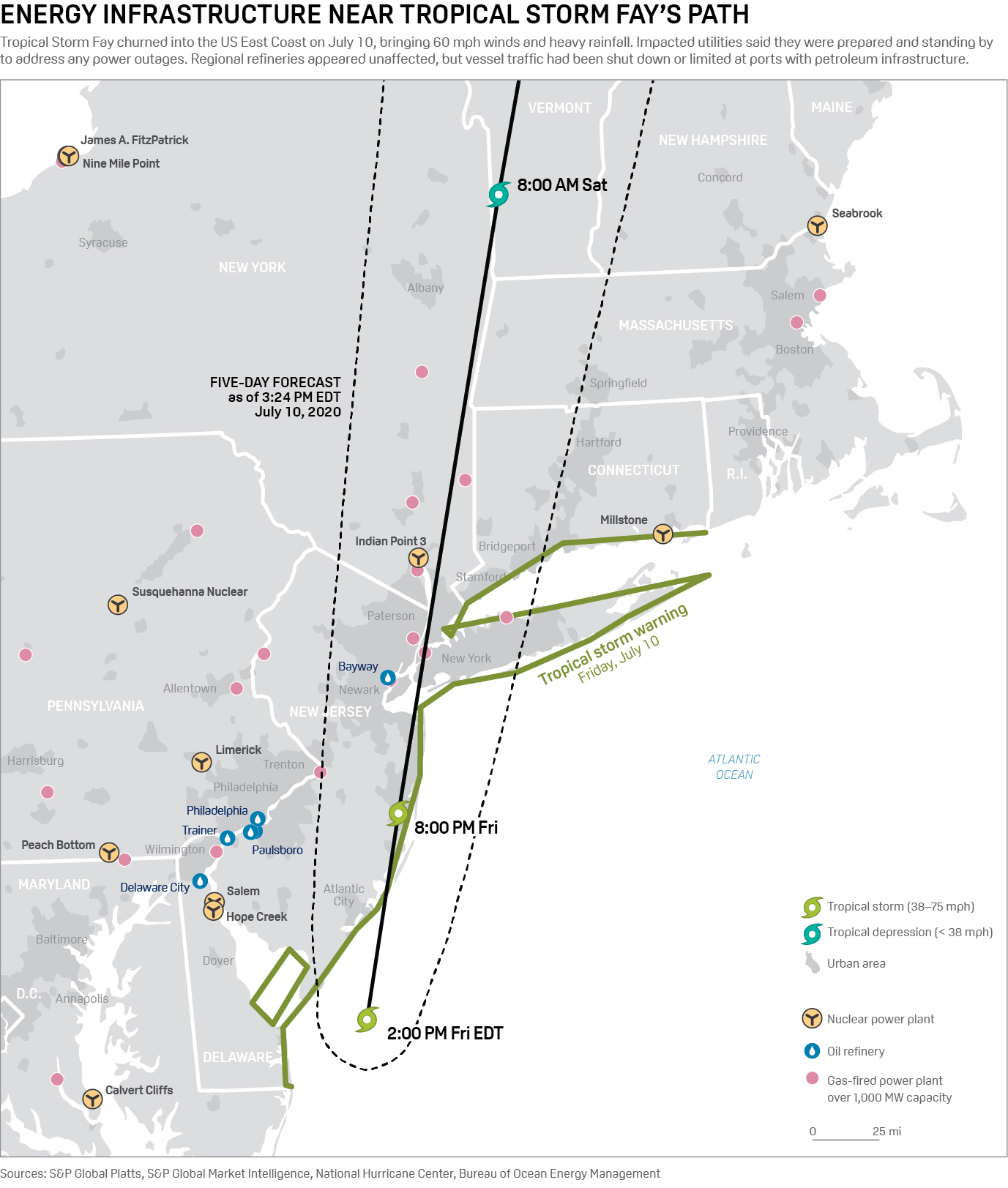
New York — Tropical Storm Fay hit the US Mid-Atlantic coast June 10, bringing high winds and dropping as much as seven inches of rain in some areas, potentially resulting in power outages. A Tropical Storm warning was in effect for the coasts of Delaware, New Jersey, New York and Connecticut.
At 5 pm EDT Tropical Storm Fay made landfall along the coast of New Jersey about 10 miles north-northeast of Atlantic City and was moving northward and expected to accelerate over southeastern New York and then New England, according to the National Oceanic and Atmospheric Administration.
Maximum sustained winds were near 50 mph, and Fay was moving to the north at 12 miles per hour. Heavy rainfall from Delaware northward into New Jersey, eastern Pennsylvania, southeast New York and southern New England "may result in flash flooding and urban flooding in areas with poor drainage," NOAA said on its website.
Tropical storm conditions will continue spreading northward across portions of the mid-Atlantic through July 11, according to NOAA.
Click here for full-size image

New York Governor Andrew Cuomo on July 9 directed state agencies to strategically deploy response resources, according to a statement.
"With widespread thunderstorms expected across the state and heavy rain and flash flooding expected to hit New York City and Long Island in the coming days, I am urging all New Yorkers to stay alert and be careful during these potentially severe weather conditions," Governor Cuomo said in a statement.
There is considerable energy infrastructure in the storm's path, including multiple power plants, transmission infrastructure, oil refineries and ports. Power prices in the PJM Interconnection and New York Independent System Operator territories remained at normal levels on the afternoon of July 10.
Utilities prepared
New York's utilities have approximately 4,500 workers available to engage in damage assessment, response and restoration across the state, according to the governor's office.
Department of Public Service staff will track the utilities' work throughout the storm and will ensure the utilities shift appropriate staffing to the regions anticipated to experience the greatest impact, according to the statement.
Crews are preparing to respond to any outages that occur due to any severe rain and windstorms that hit New York City or Westchester County, utility Con Edison said in an emailed statement.
Depending on storm damage severity, crews will give priority to restoring service lines that will provide power to the most customers as quickly as possible, then move on to restore smaller groups and individual customers who are without power, Con Ed said.
New Jersey utility Public Service Electric & Gas Company "is prepared to respond to the heavy rain, thunderstorms and strong winds forecast for the service area over the next few days," it said in a July 10 statement.
"Tropical storms can change rapidly, causing widespread damage," Jack Bridges, PSE&G's vice president for Electric Operations, said, adding "we have crews available to respond to any service interruptions that may occur."
Refineries, ports
US Atlantic Coast refineries appear unaffected by the high winds and heavy rainfall as Tropical Storm Fay makes its way up the Middle Atlantic States, sources familiar with refinery operations said July 10.
However, the US Coast Guard has issued a port condition Zulu for Long Island Sound, which includes the storage terminals at New Haven. This has shut down vessel traffic into and out of the port.
To the south, Port Condition Whiskey has been sent into effect by the USGC for the Delaware Bay area, which has limited vessel movement in and out of area ports, including Philadelphia and Wilmington, Delaware.
In the New York Harbor, a tropical storm warning remained in effect as of afternoon July 10.
The oil product Colonial Pipeline "will continue normal operations and currently has no plans to shut down any portion of our system," the pipeline operator said in a statement.