


Electric Power, Energy Transition, Natural Gas, Emissions
June 11, 2025
Texas emissions may soar with ‘gas plant boom,’ EIP says, but projects in doubt

HIGHLIGHTS
Like adding 27 million vehicles to roads
Supply chains, prices, load forecasts at issue
An Environmental Integrity Project study of the potential impact of 130 natural gas-fired generation projects proposed for Texas concludes their greenhouse gas emissions would equal that of as much as 27 million cars and trucks a year, but industry observers foresee much less gas-fired capacity coming online.
Griffin Bird, EIP research analyst and lead author of "A Pollution Footprint the Size of Texas: The Lone Star State's Gas Plant Boom," said he found 108 of the projects would be new, greenfield projects, 17 would expand existing facilities, and the details of five others could not be determined.
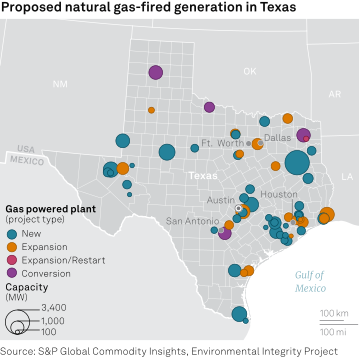
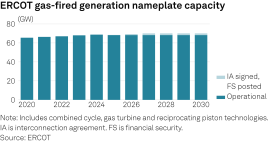
The 130 projects could add 58 GW of gas-fired generation to a state that, as of May 31, had 68.8 GW of gas generation, according to Electric Reliability Council of Texas data.
About 15 GW by 2035
Mike Pickens, S&P Global Energy associate director for North American power, said his group estimates ERCOT will add about 10 GW of new gas-fired generation "by the end of the decade, plus another 5 GW by 2035."
"Supply chain constraints, energy prices signals, and overly optimistic load forecasts are headwinds for many of these natural gas projects," Pickens said on June 11.
Tanya Peevey, Energy senior principal research analyst, said the wholesale pricing effect of significantly more gas-fired generation depends on which technology dominates the additions.
"If it is combined-cycle generators to satisfy the increase in base load due to large loads like data centers, then the next-day wholesale energy price could decrease as combined cycles are more efficient to run than combustion turbines," Peevey said on June 11. "Currently, the market favors combustion turbines to meet load at peak hours, and if that trend continues, this would put upward pressure on prices."
The Platts M2MS Power Forward curves on June 10 showed ERCOT North Hub on-peak forwards for 2030 averaging 56.27/MWh, compared with day-ahead on-peak locational marginal prices averaging $72.38/MWh for 2020-24.
In the wake of a deadly February 2021 winter storm that left about 4 million Texas electricity customers in the dark, some for days, Texas lawmakers and voters in 2023 approved establishing a Texas Energy Fund to provide low-interest financing to develop as much as 10 GW of "dispatchable" generation, specifically excluding battery storage. Lawmakers initially appropriated just $5 billion of a potential $10 billion for this purpose, but in the just-completed regular session, Bird said new legislation passed that would appropriate another $5 billion.
"We're of the opinion that it's certainly not a thriving program," Bird said. "They're struggling to keep projects from withdrawing, struggling to prevent developers from exiting the program. ... It hasn't generated any electricity yet, but that doesn't mean that the legislature is giving up on it."
'Higher monthly utility bills'
Dave Cortez, director of the Sierra Club's Lone Star Chapter, drew attention to Texas Governor Greg Abbott and Lieutenant Governor Dan Patrick's "embrace" of artificial intelligence and cryptocurrency mining operations, contributing to a forecast near-doubling of ERCOT's peakload to about 148 GW by 2030.
"Texas should expect not just higher monthly utility bills, but increases in local air pollution ... that triggers asthma and increases the ozone action days we see in places like Houston, San Marcos and other major metro areas around the state," Cortez said. "Instead of investing in low-cost, reliable power sources that have kept our lights on like energy conservation, demand response and clean energy, Governor Abbott and Patrick and the legislature have chosen to give a taxpayer handout to big gas in support of big tech like AI and crypto."
Energy Peevey expressed doubt that enough new gas-fired generation will come online "to meet the near-term large load demand, despite ERCOT's ability to move power plants more readily through the interconnection queue, compared to other" independent system operators.
"ERCOT, like other regions, has seen delays in generation coming online due to environmental constraints and public pushback limiting location options, and the region will see additive headwinds due to supply chain bottlenecks that decrease gas turbine availability and increase the capex price of gas-fired power plants," Peevey said.
Announced projects, Bird said, "can linger for years, and then, when there's an opening and the funding is right, they can start to move very quickly."
"So, in the report, we're not trying to make a judgment as to which project is likely and another that's not," Bird said.

Editor: