Crude Oil, Maritime & Shipping, Wet Freight
August 06, 2025
G7 tankers retreat from Russian crude trade ahead of lower price cap
HIGHLIGHTS
Mainstream tanker operators expected to comply with EU/UK cap
Greek firms face fewerUrals lifting opportunities going forward
Russia can still rely on shadow fleet for crude exports
G7-linked oil tankers have begun to withdraw from Russia since July, with the EU and UK's new, lower price cap for Russian crude set to limit their employment opportunities.
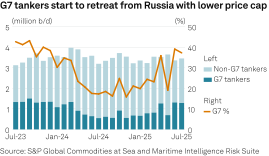
S&P Global Commodities at Sea and Maritime Intelligence Risk Suite data showed 37.3% of the OPEC+ member's nearly 3.5 million b/d in July were loaded by tankers flagged, owned or operated by companies based in the G7, the EU, Australia, Switzerland or Norway, or insured by Western protection and indemnity clubs.
This share was lower than 39.1% in June, then a 19-month high.
The drop came as the EU and UK agreed to ban maritime service companies from participating in Russian seaborne crude exports unless the barrels were sold for no more than $47.60/b, effective early September, to exert more pressure on Russia's economy.
The existing price cap of $60/b by the G7 and its allies has been in force since December 2022, and other G7 members have yet to commit to the new threshold.
However, industry participants have suggested that tankers using G7 services would need to exit Russia based on the current market conditions, with most P&I insurers based in Europe.
"Although two price caps among G7 members are expected from September ... most Western operators may likely adhere to the lower threshold to maintain access to critical elements such as insurance," tanker operator Hafnia told Platts, part of S&P Global Energy, in an email.
The price of Urals -- Russia's flagship crude export grade -- has been mostly below $60/b since late February and was last assessed at $57.355/b on an FOB Primorsk basis Aug. 5, according to Platts data.
This has provided more trading opportunities for tanker operators in Greece, Europe's top shipowning nation, in an otherwise subdued market, and they have regained the pole position in Russian exports in recent months.
Suezmax rates on the Black Sea-West Coast India route were at $5 million-$6.5 million on alump-sum basis in June. Platts assessed the rate at $6 million on Aug. 5.
However, Greek operators' crude liftings fell to 21.7 million barrels in July from 24.5 million barrels in June, and their future business outlook in Russia has become uncertain after Brussels enacted the lower price cap.
"Greek operators obviously will need to care about EU sanctions, because Greece is part of the EU," said Richard Matthews, Gibson Shipbrokers' research director.
Shipping capacity
Despite the likely Greek retreat, Russia won't have difficulties transporting its crude to overseas buyers due to the continued expansion of shadow fleet tankers serving sanctioned trades, according to many analysts.
The non-G7 fleet, mainly composed of such ships, was responsible for nearly 63% of Russian crude exports in July, or 2.17 million b/d, according to the CAS and MIRS data. The monthly reading was far below their record shipments of nearly 3 million b/d in December 2024, suggesting room for further growth.
"Considering the recent lowering of Russian crude oil price cap, unless producers there opt to accept lower prices -- which is unlikely -- it is probable that more Russian crude will move on" tankers in legally dubious trades, shipbroker BRS said in a recent note.
A Energy and S&P Global Market Intelligence study found 940 tankers were either confirmed by Western authorities to have violated sanctions or at high risk of breaching them as of this May, up from 591 tankers in April 2024.
"Fleet growth has rebounded strongly so far this year," BRS said while suggesting that shadow operators might have acquired more aged ships from mainstream owners in recent quarters amid Western sanction clampdowns.
This year, Russia has been exporting more crude on sanctioned ships that would sometimes transfer their barrels to non-sanctioned ships before the final voyages to end-users to reduce importers' legal risks.
"Shadow fleet would continue to absorb mounting regulatory pressure," CAS analysts said. "EU- and UK-sanctioned vessels have continued to transport Russian crude even after being designated."
Editor: